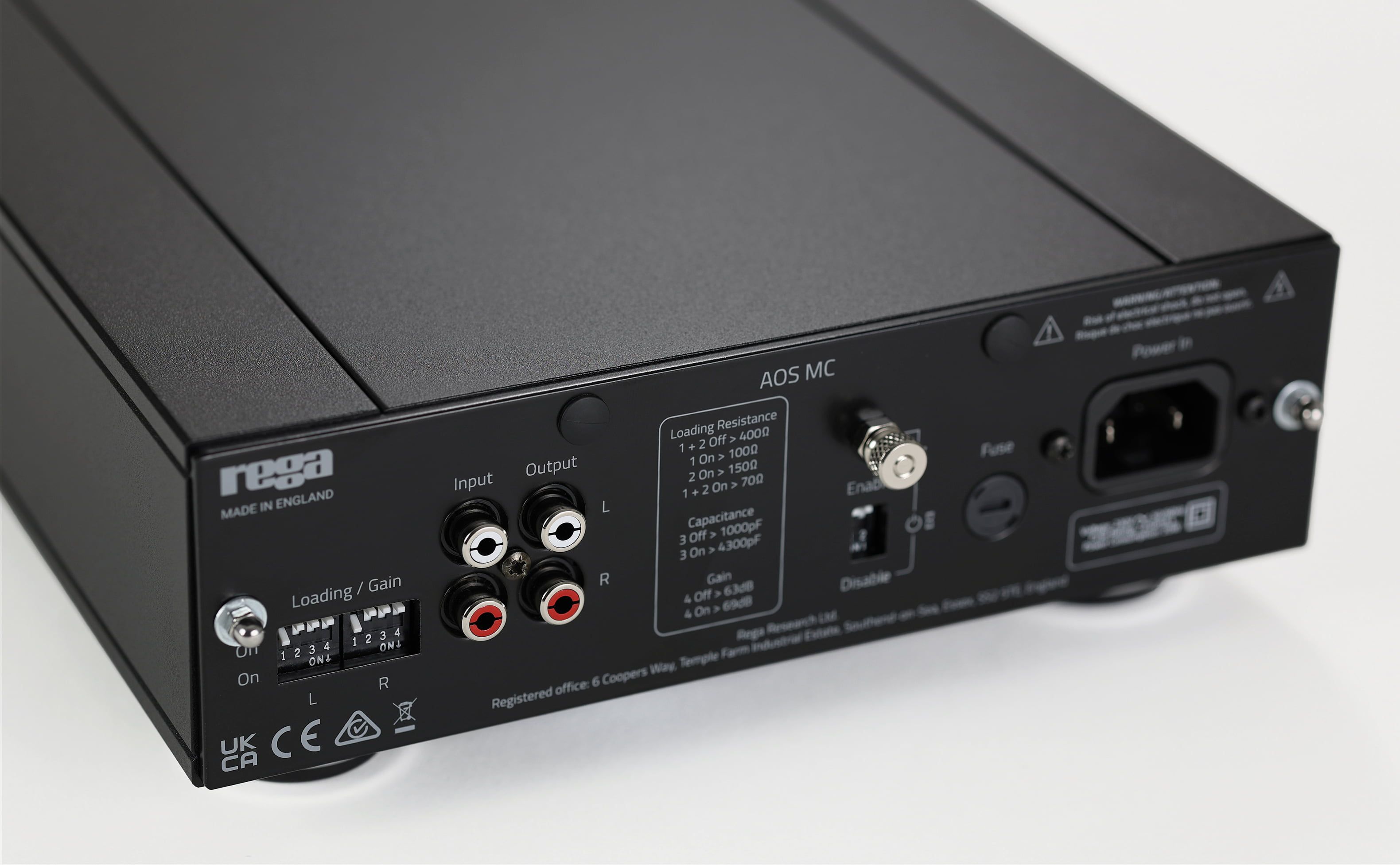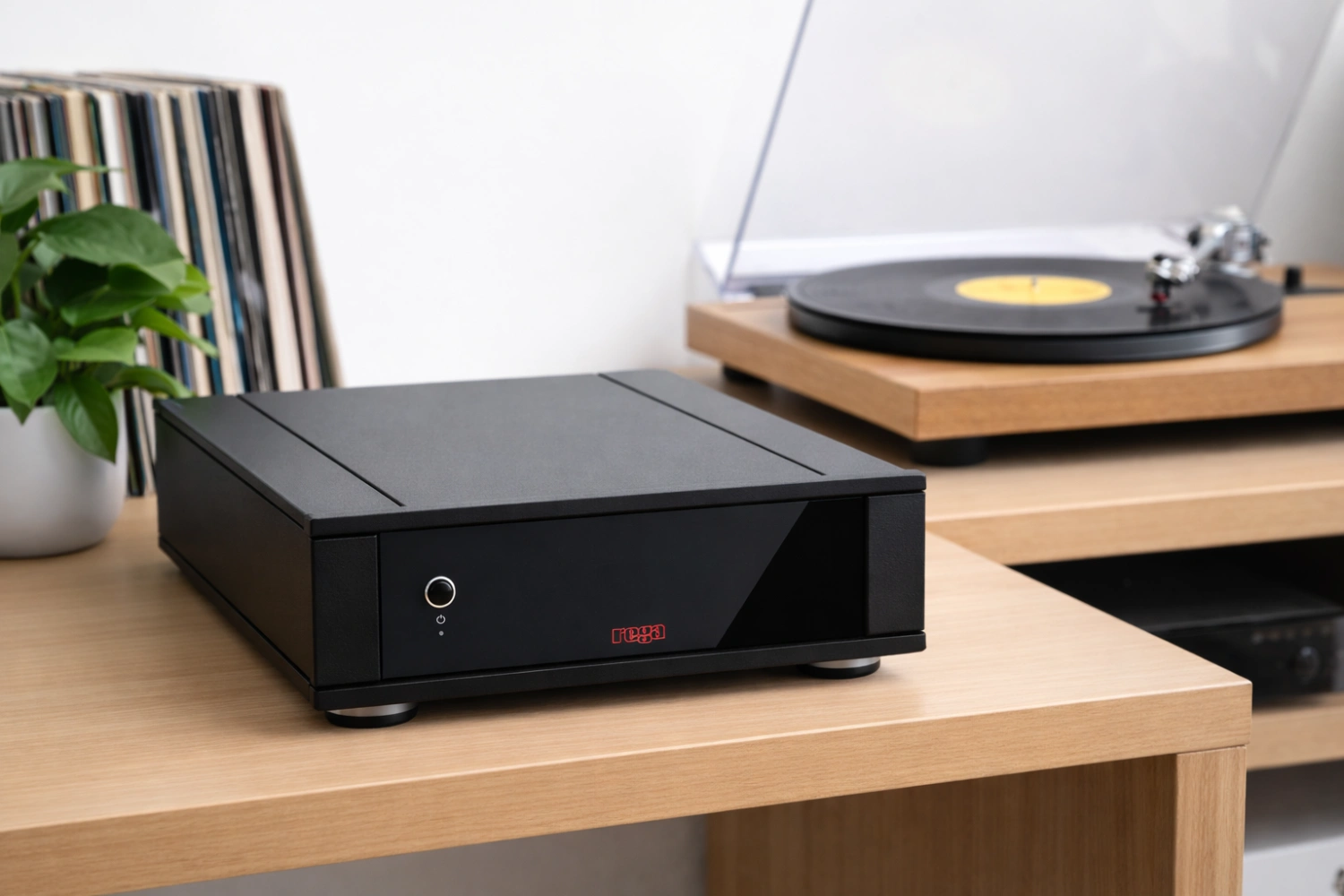
Rega Research has announced the AOS MC, a dedicated phono stage for moving-coil cartridges that brings elements of the circuit thinking behind the company’s flagship Aura phono amplifier to a more compact half-width component. It is a significant arrival for analogue enthusiasts because it combines Rega’s traditionally purist, all-analogue approach with the cartridge-adjustment facilities that are essential when using moving-coil designs from different manufacturers.
The AOS MC is not a turntable preamp intended to accommodate every cartridge type: it is specifically an MC design. That focused remit allows Rega to optimise the input stage around the very low signal levels produced by moving-coil cartridges, while providing adjustable gain, resistive loading and capacitive loading on the rear panel. For owners who change cartridges, use a low-output MC, or want to establish an electrically sensible match rather than accept a fixed default setting, those provisions are central to the AOS MC’s appeal.
An Aura-derived MC phono stage in a compact enclosure
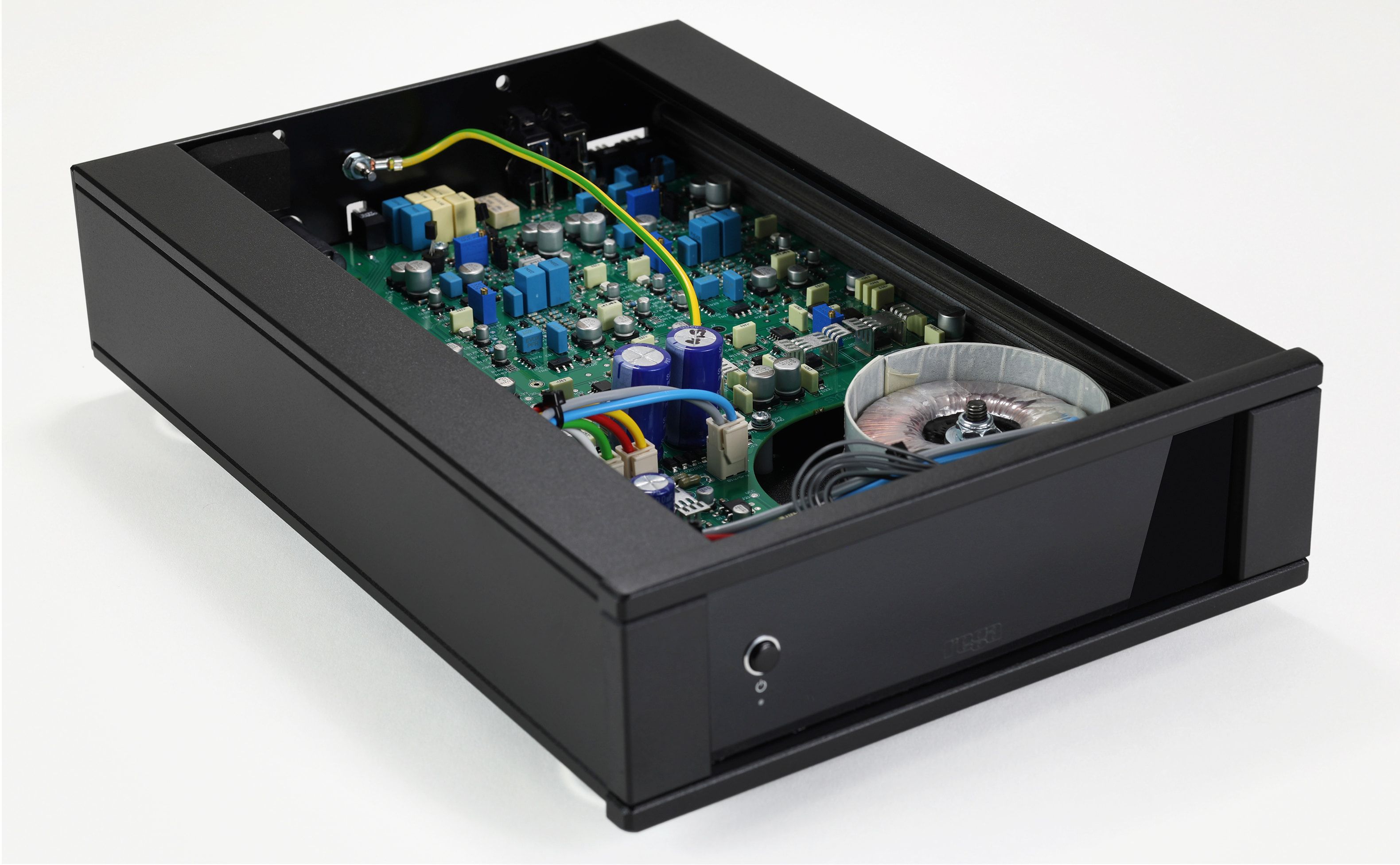
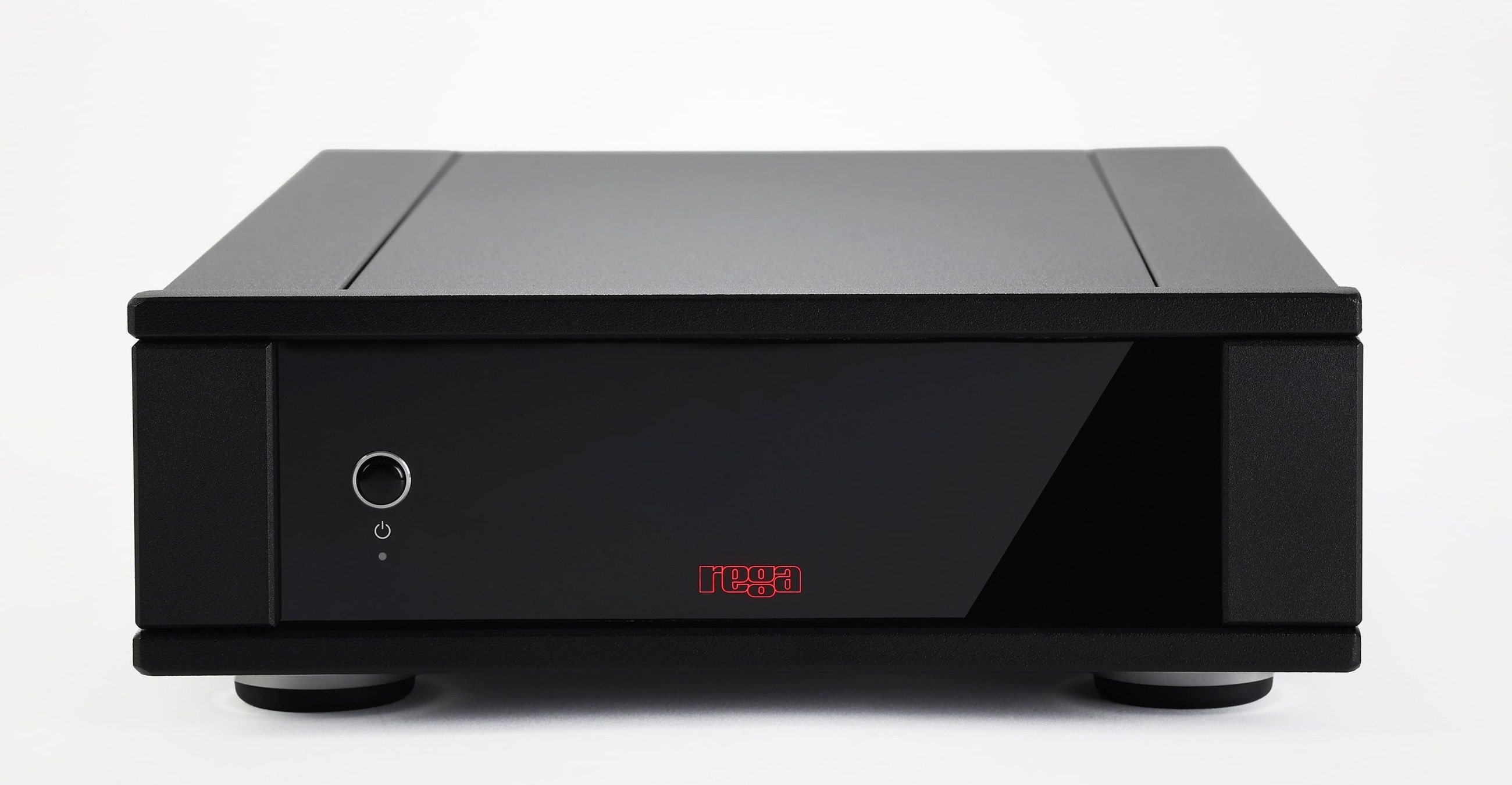
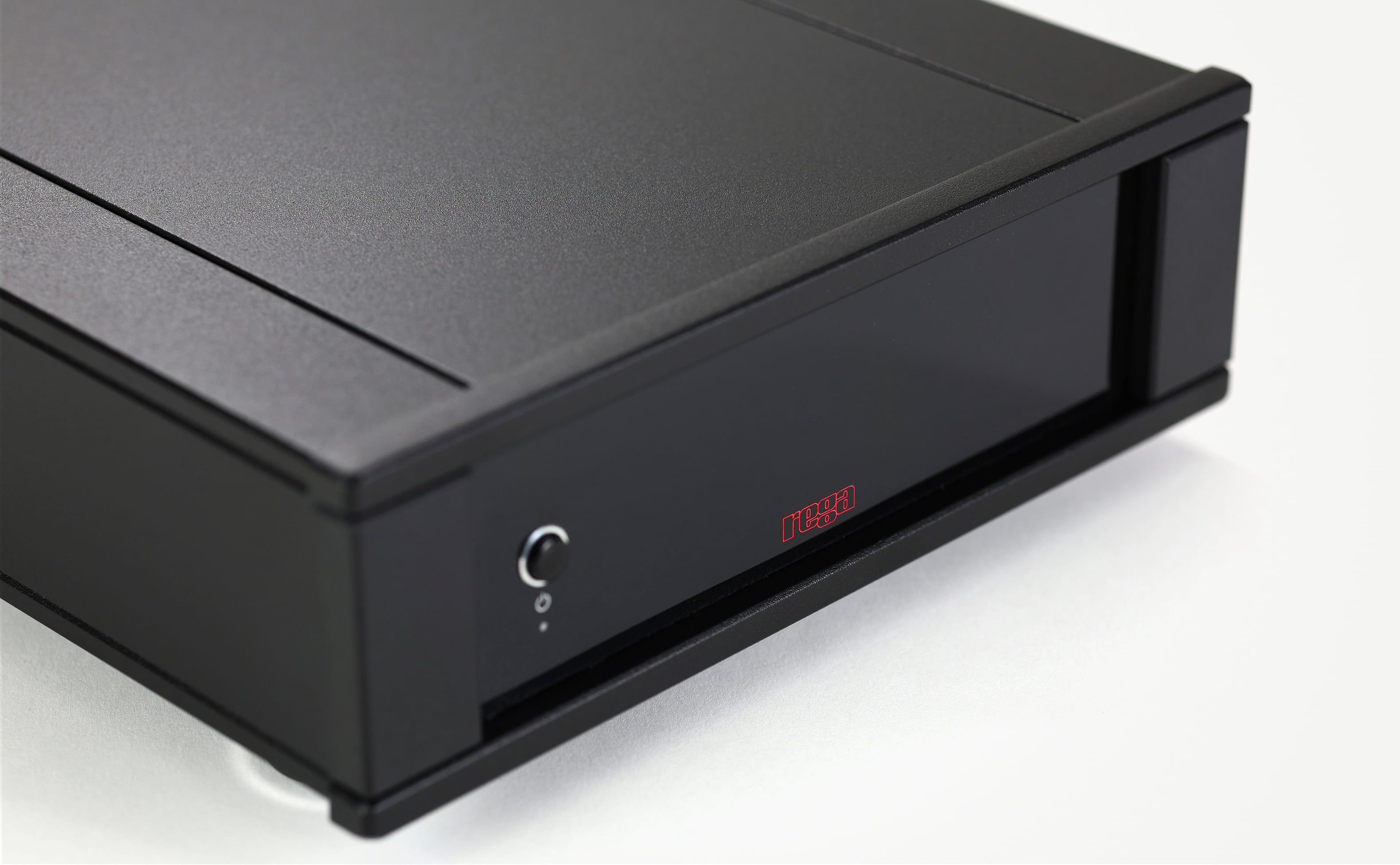
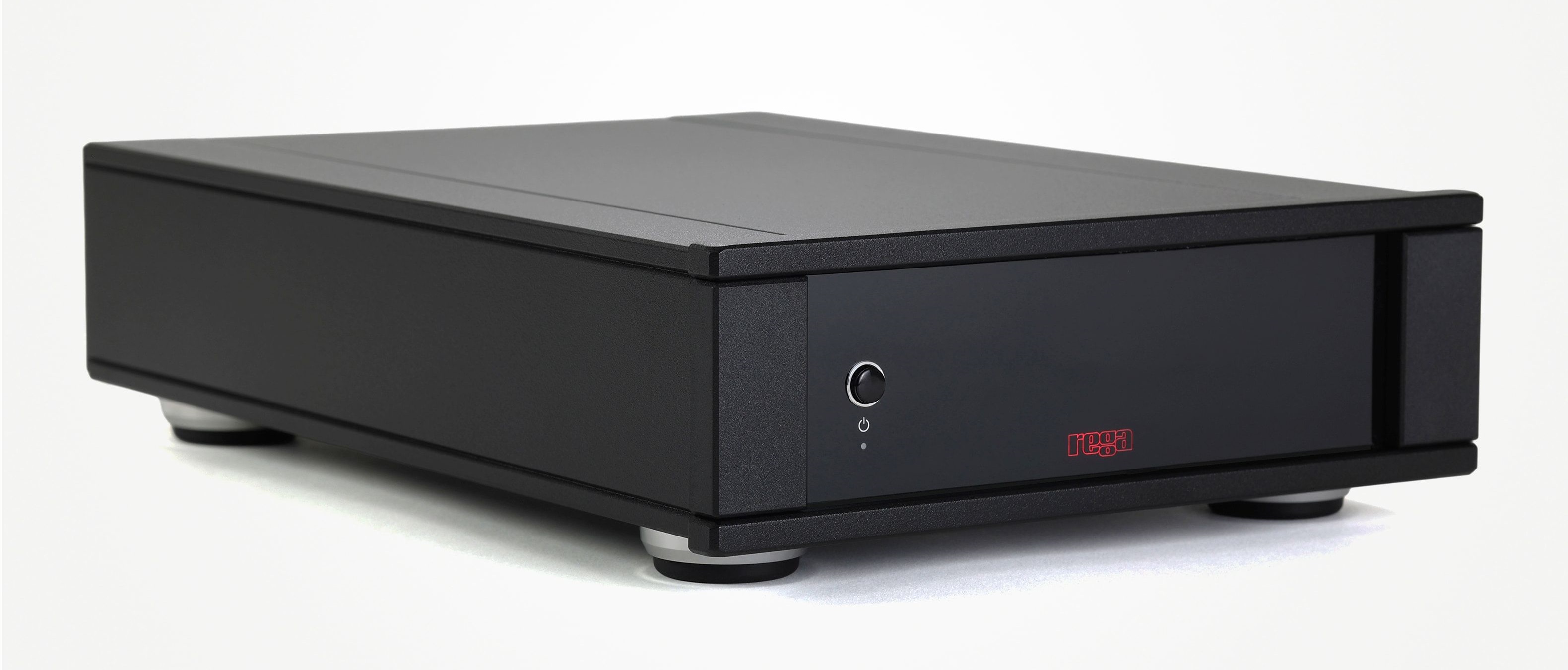
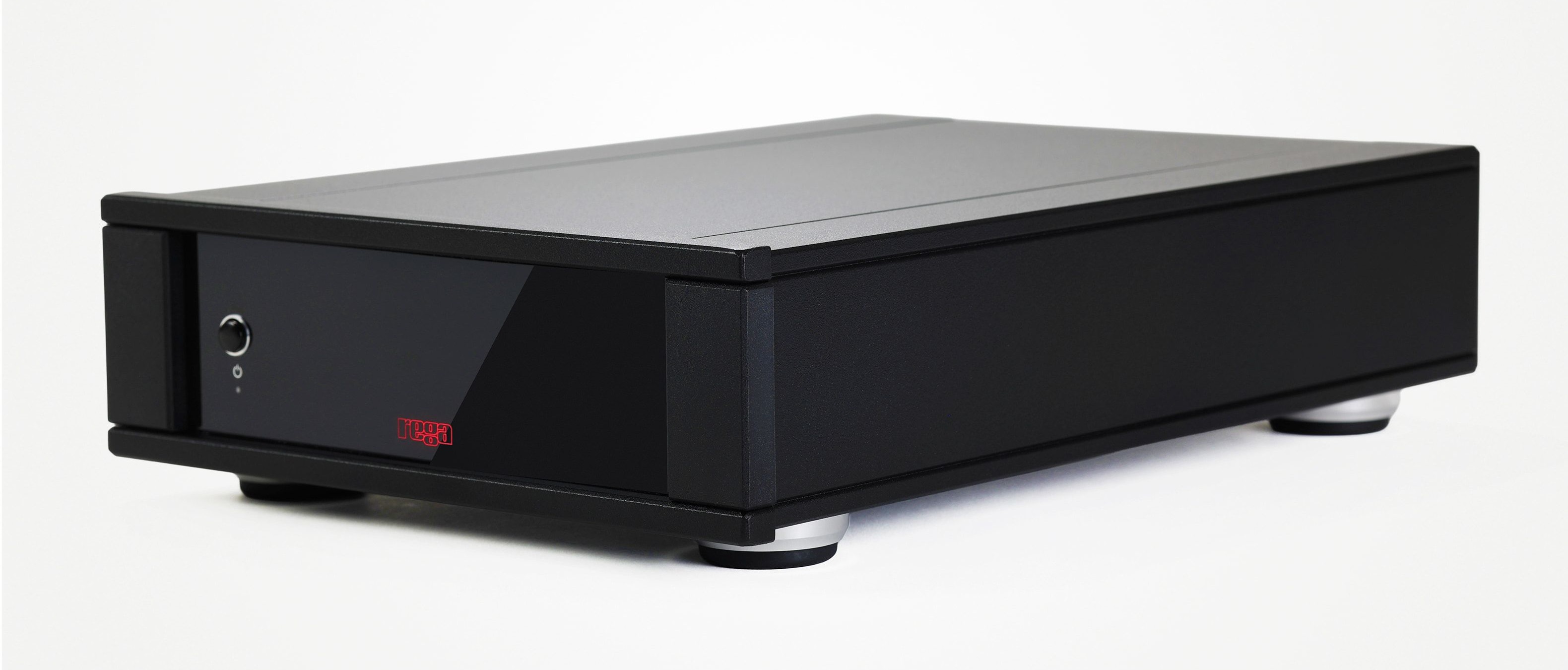
Rega describes the AOS MC as a no-compromise, fully adjustable phono amplifier whose circuit is heavily based on the Aura, its reference MC phono stage. The new model is housed in a custom-designed, black, half-width aluminium case rather than a full-width chassis. That makes it easier to accommodate alongside a turntable or a compact electronics stack, although the supplied information does not specify its dimensions, power-supply arrangement, output connections or whether a remote control is included.
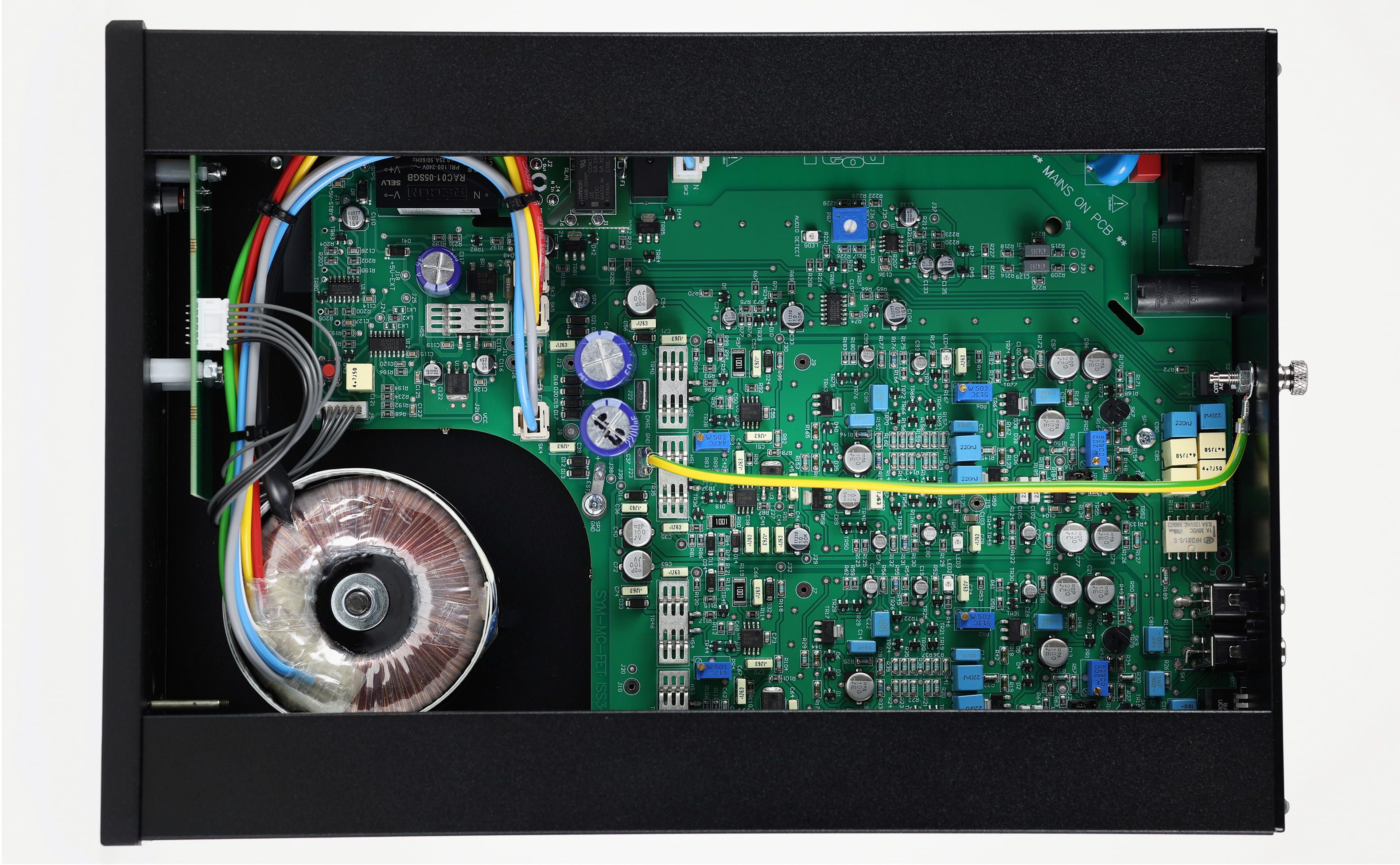
The aluminium enclosure has a practical electrical purpose beyond its cosmetic finish. A phono stage works with an exceptionally small signal at its input: the output from a low-output moving-coil cartridge can be measured in fractions of a millivolt. At that level, radio-frequency interference from domestic wireless devices, switch-mode power supplies and other electronics can become more troublesome than it would be in a conventional line-level component. Rega says the AOS MC’s all-aluminium enclosure is intended to shield the sensitive circuitry from RFI.
Rega also emphasises that the AOS MC is wholly analogue, with no digital control circuits in the audio path. This does not automatically determine sound quality, but it is consistent with a design philosophy that seeks to keep switching noise, digital clocks and unnecessary signal-path components away from the low-level cartridge amplification circuitry. The company further says it has avoided superfluous components and circuits that could compromise the signal.
Why gain and loading adjustment matter with moving-coil cartridges
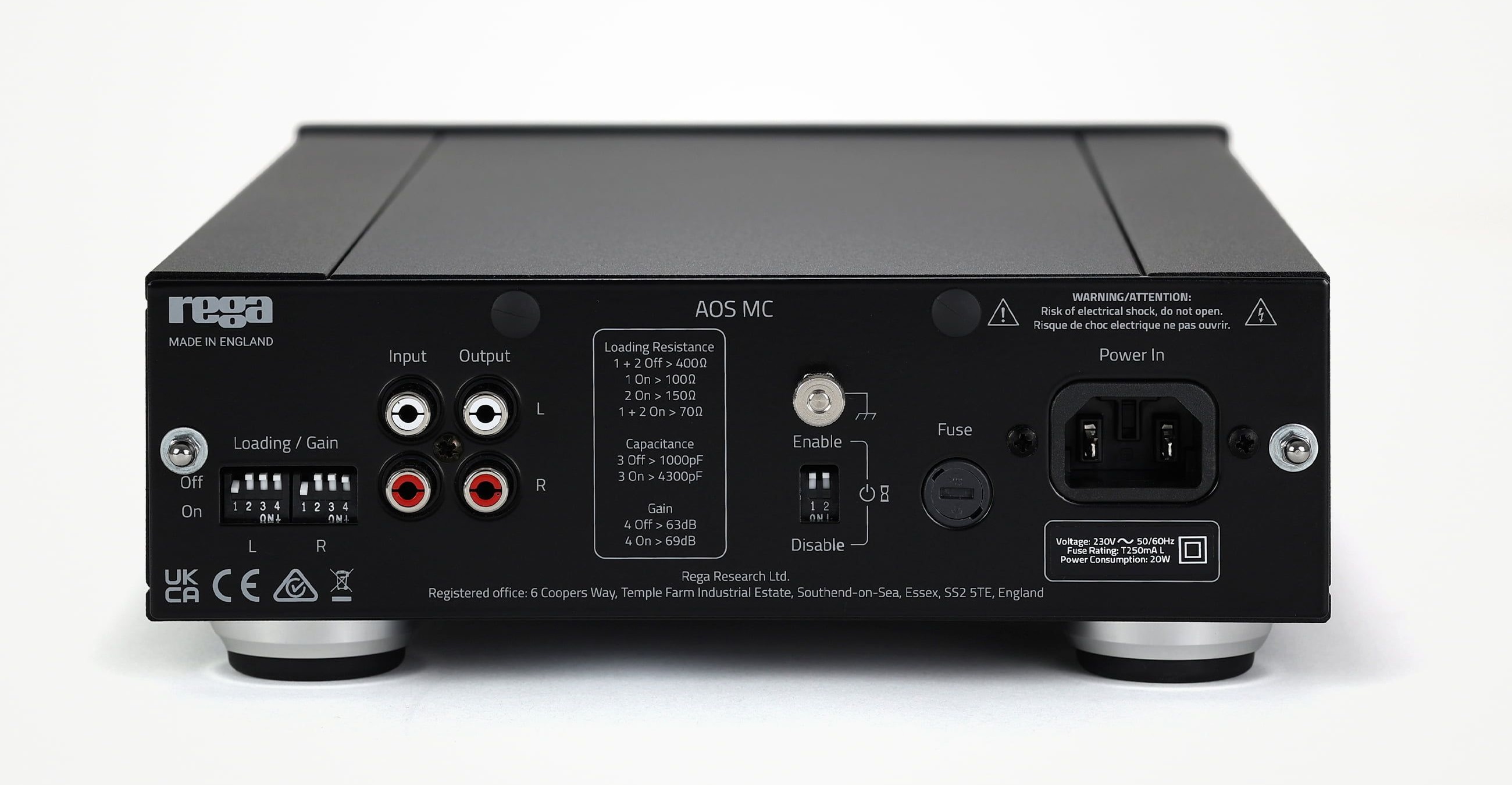
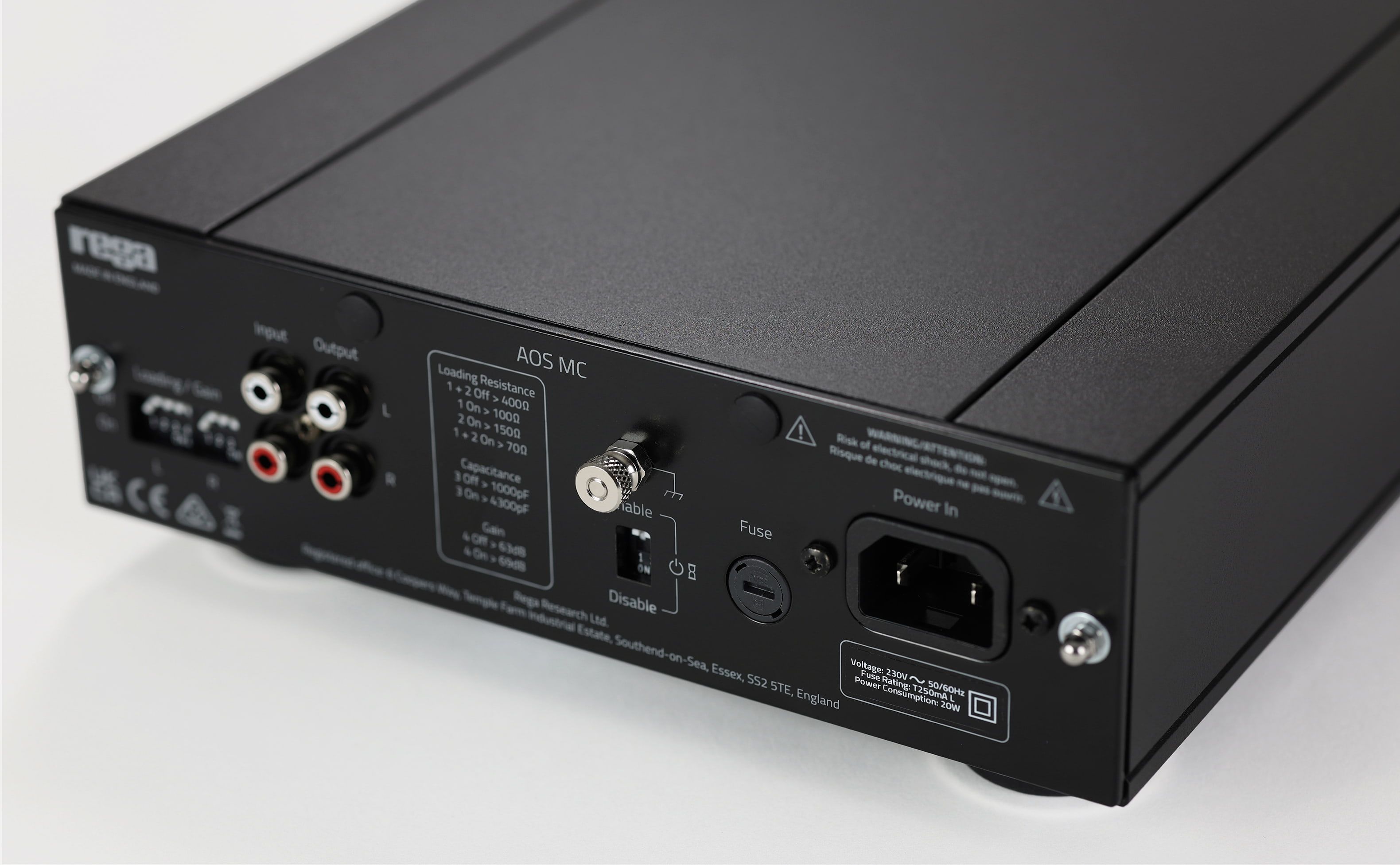
Unlike a moving-magnet cartridge, an MC cartridge generally produces a much lower voltage and therefore needs considerably more gain before it can feed a conventional line input. The AOS MC offers rear-panel input-sensitivity adjustment in 6dB increments, giving the installer scope to select a gain setting appropriate to the cartridge’s output. This is valuable because too little gain can leave a system sounding quiet and force excessive use of the main amplifier’s volume control; too much can reduce available headroom and make gain structure unnecessarily awkward.
The right setting is not simply the highest one. A cartridge with a very low output may need more amplification than one with a higher output, but the final choice also depends on the sensitivity of the following preamplifier or integrated amplifier, the listening level required and the available headroom in the system. Rega has not stated the AOS MC’s absolute gain figures, so prospective buyers will need to consult the final manual or dealer guidance when matching a particular cartridge.
Resistive loading is adjustable from 70 ohms to 400 ohms. In basic terms, the selected input resistance forms part of the electrical load seen by the cartridge generator. Cartridge manufacturers commonly recommend a loading value or range, and that guidance is the sensible starting point. The 70-400 ohm range should cover many MC cartridge recommendations, but it is not infinitely variable and it will not suit every possible recommendation exactly. Its usefulness lies in offering meaningful options without resorting to outboard plugs, bespoke loading resistors or a fixed factory value.
The AOS MC also provides capacitive loading choices between 1,000pF and 4,300pF. Capacitance is usually discussed more often in moving-magnet set-up, where cable and input capacitance can have a pronounced effect on the upper-frequency electrical resonance. It can still form part of the overall interface in MC systems, however. Rega’s inclusion of selectable capacitance expands the adjustment available to the user, though the best setting should be guided by the cartridge manufacturer’s advice rather than altered indiscriminately.
A two-stage Class A circuit with FET input devices
At the heart of the AOS MC is a two-stage amplifier architecture. Rega says the first stage is a symmetrical complementary Class A circuit using ultra-low-noise Field Effect Transistors from Linear Systems, arranged as a composite pair with parallel-connected devices. In an input stage for an MC cartridge, noise performance is particularly important: any noise introduced at this point is amplified along with the musical signal through the rest of the phono stage and system.
Field Effect Transistors are often used in sensitive audio input circuits because of their operating characteristics. Rega’s stated reason here is especially relevant to MC cartridge operation: the FET implementation ensures that no bias current flows through the cartridge coil. The company says this preserves the cartridge’s delicate magnetic geometry. In practical terms, Rega is seeking to avoid an input arrangement in which DC conditions could interact with the cartridge generator.
The company also says there are no coupling components between the cartridge output and the input-stage FETs. Coupling capacitors are commonly used to block DC between circuit sections, but any component placed directly in such a low-level signal path becomes a design decision with potential electrical and sonic consequences. Rega’s direct-coupled input arrangement is intended to reduce that component count. This requires careful control of circuit operating conditions, which helps explain the inclusion of a self-regulating servo system to compensate for changes in ambient and operating temperature.
Temperature stability matters in Class A circuitry because device operating points can shift as components warm up. Class A operation means the active devices remain conducting rather than switching on and off with the waveform, an approach often selected for its linear operating behaviour. It also generates more heat and demands stable bias control. Rega’s servo is intended to regulate the circuit as conditions change, rather than leave performance dependent on a narrow temperature window.
Split RIAA equalisation: passive high frequencies, active low frequencies
A phono stage does two jobs: it raises the tiny cartridge signal to line level and applies RIAA equalisation. Records are cut with bass reduced and treble boosted according to the standard RIAA curve, allowing longer playing times and reducing the physical challenges of cutting large low-frequency groove excursions. During playback, the phono stage must apply the complementary response, restoring bass and reducing treble by the correct amount.
Rega says the AOS MC’s first stage drives the passive high-frequency section of its RIAA network. Its second stage is a symmetrical differential Class A circuit with a common-base driver stage, and acts as the active amplifier for the low-frequency part of the RIAA equalisation. Splitting equalisation duties between passive and active sections is a recognised circuit approach. In broad terms, a passive network attenuates selected frequencies between gain stages, while active equalisation uses the amplifier’s feedback and gain network to shape response. The exact result depends on the implementation, component tolerances and gain structure rather than the topology label alone.
Rega specifies a frequency response from 17.5Hz at -3dB to 100kHz at -0.2dB. It also claims RIAA accuracy better than ±0.2dB from 65Hz to 70kHz, measured into a 100kΩ output load. RIAA accuracy is important because deviations from the intended replay curve can alter tonal balance: too much or too little correction at either end of the band can change bass weight, treble energy and the perceived balance of a recording. The stated ±0.2dB figure over that wide span indicates a tightly controlled equalisation target, although it remains a manufacturer specification rather than an independent measurement.
System considerations and day-to-day use
The AOS MC will require a turntable fitted with a moving-coil cartridge and an amplifier or preamplifier with a suitable line-level analogue input. It is not presented as a phono stage for moving-magnet cartridges, so owners of MM designs, or MC cartridges used through a step-up transformer into an MM input, should confirm compatibility before considering it.
Set-up should begin with the cartridge maker’s recommended load and the lowest gain setting that permits comfortable listening levels with sensible volume-control range. From there, changes should be made methodically, one setting at a time. The rear-panel location of the controls suggests that the AOS MC is designed as a fit-and-set component rather than one for frequent on-the-fly changes. That is entirely reasonable for cartridge loading, which should normally be established during installation rather than adjusted track by track.
Placement remains important with any phono stage. Keeping the AOS MC away from large power transformers, mains blocks, network hardware and other potential sources of electromagnetic noise is good practice, as is routing the tonearm cable away from mains leads where possible. The chassis is designed to reject RFI, but careful installation remains the first line of defence with microvolt-level cartridge signals.
Rega has included automatic standby, which puts the AOS MC into sleep mode after a period without signal. This can be disabled using small switches on the rear panel. The feature may be useful for owners who prefer equipment not to remain powered continuously, while the defeat option accommodates those who want the unit permanently active. Rega offers a lifetime warranty on the AOS MC.
What remains to be confirmed
The announcement establishes the AOS MC as a serious, dedicated MC phono stage with a clearly stated design direction: low-noise FET input circuitry, two Class A gain stages, split RIAA equalisation and meaningful cartridge adjustment in a compact enclosure. It should be of particular interest to MC users who want more flexibility than a fixed-loading phono input can offer, without moving to a digitally controlled platform.
However, price and delivery information have not yet been announced. Rega has also not supplied full details of gain values, dimensions, power consumption, input and output socket types, or the available loading steps. Those details will be important in determining how the AOS MC compares in practical system terms with other dedicated MC phono stages, and in confirming the best match for a specific cartridge and amplifier.