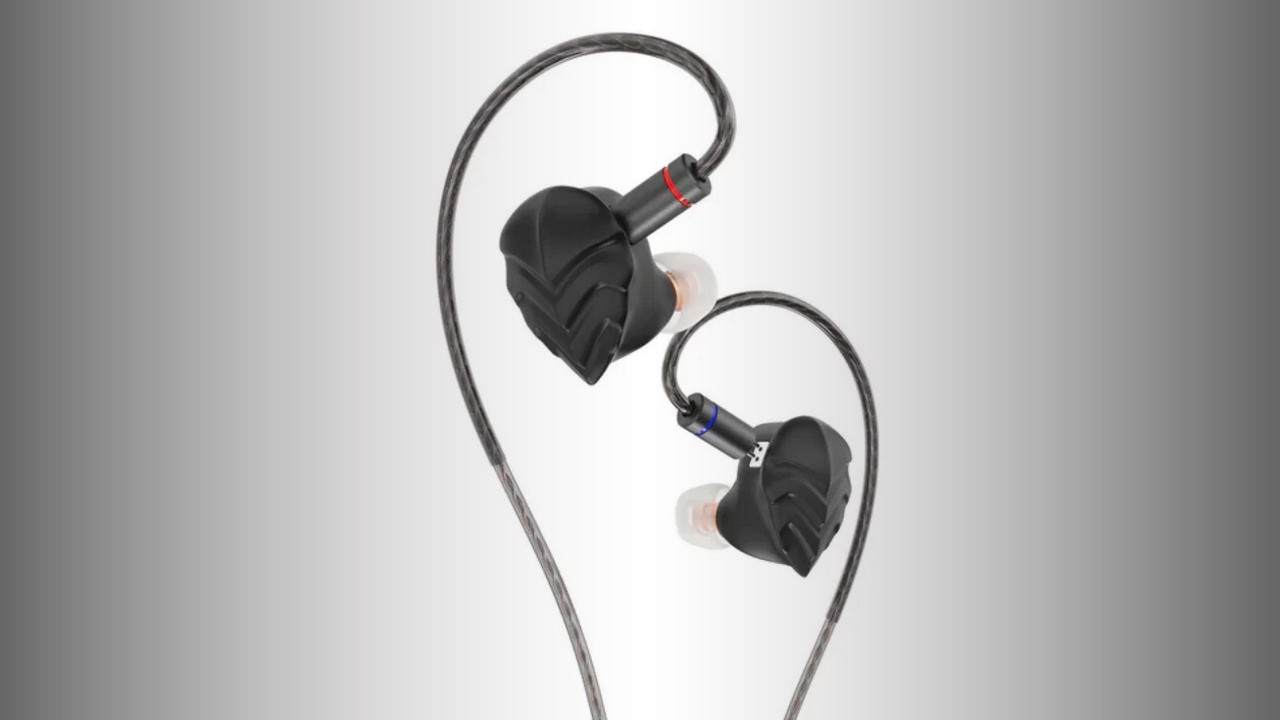
Hidizs has introduced the MK12 Turris, a wired in-ear monitor built around a large 12mm dynamic driver, interchangeable acoustic filters and a detachable two-pin cable. The headline feature is not simply its magnesium-dome driver, but the ability to alter the earphones’ tonal balance without DSP, an app or an EQ profile: three supplied filters are intended to provide treble-forward, balanced and bass-emphasised presentations.
That makes the MK12 Turris an interesting proposition for listeners who use one pair of IEMs across varied music, sources and environments. A bassier tuning may be welcome on a noisy commute, for example, while a more even balance can be the sensible starting point for home listening. The earphones are also specified at 32 ohms and 111dB sensitivity, suggesting that they should be relatively easy to drive from a phone, portable player or compact USB DAC/headphone adaptor, rather than requiring a dedicated high-power desktop amplifier.
The Turris name is inspired by Turritopsis dohrnii, a jellyfish often associated with regenerative ability. In practical hi-fi terms, however, the important details are the driver, filter system, housing materials and connection options.
A 12mm magnesium-dome dynamic driver
At the centre of the MK12 Turris is a 12mm dynamic driver using an M-shaped dome said to be 91% pure magnesium. Dynamic drivers operate rather like miniature loudspeaker drive units: a diaphragm is moved by a voice coil within a magnetic field, producing sound pressure in the sealed volume of the ear canal. They remain the most common IEM driver type because a single full-range driver can deliver coherent bass, midrange and treble without the crossover networks required by multi-driver designs.
A 12mm diaphragm is relatively large by IEM standards. All else being equal, greater radiating area can make it easier for a driver to move enough air at low frequencies, which is relevant to bass extension and perceived physical weight. It does not, by itself, guarantee deeper or better-controlled bass: enclosure tuning, diaphragm behaviour, magnetic motor design, acoustic damping and, crucially, the seal created by the eartips all matter. But it explains why Hidizs has chosen a single-driver approach rather than relying on several smaller drivers to cover the audible range.
Magnesium is a notable diaphragm material because it combines low mass with stiffness. In broad engineering terms, a light diaphragm can start and stop quickly, while stiffness helps it resist bending modes that can add unwanted coloration as frequency rises. The precise acoustic result depends on the entire driver assembly, so it would be premature to draw listening conclusions from the material alone. Still, magnesium is a more purposeful choice than treating the diaphragm as an inconsequential cosmetic specification.
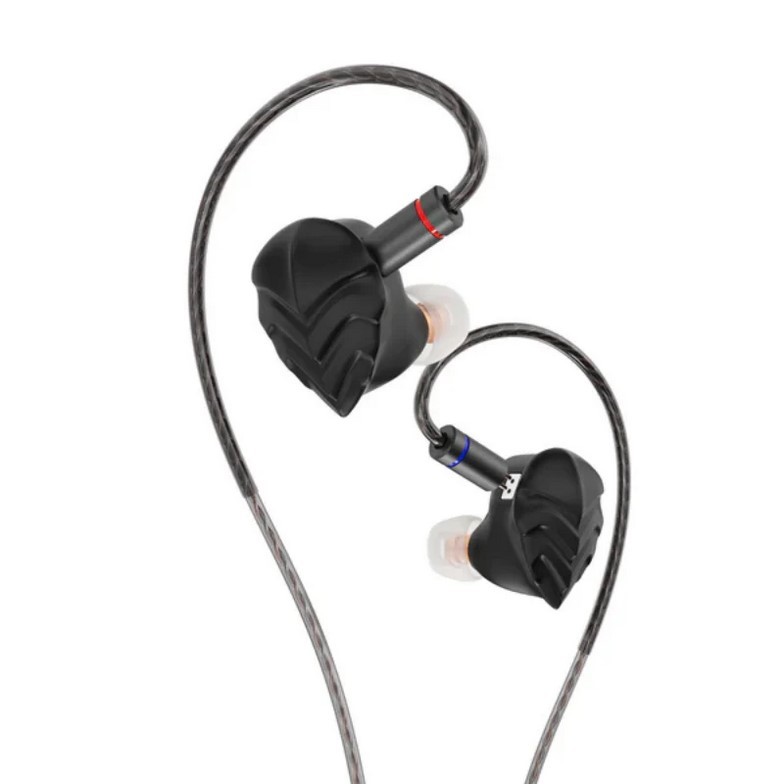
Hidizs specifies a 1.5T external-magnet system. A powerful motor can provide strong control over the voice coil and diaphragm, and is commonly associated with sensitivity and transient responsiveness when the system is engineered well. The company also claims low distortion, although it has not supplied a distortion measurement or test conditions in the information provided, so there is no meaningful figure to compare with other IEMs.
The claimed frequency response is 10Hz–45kHz. The lower figure should be read as an indication of the driver’s claimed extension rather than a promise that every listener will hear usable 10Hz output; fit and seal have an enormous effect below roughly 100Hz in an IEM. Similarly, 45kHz lies beyond conventional human hearing. Such figures do not independently establish sound quality, but they indicate that Hidizs is positioning the driver as a wide-bandwidth design.
Three acoustic filters, with nine possible combinations
The MK12 Turris includes three replaceable acoustic filters: silver, rose gold and red. Hidizs describes the silver option as treble-emphasised and suited to classical music, the rose-gold filter as balanced, and the red version as offering richer bass. In the specification list, these are described as high-pass, balanced and low-pass filters respectively.
It is worth clarifying what this sort of filter normally means in an IEM. These are not active electronic filters in the conventional sense; rather, interchangeable nozzle or acoustic-filter parts alter the acoustic resistance, damping or path at the front of the driver. This can change how the earphone’s output is balanced across parts of the frequency range. The exact mechanical construction and measured response of the MK12 filters have not been supplied, so their degree of adjustment cannot be quantified from the available information.
Nevertheless, physical tuning is useful because it remains in effect regardless of source. A listener moving between a smartphone, a portable player and a desktop DAC does not need to rely on compatible software or carry separate EQ profiles. It can also be preferable for those who want to preserve a simple, direct signal path. The trade-off is that changing a filter is less immediate than changing EQ, and the three supplied profiles cannot offer the fine-grained control of carefully applied parametric equalisation.
The package also includes three types of eartip, producing what Hidizs calls nine sound-signature options when combined with the filters. Eartips are not an afterthought. Their bore diameter, material, insertion depth and ability to seal the ear canal can all change the final tonal balance. A poor seal will usually reduce bass substantially, while a wider-bore tip can alter the balance of upper-midrange and treble compared with a narrow-bore alternative. Before judging the filter system, owners should try the supplied tip sizes and materials carefully, using the same track and listening level.
Aluminium construction, with a titanium collector’s edition
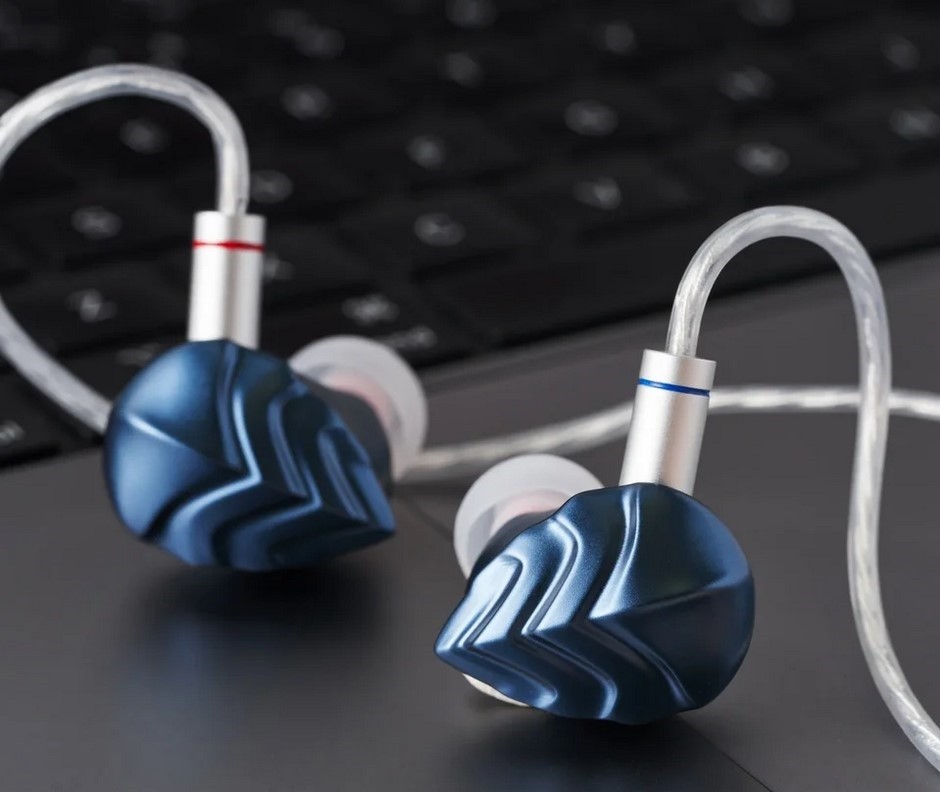
The standard MK12 Turris housing is CNC-machined from aluminium alloy. CNC machining is well suited to IEM shells because it allows consistent, precisely shaped enclosures with a more substantial feel than moulded resin or plastic designs. Aluminium also keeps weight low, an important consideration where the earphone is supported by the outer ear over long sessions.
Hidizs also offers a collector’s version with a titanium housing in a gradient finish. Titanium is stronger than aluminium for a given mass and is commonly used where durability and a premium metal finish are priorities. The company says the titanium acts as a natural damper to reduce resonance. Housing material and rigidity can indeed influence an earphone’s mechanical behaviour, though the audible outcome depends on the housing geometry, internal damping and driver mounting as much as the metal selected.
The draft describes each earpiece as not exceeding 10g without cable, while the supplied specification list gives a weight of approximately 19g without cable. These figures do not agree, and it is not clear whether the latter refers to a pair, a different housing version or an error in the supplied details. Prospective buyers who regard weight as decisive for fit should confirm the applicable figure with Hidizs or their retailer.
Comfort will ultimately depend on ear shape, nozzle length, tip choice and cable routing as well as the shell’s mass. The compact all-metal approach should be attractive to listeners who want a robust portable IEM, but metal housings can be more sensitive to handling noise if their cable or fit is not well managed. That is another reason to use the over-ear cable routing and achieve a stable insertion.
Detachable two-pin cable and portable-source compatibility
The supplied 1.2m cable uses silver-plated oxygen-free copper conductors in a twisted-pair arrangement, terminating in a standard 0.78mm two-pin connector at the earphone end. The removable cable is one of the MK12’s more practical features. Cables are exposed to daily wear at plugs, strain-relief points and around the ear, so replaceability can extend an IEM’s service life. It also gives owners the option of changing termination or ergonomics without replacing the earphones themselves.
The twisted geometry is intended to help reject interference, while silver plating is frequently used in headphone cables. Claims about increased detail or reduced signal loss should be treated cautiously: with short headphone cables, fit, driver tuning and source quality will have far greater influence on the sound than conductor marketing. The more immediate benefits here are the detachable standard connection and the availability of different plugs.
Hidizs offers 3.5mm and 4.4mm gold-plated connector options. The 3.5mm version is the natural choice for conventional single-ended headphone outputs, including many phones with adapters, laptops and portable DACs. The 4.4mm Pentaconn option is aimed at portable and desktop sources with a balanced headphone output. Balanced headphone connections can offer greater available voltage or power on some compatible devices, but the benefit depends entirely on the source’s circuit design; the connector alone does not make an earphone sound better.
With a rated 32-ohm impedance and 111dB sensitivity, the MK12 Turris should not be a difficult electrical load for most modern portable sources. That is useful for travel and work use, where a small USB DAC adapter may be preferable to carrying a separate amplifier. Sensitive IEMs can, however, reveal background hiss from noisier headphone stages, so a low-noise source remains desirable. Owners should also begin at low volume, particularly when moving to a more powerful balanced output.

Who the Hidizs MK12 Turris is for
The MK12 Turris is aimed at the listener who wants a single, full-range dynamic-driver IEM but does not want to be locked into one fixed factory tuning. Its filter system and supplied eartips offer a useful degree of adjustment without turning the product into a software-dependent device, while the 0.78mm two-pin connection and 3.5mm or 4.4mm plug choices make it straightforward to integrate with portable and desktop headphone systems.
Its most compelling feature on paper is the combination of a large magnesium-dome driver and physical tuning options in a compact metal housing. The key limitation is equally clear: without published filter-response plots, distortion data or independent listening and measurement work, the magnitude and character of the three filter changes remain to be established. For buyers, that makes correct fit, careful experimentation with the tips and filters, and choosing the appropriate plug for the intended source the sensible route to getting the best from the design.
Hidizs MK12 Turris specifications
- Type: In-ear headphones
- Driver: 12mm dynamic
- Diaphragm: M-shaped magnesium dome, 91% purity
- Magnetic system: External magnets, 1.5T
- Housing: Aluminium alloy; titanium in the collector’s version
- Replaceable filters: Treble-emphasised/high-pass, balanced and bass-emphasised/low-pass
- Cable: Silver-plated oxygen-free copper, twisted pair
- Earphone connector: Detachable 0.78mm two-pin
- Cable length: 1.2m
- Source connectors: 3.5mm or 4.4mm, gold-plated
- Sensitivity: 111dB
- Impedance: 32 ohms
- Frequency range: 10Hz–45kHz
- Weight: Approximately 19g without cable (note: this conflicts with the separate supplied claim of no more than 10g per earpiece)