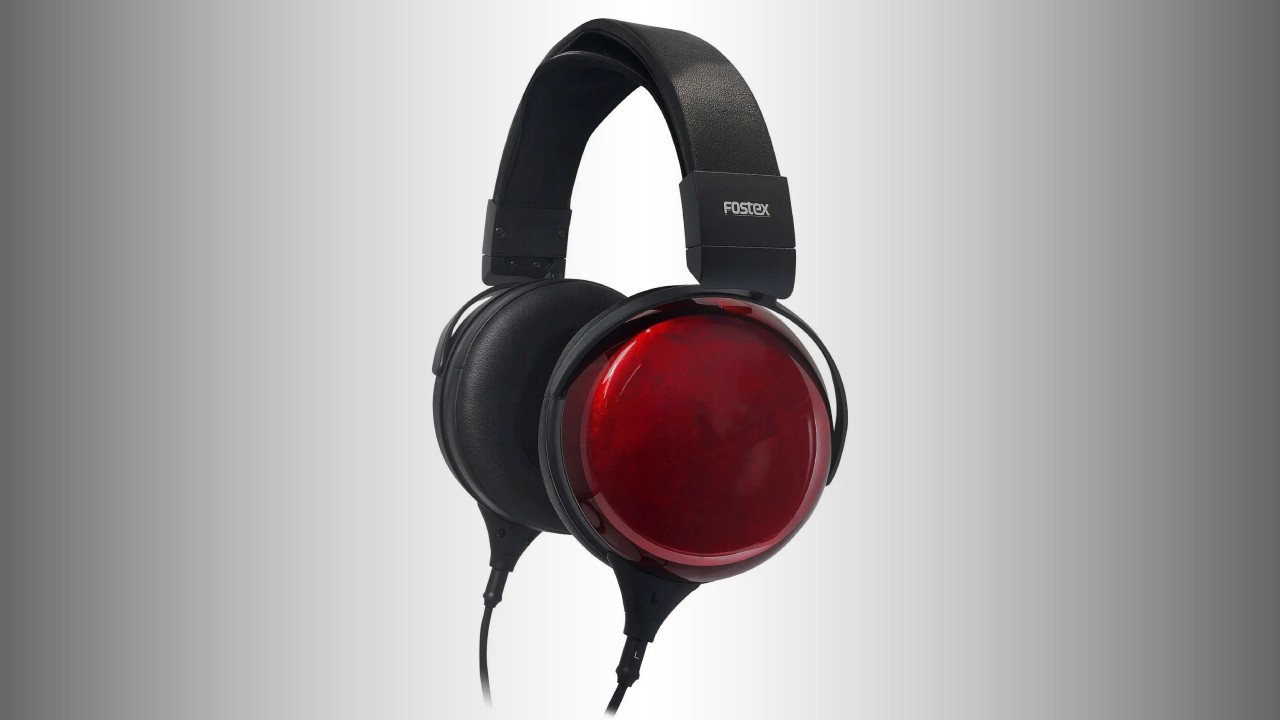
Fostex’s TH910 is a new closed-back, full-size headphone that develops the company’s long-running TH900 design language in a more comprehensively revised package. Its appeal is not simply the striking Japanese urushi-lacquered woodwork: Fostex has also specified a revised 50mm BioDyna dynamic driver, redesigned pads, lighter magnesium-alloy mechanical parts and a low 25-ohm nominal impedance.
That combination places the TH910 firmly in the premium wired-headphone category. It is a conventional dynamic design rather than a planar magnetic or electrostatic model, but one executed with unusually elaborate materials and finishing. For the listener, the key questions will be how its closed enclosure, efficient electrical load and supplied single-ended cable fit into an existing headphone system—and whether its luxury construction suits the intended use.
A revised BioDyna driver at the centre
The TH910 uses a 50mm dynamic driver with a neodymium magnet and Fostex’s BioDyna diaphragm. BioDyna is the company’s proprietary biocellulose-based cone material. In a dynamic headphone, the diaphragm must be light enough to start and stop quickly, yet sufficiently rigid and internally well damped that it does not break up in unwanted ways as frequency rises. Material selection is therefore fundamental to both tonal balance and perceived definition.
Fostex says the driver’s suspension has been revised to improve vibration stability and control at low frequencies. The suspension is the part of the driver assembly that centres and supports the moving diaphragm and voice coil. Better control here is intended to help the diaphragm move in a more predictable manner, especially during larger bass excursions. Fostex describes the expected result as defined, precise bass, natural and clear midrange reproduction, and expressive treble without excessive harshness. Those are manufacturer characterisations rather than independent listening findings, but the attention to diaphragm and suspension behaviour is significant: the driver itself, not only the earcup finish, is central to the TH910 update.
Its quoted frequency range is 12.5Hz to 40kHz. This figure identifies the claimed operating bandwidth, but it should not be treated as a complete description of tonal balance or extension in use; no tolerance window or frequency-response graph is supplied here. Fit, pad seal and the output impedance of the connected amplifier can all influence what a closed-back headphone ultimately sounds like at the ear.
Closed-back architecture, magnesium hardware and maple cups
As a closed dynamic headphone, the TH910 uses sealed earcups rather than the open grille architecture common to many reference designs. A closed enclosure can be the more practical choice for domestic listening where some reduction of outward sound leakage is desirable, or where the listener wants less intrusion from the room. It also means that the internal volume, cup material and pad seal play important roles in the final acoustic behaviour. A poor seal around the jaw or glasses, for example, commonly reduces perceived bass in closed headphones.
Fostex has made the cup bases and holders from magnesium alloy. The company says this reduces the weight of the relevant structure by approximately 20% compared with aluminium. Magnesium is useful in a headphone mechanism because reducing mass around the yokes and cup supports can make a large over-ear design feel less cumbersome, while mechanical rigidity and resonance control remain important. The TH910’s quoted weight is approximately 385g without cable: not a lightweight portable headphone, then, but a figure that makes the revised support structure relevant for longer seated sessions.
Rubber gaskets are fitted at the rotation points. Their stated purpose is to damp parasitic vibration and provide a more stable fit. There is also a practical ergonomic dimension: cup pivots need to move smoothly enough to follow the shape of the wearer’s head, but should not feel loose or transmit unnecessary mechanical noise through the structure.
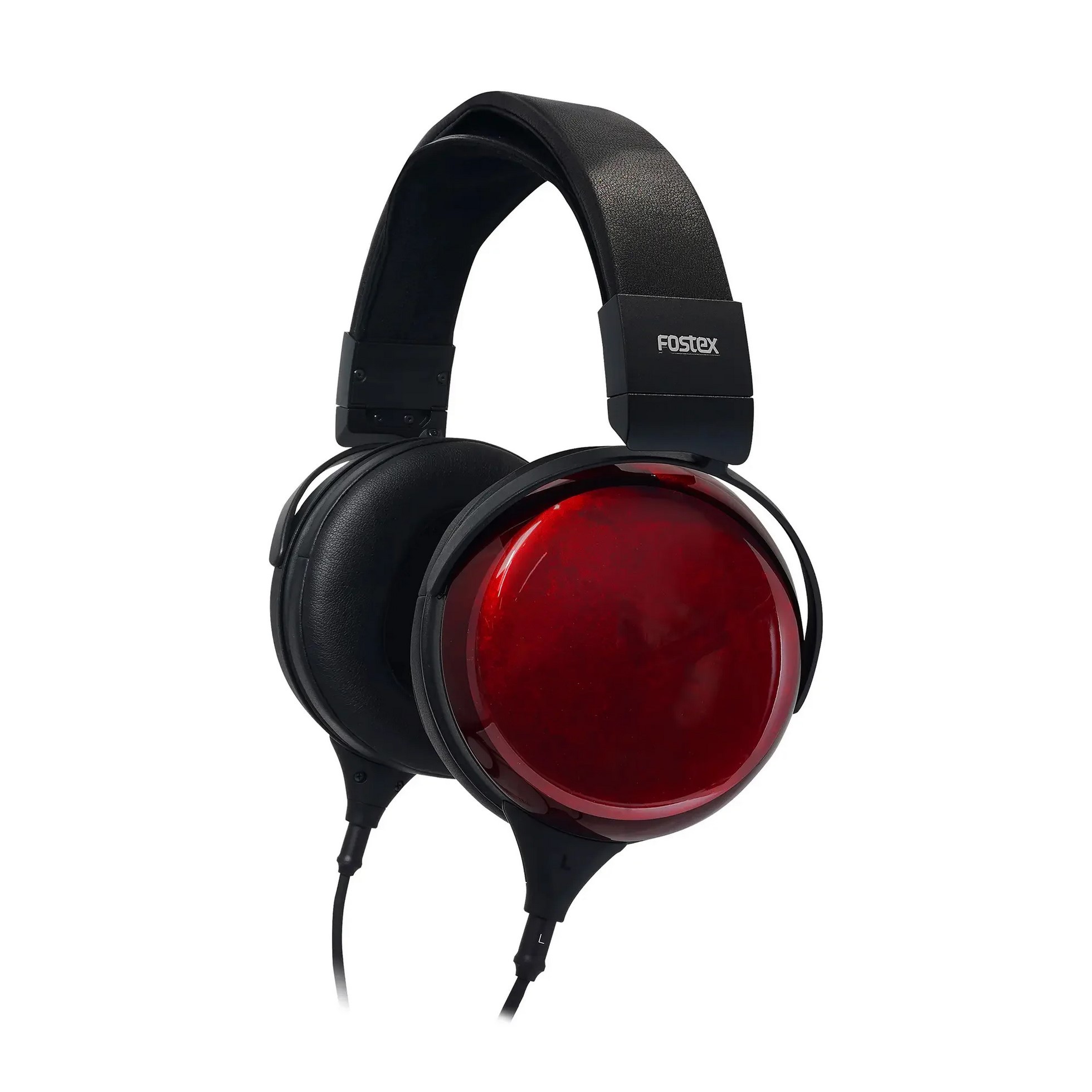
The exterior earcup housings are made from hard maple, then finished in traditional Japanese urushi lacquer using silver foil. The work is carried out by Sakamoto Otozo Shoten, a company founded in 1900. Urushi is a labour-intensive, multi-layer lacquer finish, and the TH910’s treatment is a notable contrast with the painted metal, moulded polymer or exposed-composite cups used by much of the modern headphone market.
Fostex says the dense wood and hard lacquer layers are intended to avoid unwanted coloration while retaining deep bass and transparent high frequencies. It is sensible to distinguish the two aspects of that claim. The visual result is clearly part of the product’s proposition, while acoustically the cup is one component in a larger system that includes the driver, internal damping, enclosure volume and pads. Fostex has not provided enclosure measurements or internal damping details, so those aspects cannot be assessed from the published specification alone.
Pad geometry matters as much as pad softness
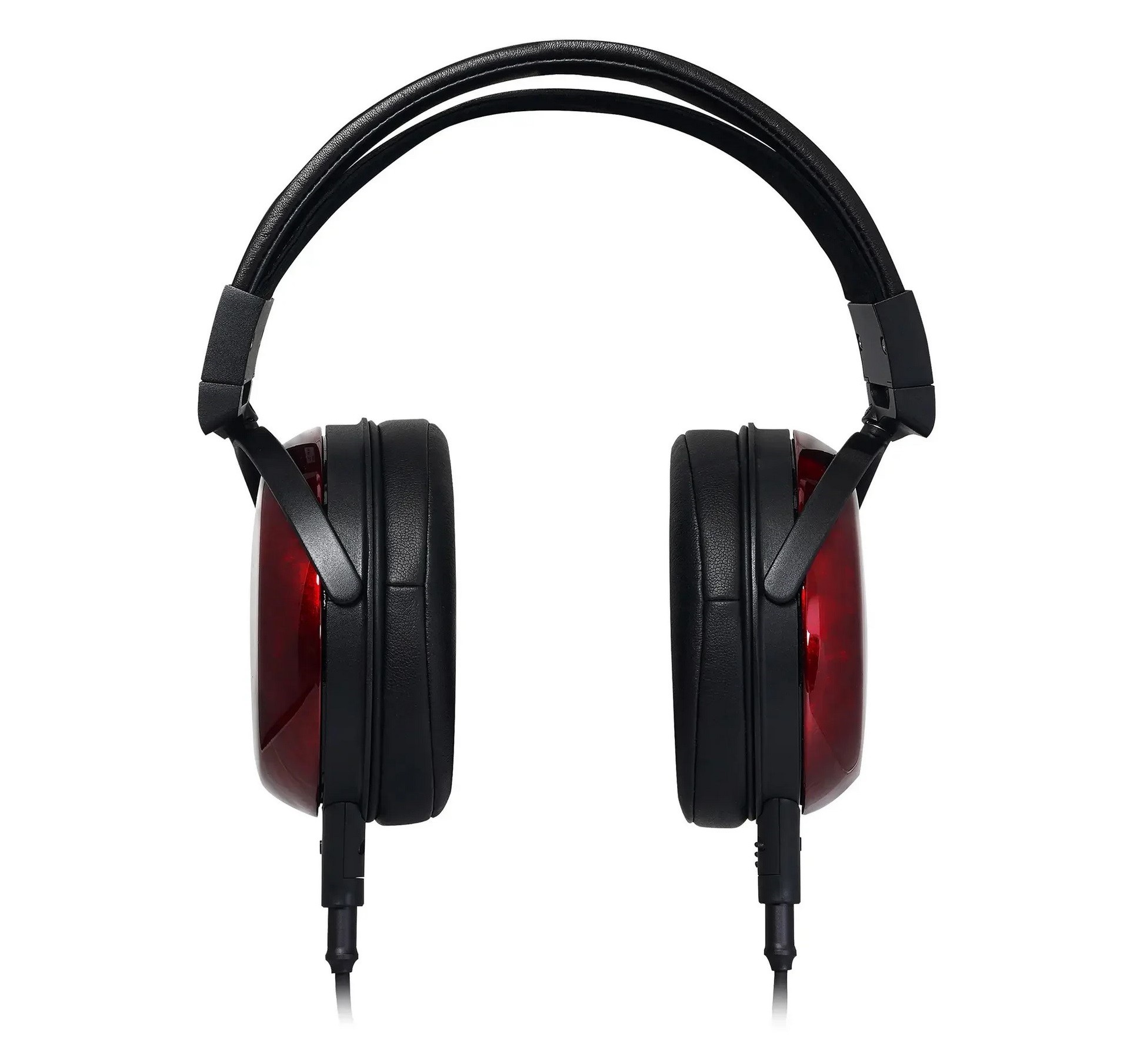
Fostex has given the TH910 new earpads with an angled contact plane. This is more than a comfort change. The angle can help the pads follow the head more closely and can alter the relationship between the ear and driver. In over-ear headphones, that relationship affects both the consistency of the seal and the acoustic path from diaphragm to ear, so a pad redesign can be consequential to the overall voicing.
The pads use two-layer urethane: a softer outer layer and a more elastic inner layer. In principle, this aims to combine a compliant skin-facing surface with enough structural support to maintain the cup position and seal. The exterior is a synthetic leather based on silk protein, which Fostex says is three times stronger than conventional materials. As with any leatherette-style pad, long-term comfort will depend on individual head shape, temperature and how effectively the pads maintain an even seal, but the specified construction addresses the usual competing demands of softness and support.
The headband and its underside cushion are finished in genuine sheepskin. Fostex says this keeps the band flexible and soft while spreading pressure more evenly. Given the 385g cable-free weight, sensible pressure distribution is likely to matter more than an impressive materials list alone. Prospective owners should also remember that pads are acoustically functional parts, not merely consumables: replacing them with a different shape or material can materially change the sound and fit of a closed-back headphone.
Amplifier matching and cable connection
The TH910 is rated at 25 ohms and 100dB/mW sensitivity. A 25-ohm headphone does not demand the high voltage swing associated with many high-impedance models, while 100dB/mW is a relatively efficient rating on paper. In practical terms, the TH910 should be capable of reaching useful levels from a broad range of dedicated headphone outputs. That does not automatically mean every phone, laptop or compact dongle will deliver the same control or noise performance, however.
Low-impedance headphones can draw more current than high-impedance alternatives at a given voltage, so a headphone amplifier with a competent low-impedance output stage remains desirable. The amplifier’s output impedance is also worth considering. As a general rule, a low output impedance helps minimise the chance that a headphone’s varying impedance behaviour will affect its frequency response. Fostex does not state a recommended amplifier power or output-impedance range in the information supplied, so buyers should not assume a precise power requirement from the 1,800mW maximum input figure. That is a maximum input rating, not a recommendation for normal listening power.
The supplied 2m detachable cable uses two 3.5mm two-pole connectors at the earcups and terminates in a 6.3mm three-pole plug, with a gold-plated 6.3mm adaptor included. This is an unbalanced, or single-ended, connection intended for the standard 6.3mm headphone sockets found on many desktop amplifiers, integrated amplifiers and headphone DACs. Its two-metre length favours an armchair or desk system over portable use.
Fostex specifies 7N oxygen-free copper—99.99999% purity—for both the cable and internal wiring, and says this is intended to minimise signal loss and distortion. The more immediate ownership benefit is that the cable is detachable, rather than permanently fixed to the cups. Fostex also says it plans to release a standard balanced cable with a 4.4mm plug in future. A balanced cable would be relevant only for an amplifier with a compatible 4.4mm balanced headphone output; it should not be connected to a single-ended socket through an inappropriate adaptor.
Who the Fostex TH910 is for
The TH910 looks most compelling for a listener seeking a statement closed-back headphone for a dedicated wired system, particularly one who values Japanese craft as highly as conventional driver engineering. Its low impedance and 100dB/mW sensitivity should make it less restrictive in amplifier choice than some specialist high-impedance designs, while the supplied 6.3mm termination makes a desktop headphone amplifier, DAC/headphone amp or integrated amplifier’s headphone output the natural starting point.
Its trade-offs are inherent to the format and the published package. At around 385g before its cable is attached, it is primarily a full-size listening headphone rather than a lightweight travel model. The supplied cable is single-ended, so users committed to a 4.4mm balanced setup will need to wait for Fostex’s planned cable or investigate a correctly wired compatible alternative. And while the urushi and silver-foil cups are likely to be a major attraction, such an elaborate finish may encourage more careful handling than a utilitarian plastic portable design.
What distinguishes the TH910 is the attempt to treat mechanical construction, wearing interface and acoustic driver development as connected parts of one design. The revised BioDyna driver and suspension address the sound-producing mechanism; the angled, dual-density pads address fit and seal; magnesium components and rubber gaskets address support and vibration; and the lacquered maple cups bring Fostex’s traditional craft identity to a modern closed-back platform. Final judgement will require independent listening and, ideally, confirmation of pricing, availability and balanced-cable timing, none of which has been provided in the current announcement.
Fostex TH910 specifications
- Type: Closed dynamic
- Driver: 50mm BioDyna cone with neodymium magnet
- Impedance: 25 ohms
- Sensitivity: 100dB/mW
- Maximum input power: 1,800mW
- Frequency range: 12.5Hz–40kHz
- Weight: Approximately 385g, without cable
- Supplied cable: 2m, 2 × 3.5mm (two-pole) to 6.3mm (three-pole, gold-plated), unbalanced, 7N high-purity copper