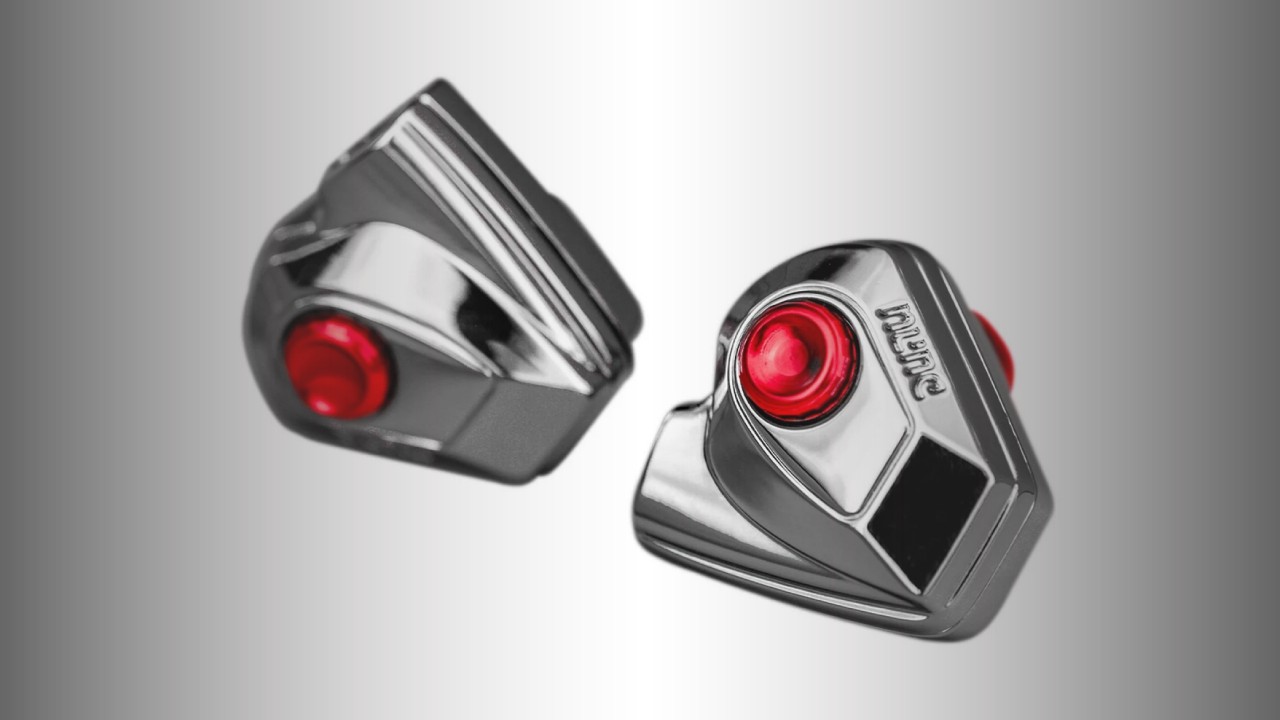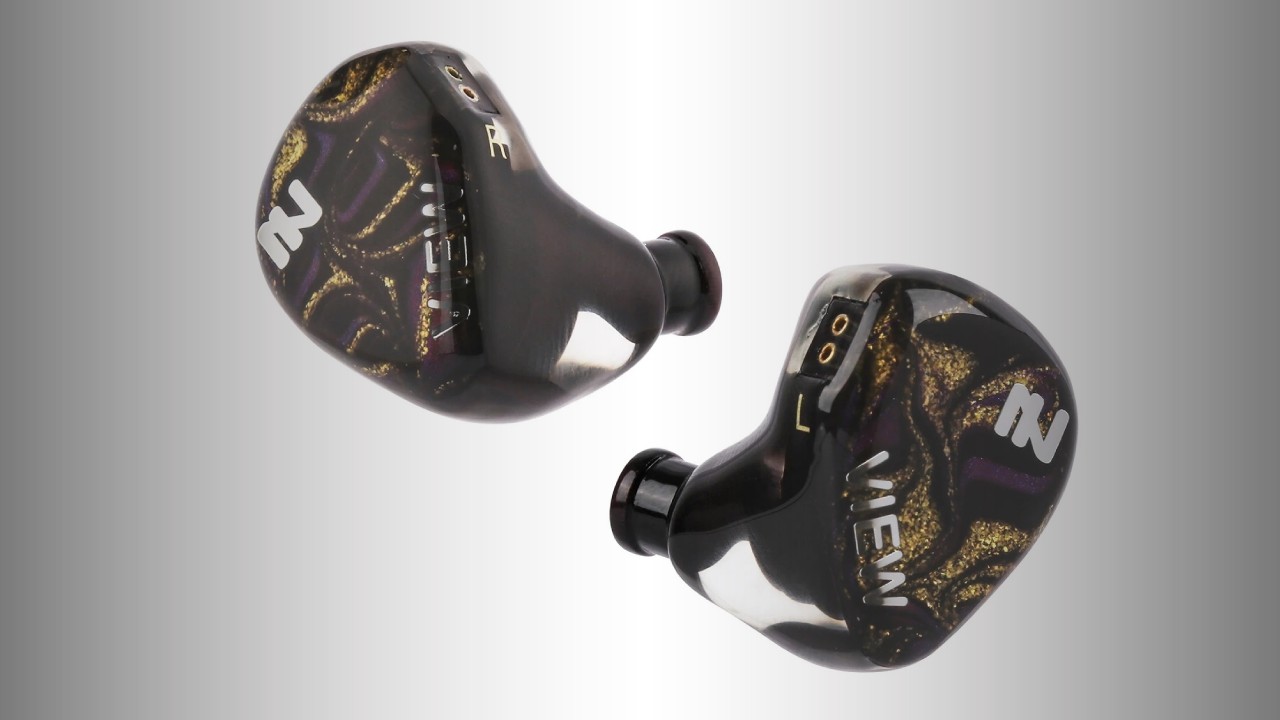
INTUAURA has introduced the Splendor II, the second generation of its Splendor single-driver dynamic earphones. Priced at $259, the new model combines distinctly decorative, hand-painted shells with a detachable 2-pin cable system and a low claimed impedance of 18 ohms.
The headline feature is not conventional amplifier hardware inside the earphones, but INTUAURA’s stated use of “Phantasm DSP DAC & AMP” technology as part of the acoustic and tuning development. The company says this work optimises the front-chamber volume, revises the driver design and smooths the final voicing. It also claims improved analytical ability alongside a softer sound than the previous Splendor.
Those are ambitious aims, particularly in a single-dynamic-driver design. A single driver avoids the electrical crossover and handover region required by multi-driver earphones, but it asks one diaphragm, motor system and acoustic enclosure to cover the entire audible range coherently. The quality of that acoustic implementation—rather than driver count alone—has a major bearing on the result.
A second-generation single-dynamic design
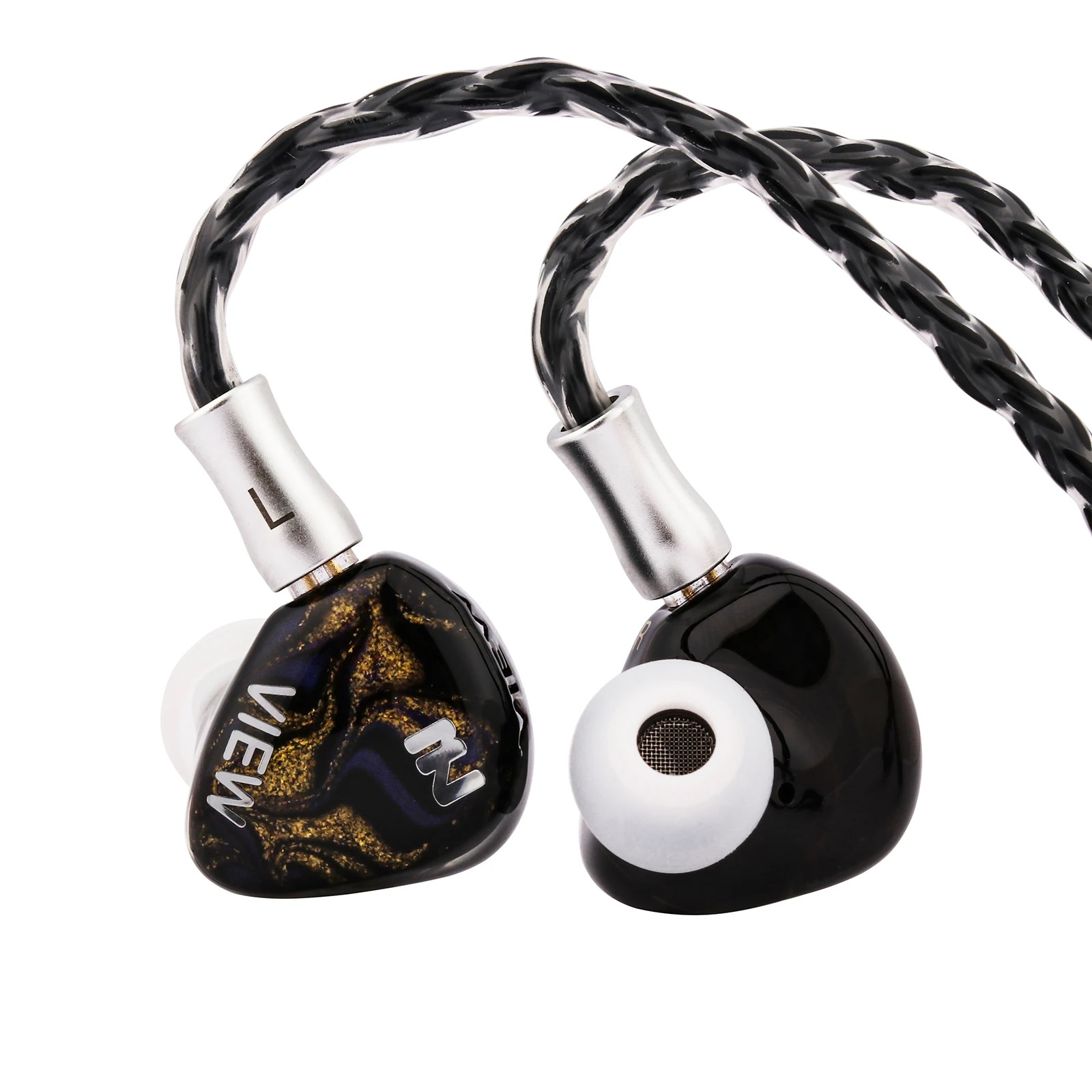
Splendor II uses what INTUAURA describes as a double-sided composite alloy shell, with a diaphragm said to be similar to beryllium metal. The wording does not confirm a pure beryllium diaphragm, and that distinction matters: beryllium is a costly material whose stiffness-to-mass ratio has made it attractive for diaphragms, while “beryllium-like” or beryllium-inspired constructions can refer to a range of coatings, alloys and composite approaches. The manufacturer has not supplied further detail on the diaphragm’s exact material or construction.
In principle, a light and rigid diaphragm can help a dynamic driver remain well controlled as frequency rises. Lower moving mass can aid acceleration and stopping behaviour, while stiffness helps resist breakup modes—unwanted resonances that can colour treble reproduction. Neither material description alone guarantees a particular sound, however. The surround, voice coil, magnet, damping, enclosure geometry and final acoustic tuning all remain fundamental.
INTUAURA also cites a high-performance magnetic circuit intended to provide precise control and optimised airflow. In a moving-coil driver, the magnetic assembly creates the field in which the voice coil moves. A well-engineered motor system can support more linear motion, while venting and airflow are part of controlling the air pressure behind and around the diaphragm. These details are especially relevant in compact earphone enclosures, where very small changes in chamber volume or venting can affect bass level, midrange balance and driver damping.
The company’s stated objective for the Splendor II is a sound that is both more analytical and smoother, with listening comfort central to the voicing. Those descriptions should be understood as manufacturer tuning intentions rather than independent listening findings. “Analytical” can imply clearer separation and more readily apparent low-level detail, while a smoother balance usually suggests an effort to prevent upper-midrange or treble energy becoming fatiguing. Whether the two are successfully reconciled depends on the final frequency balance and fit in the listener’s ear.
What Phantasm and AWCT appear to address
INTUAURA says its Phantasm DSP DAC & AMP technology optimises the front-chamber volume and redesigns the speaker structure to improve “true audio resolution”, with fine tuning intended to make operation smoother. The supplied information does not specify an onboard DAC, amplifier, digital input or battery, so this should not be interpreted as confirmation that Splendor II itself is a self-powered digital earphone. Rather, the description appears to refer to the company’s design and tuning methodology. Buyers looking for a USB-C DAC-equipped model should confirm the product’s exact configuration with their retailer before ordering.
The front chamber is the small acoustic space between the driver and the nozzle or sound outlet. Its volume, damping material and passages act as an acoustic filter. This is one of the principal ways an earphone designer can shape the relationship between bass, midrange and treble without relying on an electronic crossover. A change to that chamber can alter resonant frequencies and pressure behaviour, so INTUAURA’s emphasis on front-chamber optimisation is technically meaningful even though the company has not published dimensions or measurements.
AWCT is the brand’s name for a further audio-tuning technology intended to produce more realistic, textured detail. No technical expansion of the acronym or description of the process is provided in the launch information. It is therefore best treated as a proprietary tuning label, rather than a specification that can be directly compared with a known driver, DAC or crossover topology.
Hand-painted finish and detachable cabling
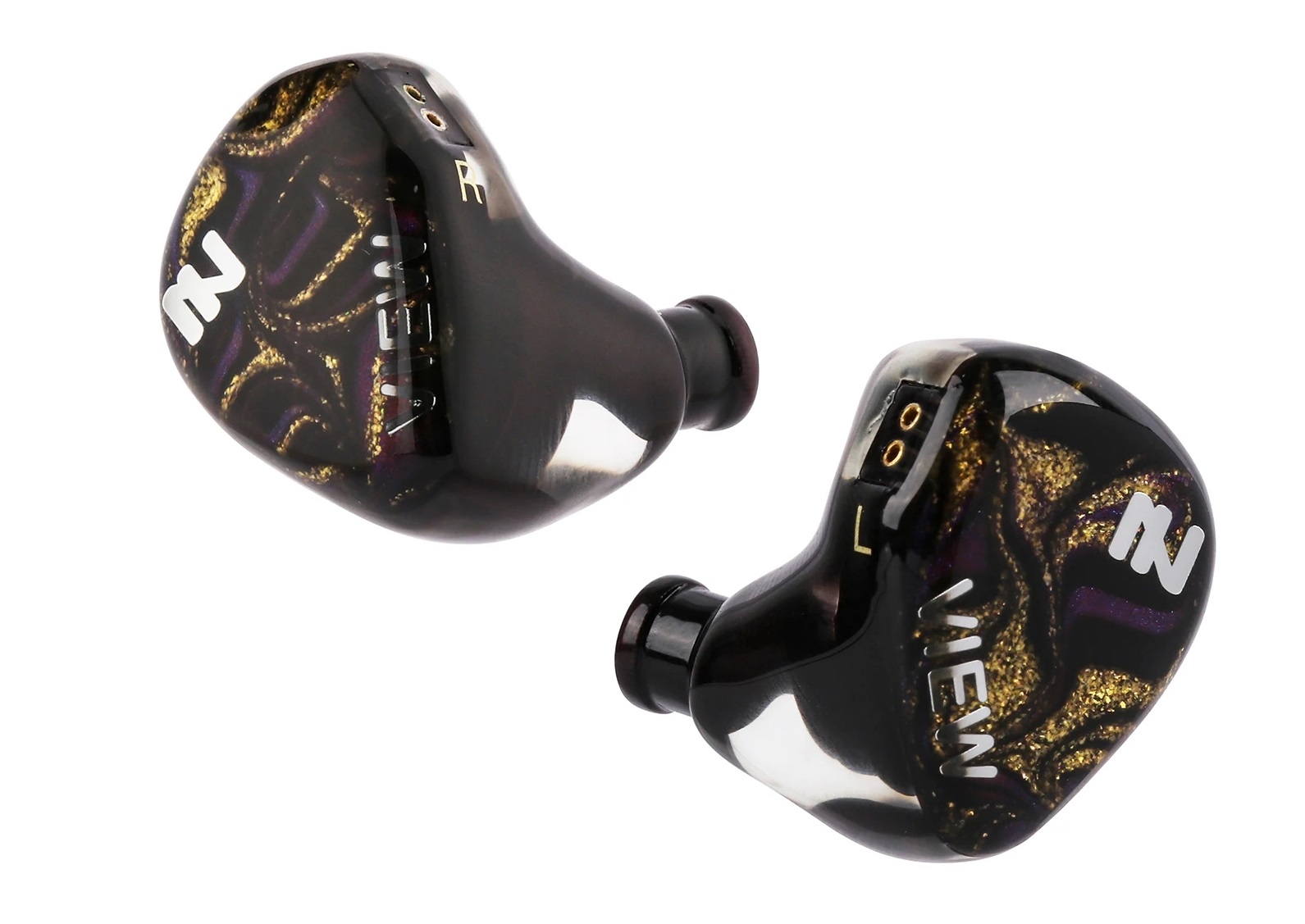
Visually, the Splendor II is unapologetically ornate. Each shell is hand-painted in a purple-to-blue gradient and finished with gold embellishments. At this price, that kind of finish is a meaningful point of differentiation from the more usual plain resin or machined-metal alternatives. Hand finishing can also mean minor cosmetic variation from one pair to another, which is often part of the appeal of this approach.
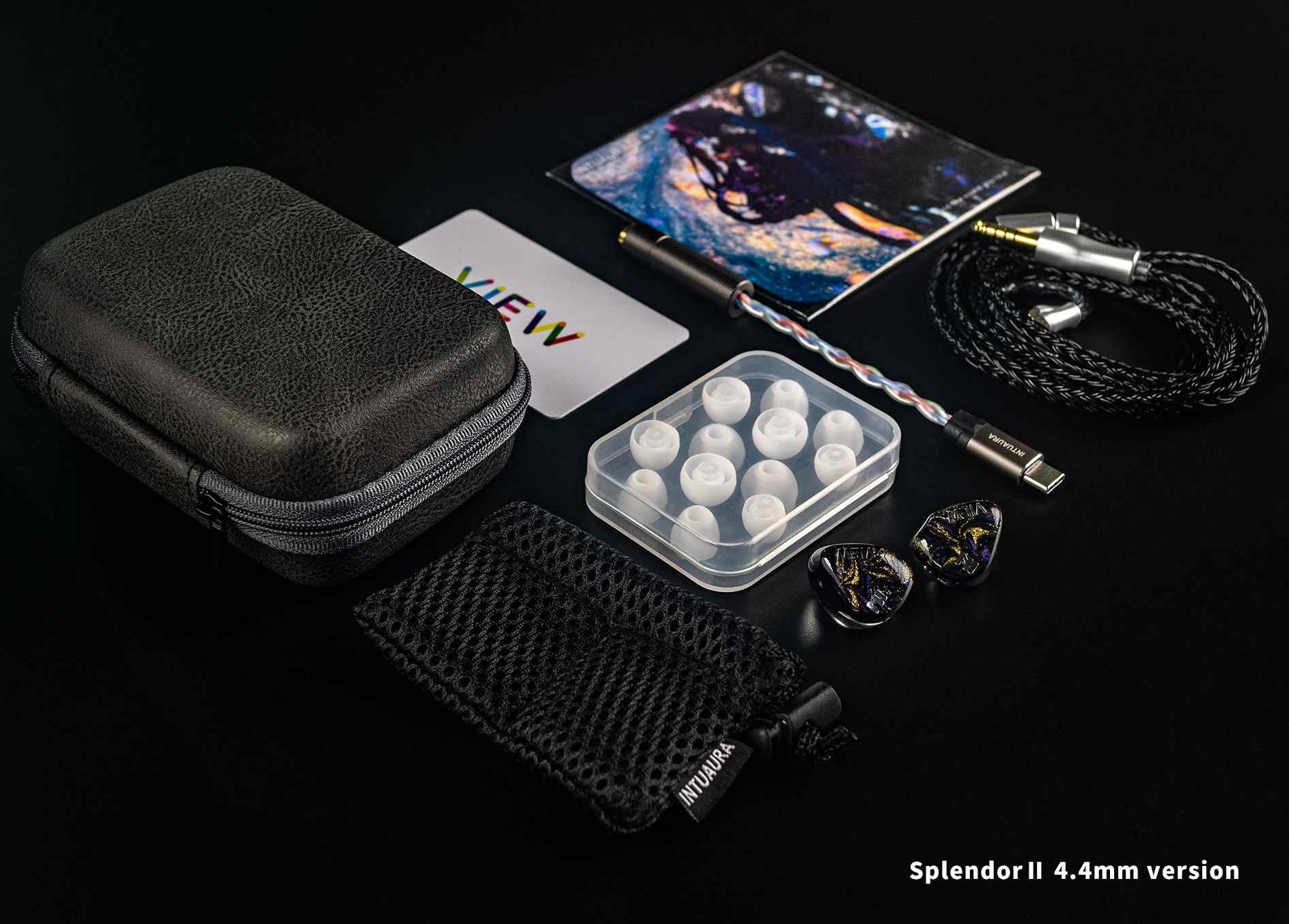
INTUAURA supplies a high-purity copper-alloy cable with a double-pin connection, listed in the specifications as 2-pin. Detachable cables are practical for two reasons: they allow a damaged cable to be replaced without discarding the earphones, and they make it possible to choose a different termination for another source. The supplied cable is listed with 3.5mm and 4.4mm connector options.
A 3.5mm plug is the common single-ended connection for portable players, dongle DACs and conventional headphone outputs. A 4.4mm Pentaconn connection is normally used with a compatible balanced headphone output. Balanced headphone connections can provide more available voltage or power from some source devices, but they do not automatically improve sound quality simply because of the connector. The practical benefit depends on the output circuit in the chosen player, DAC/amplifier or portable amplifier. A 4.4mm plug must only be used with a properly wired 4.4mm balanced output; it should not be adapted carelessly to an unrelated connector.
Impedance, sensitivity and source matching
The stated 18-ohm impedance places Splendor II in the low-impedance category. In broad terms, this means it should not require a high-voltage desktop headphone amplifier simply to reach useful volume. It should be an accessible match for portable digital audio players, phone dongles and compact DAC/headphone amplifiers, provided they have a suitably quiet output.
INTUAURA lists sensitivity as 125dB, although it does not state the reference used for that figure—for example, dB/mW or dB/V. The number nevertheless indicates a potentially very sensitive design. High sensitivity is useful with low-powered portable sources, but it can expose background hiss from noisy outputs and makes fine control of volume more important. Owners using a powerful desktop headphone amplifier should begin at minimum volume and ensure the amplifier offers a low-gain setting where possible.
Output impedance is another worthwhile consideration with low-impedance earphones. A source with a very low output impedance is generally preferable, as it is less likely to interact with the earphones’ impedance behaviour and alter the intended tonal balance. This is not a Splendor II-specific measurement—INTUAURA has not supplied an impedance curve—but it is sensible matching practice for sensitive, low-impedance designs.
Frequency-response claims need clarification
The launch description contains two different frequency-range claims. In the body text, INTUAURA refers to a response from 5Hz to 50kHz. The published characteristics list instead gives 20Hz to 20kHz. The latter corresponds to the conventional nominal limits of human hearing, while an extended 5Hz–50kHz figure is commonly used to describe the claimed operating bandwidth of a driver rather than what will necessarily be heard.
Because the supplied material presents both ranges, prospective buyers should seek confirmation of the official specification. Frequency-extension figures alone also say little about tonal balance: they do not reveal how loud the earphones are at the extremes, how smooth the response is through the midrange, or how they behave once inserted and sealed in an individual listener’s ears. For earphones in particular, tip choice and seal can make a substantial difference to perceived bass and overall balance.
INTUAURA Splendor II specifications
- Type: Single-driver dynamic earphones
- Shell: Double-sided composite alloy, hand-painted purple-blue gradient with gold embellishments
- Claimed frequency response: 5Hz–50kHz in the product description; 20Hz–20kHz in the listed characteristics
- Impedance: 18 ohms
- Sensitivity: 125dB (reference not stated)
- Cable connection: 2-pin
- Cable: High-purity copper alloy
- Source termination options: 3.5mm / 4.4mm
- Price: $259
Who the Splendor II is for
Splendor II will most obviously appeal to listeners who want a visually distinctive, detachable-cable dynamic earphone rather than an anonymous utilitarian design. The 18-ohm impedance and high stated sensitivity point towards straightforward use with portable sources, while the 3.5mm and 4.4mm options accommodate both conventional and balanced-equipped players.
The potential trade-off is that several central technical claims remain broad. INTUAURA has not supplied driver diameter, exact diaphragm composition, cable length, included eartips, shell dimensions, weight, acoustic measurements or an explanation of how Phantasm and AWCT are implemented. Nor has it resolved the discrepancy between the two published frequency-range figures. These omissions do not negate the design, but they mean purchasers seeking an engineering-led comparison should look for fuller official documentation and independent measurements before drawing conclusions.
What is clear is that INTUAURA is taking a traditional single-dynamic architecture and pairing it with an unusually elaborate finish and a tuning-focused story. At $259, Splendor II’s appeal will rest on how convincingly that combination of acoustic refinement, efficient drive requirements and hand-painted presentation comes together in a listener’s own source chain and fit.