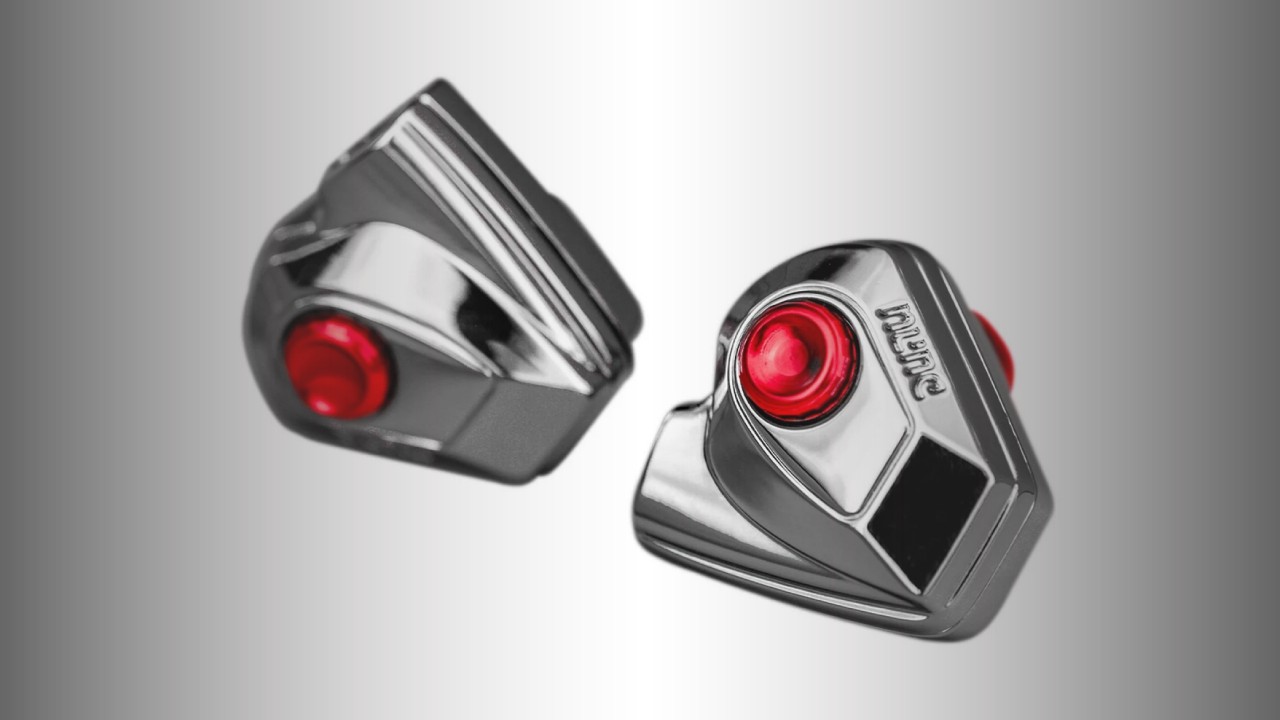
DUNU’s Titan S2 is a wired in-ear monitor built around a single dynamic driver, but its specification is more ambitious than that description suggests. The new model combines a dual magnetic circuit, a composite diaphragm with a high-strength dome and flexible surround, a detachable 0.78mm two-pin cable, and DUNU’s compact Q-Lock Mini interchangeable plug system.
That makes the Titan S2 relevant to listeners who still want a conventional, cable-connected IEM but use more than one source. It can connect to a standard 3.5mm headphone output, then be changed to 4.4mm without replacing the entire cable. The latter is increasingly useful with portable players, DAC/headphone amplifiers and some desktop units that provide a 4.4mm balanced headphone socket.
The published electrical figures are a 16-ohm impedance and 107dB sensitivity, alongside a claimed frequency range of 5Hz to 40kHz. Those numbers do not by themselves establish how the Titan S2 will sound, but they do indicate an IEM intended to reach worthwhile levels from low-power portable hardware as well as dedicated headphone amplification. As always with sensitive in-ears, the noise floor and output quality of the source can matter as much as outright power.
A dynamic-driver IEM focused on motor and diaphragm control
At the centre of the Titan S2 is a dynamic driver using what DUNU describes as a high-strength dome, a composite diaphragm and a flexible, long-stroke suspension. In a dynamic driver, the diaphragm is attached to a voice coil, which moves in response to the audio signal while suspended in a magnetic field. That movement creates the air pressure changes that reach the ear as sound.
The diaphragm needs to do several competing jobs well. It must be light enough to respond quickly to small signal changes, rigid enough to resist unwanted deformation at higher frequencies, and sufficiently damped that it does not continue ringing after the musical signal has stopped. A composite diaphragm can be a sensible route to balancing those requirements, since different materials or layers can be selected for stiffness and damping rather than relying on one material alone.
DUNU says the Titan S2’s dome uses a high-strength material with a high damping coefficient, coupled to a flexible suspension. The dome is the central radiating part of many dynamic diaphragms; the surround permits its movement. A compliant surround with adequate excursion is particularly relevant at lower frequencies, where the driver needs to move more air. Meanwhile, controlled damping is intended to reduce resonance and preserve a clean transition between notes. These are engineering aims, rather than a guarantee of a particular tonal balance, but they explain why the company places emphasis on this diaphragm construction.
The driver also uses a high-tension voice coil. The voice coil is the driver’s electrical-to-mechanical interface, so its design affects mass, control and thermal behaviour. DUNU has not published further details of its material, dimensions or winding, so it would be premature to draw more specific conclusions. Still, the stated approach clearly places the Titan S2’s design focus on controlling the moving assembly rather than treating its driver as a commodity part.
Dual magnetic circuits and dual-chamber adjustment
DUNU specifies dual magnetic circuits positioned internally and externally to drive the Titan S2’s dynamic driver. In broad terms, a magnetic circuit directs magnetic flux through the gap in which the voice coil operates. A strong, well-controlled field can improve the efficiency with which the coil turns current into motion. DUNU says its arrangement increases power efficiency and supports performance across the frequency range.
For the listener, efficiency has a practical benefit: an IEM that does not require substantial voltage to play loudly is easier to use with a phone adaptor, compact Bluetooth DAC or modest portable player. However, low impedance is also worth considering. At 16 ohms, the Titan S2 may be more sensitive to the output impedance and current capability of the connected source than a higher-impedance headphone. A competent modern headphone output should generally be the starting point, while a source with audible hiss can be less desirable with any reasonably sensitive IEM.
The Titan S2 also employs what DUNU calls dual-chamber response adjustment. Acoustic chambers are important in an IEM because the volume of air behind and around a dynamic driver works with its diaphragm and venting. The chamber geometry and vents can influence bass extension, pressure relief, resonance behaviour and the driver’s overall response. DUNU has not detailed the layout or whether users can alter the adjustment, so this should be understood as an internal acoustic-tuning feature rather than an advertised user-adjustable tuning system.
Metal housing, detachable cable and Q-Lock Mini terminations
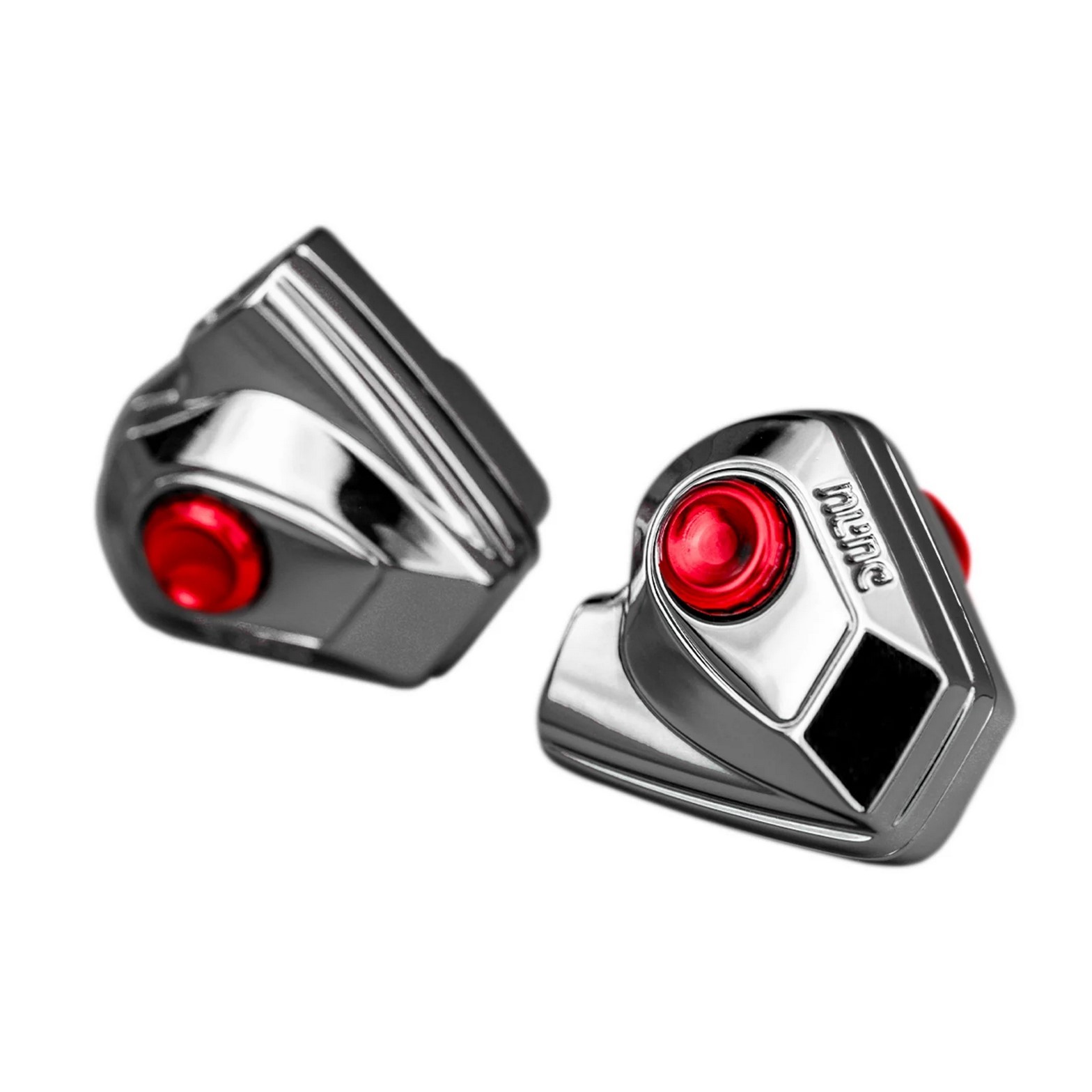
The earpieces are made from a high-density alloy with chrome plating. DUNU describes the result as durable and scratch-resistant, with a mirror-like finish. Metal housings can offer a robust alternative to resin shells and may provide a rigid enclosure for the driver, though shell material alone does not determine acoustic performance. In everyday ownership terms, the immediate advantages are likely to be the hard-wearing construction and the more substantial feel associated with alloy-bodied IEMs.
The supplied cable is a four-strand design using OCC copper and silver-plated OCC conductors, protected by a nylon braid. OCC, or Ohno Continuous Casting, is a copper production method commonly used in premium audio cables. The material and plating description tells us how the cable is constructed, but should not be taken as evidence of a specific sound signature. The more tangible ownership benefits here are the cable’s protective outer braid and its detachable connection.
At the earpieces, the Titan S2 uses the widely recognised 0.78mm two-pin connector. This is useful beyond simple replacement after damage: it also gives owners a route to alternative cable lengths, microphone-equipped cables or other terminations, provided the replacement cable uses the same 0.78mm two-pin format and is physically compatible with the shell. Two-pin connectors should be pulled straight from the housing rather than twisted or tugged by the cable itself.
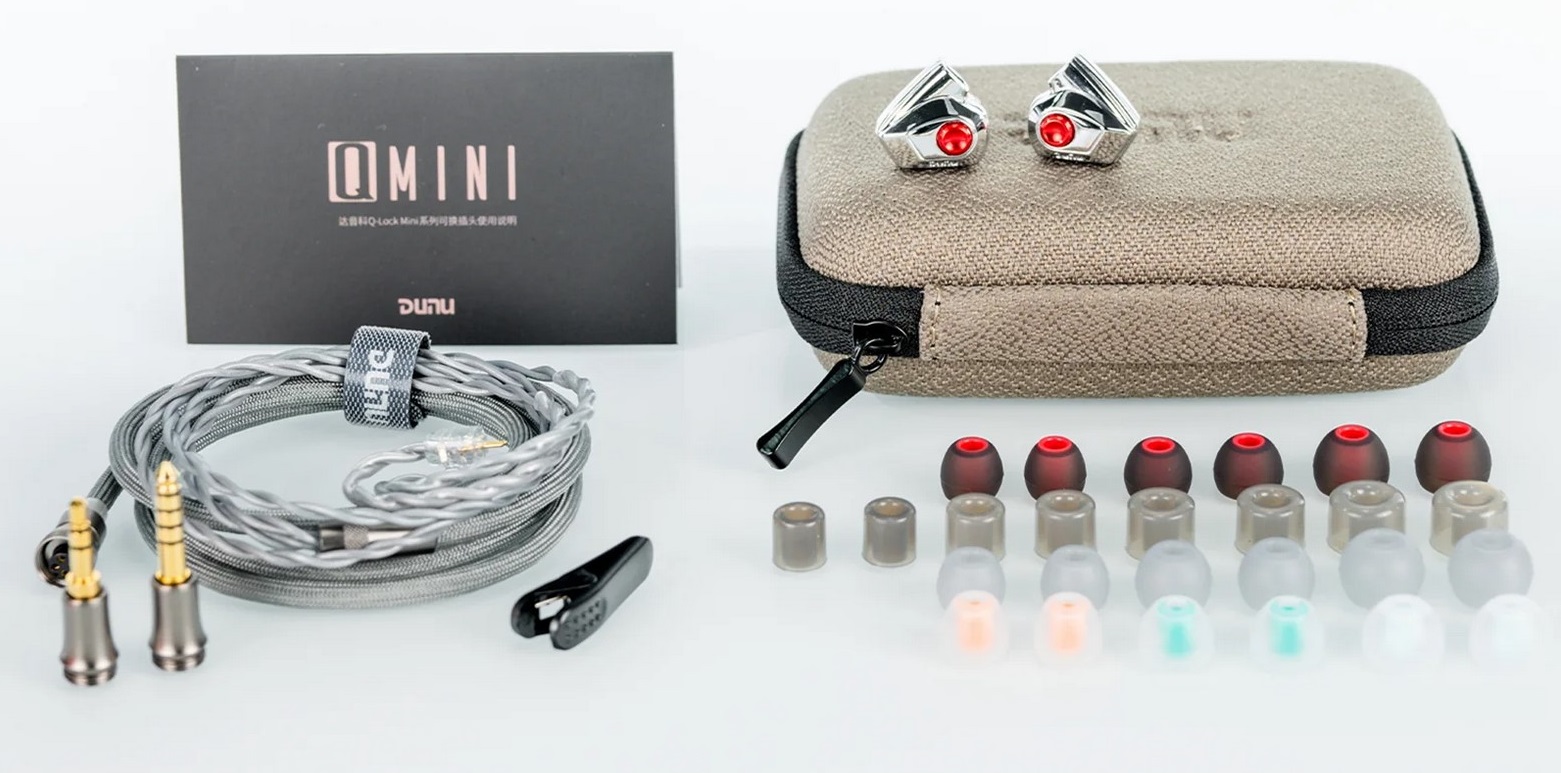
The more distinctive feature is DUNU’s Q-Lock Mini system. Both 3.5mm and 4.4mm plugs are included, allowing the cable’s source-end termination to be swapped. A 3.5mm plug remains the practical default for traditional single-ended headphone outputs. The 4.4mm Pentaconn-format connection is commonly used for balanced headphone outputs, where the left and right channels have separate positive and negative connections.
Balanced operation is not automatically a sound-quality upgrade; implementation in the connected player or amplifier is what matters. Its real advantage here is convenience. Owners of a source with a 4.4mm output can use it without buying a second cable, while retaining the supplied 3.5mm plug for conventional portable gear. It is important not to connect a balanced cable termination to an unsuitable single-ended output via an unverified adaptor, as headphone-output wiring arrangements vary.
Fit, eartips and portable-system considerations
In-ear monitors derive a large part of their perceived bass weight, isolation and tonal consistency from the seal at the ear canal. DUNU includes Candy and S&S ear pads—effectively a selection of supplied ear tips—alongside a storage case, cable clip and the replacement plug modules. The inclusion of more than one tip family is worthwhile because tip material, bore size and fit can change both comfort and the acoustic seal.
Before judging any IEM, it is sensible to try the supplied tip sizes and styles. A poor seal typically reduces low-frequency output and can make the presentation seem thinner or brighter than intended. Conversely, the most secure seal is not necessarily the best choice if it creates discomfort over longer sessions. The ideal option is one that remains stable, provides consistent isolation and does not require constant readjustment.
The cable clip can be useful when the Titan S2 is worn on the move, reducing cable movement and the mechanical noise that can travel up a cable to the earpieces. The supplied case is similarly more than a cosmetic extra: keeping the IEM and plug modules together reduces the risk of damage to the detachable connectors and helps preserve the polished housing.
DUNU Titan S2 specifications
- Type: Dynamic in-ear headphones
- Sensitivity: 107dB
- Frequency range: 5Hz–40,000Hz
- Impedance: 16 ohms
- Earpiece connector: 0.78mm two-pin
- Supplied cable terminations: 3.5mm and 4.4mm via Q-Lock Mini
- Included accessories: Candy and S&S ear tips, storage case, cable clip and replacement plugs
Who the Titan S2 is for
The Titan S2’s strongest proposition is its combination of a conventional dynamic-driver architecture and flexible cable termination. It is aimed at the listener who wants one wired IEM to cover a standard 3.5mm portable output and a 4.4mm-equipped player or headphone amplifier, without accumulating multiple cables. The 0.78mm two-pin interface also leaves scope for replacement cables later.
Its dual-magnet motor, dual-chamber tuning and composite diaphragm are meaningful design details, although DUNU has not supplied measurements, driver size, enclosure dimensions or full acoustic data. Those missing details mean that tonal balance, isolation and source sensitivity should be assessed only once independent measurements or listening evaluations are available. On the available information, however, the Titan S2 appears to put useful system flexibility and serviceable cable design alongside a more carefully specified dynamic-driver assembly than is typical of a basic bundled-earphone approach.