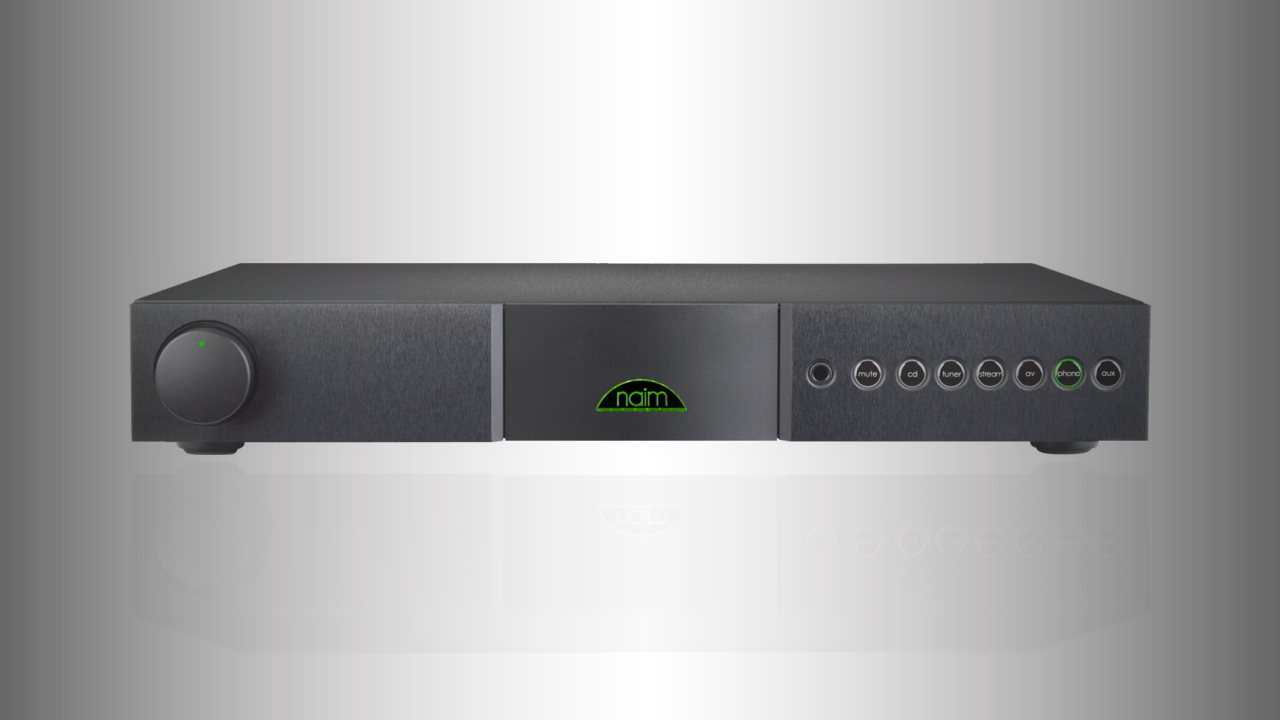
The Naim ND5 XS 2 is a network player intended to bring contemporary streaming, local-library playback and conventional digital-source connectivity to an established two-channel system. Housed in Naim’s compact XS-series casework, it is not an all-in-one amplifier: it is a dedicated source component, designed to feed a spare line-level input on an integrated amplifier or preamplifier via either RCA phono or Naim’s preferred DIN connection.
That distinction matters. A separate network player can be a sensible route for owners who like their existing amplification and loudspeakers but need a more comprehensive way to access music from a home server, streaming services, internet radio, mobile devices and digital transports. The ND5 XS 2 also has several digital inputs, allowing it to act as a DAC-equipped front end for selected external sources rather than being limited to network playback alone.

A Naim streamer built around a dedicated digital platform
At the centre of the ND5 XS 2 is Naim’s proprietary streaming platform. The supplied specification describes a network card using low-voltage differential digital audio transmission, a signalling approach used to move digital data with good resistance to interference over short internal connections. In a network player, the important point is not merely that music data arrives over Ethernet; it is how that data is handled between the network interface, processing stage and DAC. Noise and timing errors generated within a digital product can potentially reach sensitive analogue stages if the design does not carefully separate and regulate those sections.
Naim says the platform controls the audio-data flow with the DAC’s own clock rather than relying on an external clock. In practical terms, this describes a buffered, clock-led arrangement: incoming network data is stored and then released to the conversion stage according to the player’s local timing reference. This is a common and sensible strategy in network audio, because packet arrival across a domestic network is not itself a suitable timing reference for digital-to-analogue conversion.
Before conversion, the ND5 XS 2 uses a SHARC digital signal processor to resample incoming data with 40-bit precision. Resampling is a digital-processing stage that converts incoming sample rates to the rate required by the DAC stage. The quoted 40-bit figure refers to the arithmetic precision used internally, not to a claim that music files are played at 40-bit resolution. Its relevance is that sufficient processing headroom can help minimise rounding errors during digital filtering and rate conversion.
The converter itself is specified as a Burr-Brown PCM1791A DAC. Naim’s published description therefore gives unusually useful detail about the signal path: network or input data is processed by the SHARC DSP before reaching this DAC, rather than simply being passed directly from a streaming module to an unspecified conversion section. Exact audible results will depend on the implementation as a whole, including analogue output circuitry and power supply, so the chip designation alone should not be treated as a shortcut to sound quality.
File support, streaming services and network playback
For music held on a computer or NAS drive, the ND5 XS 2 supports UPnP playback. A UPnP server organises a library and presents it to the player over the local network, making this a useful solution for those with substantial collections of ripped CDs or downloaded high-resolution files. The network connection listed is Ethernet; a wired connection is generally the most robust option for uninterrupted playback, especially where high-resolution files and a busy household network are involved.
The stated file-format list is extensive: WAV, FLAC, ALAC, AIFF, DSD64, DSD128, AAC, MP3, OGG, WMA and M4A are included. The supplied information also states that gapless playback is supported for all lossless formats and most compressed formats. Gapless operation is particularly important with live recordings, classical works and albums that have been mastered as continuous performances, where an audible interruption between tracks would undermine the intended sequence.
Maximum resolution varies by format. WAV is listed at up to 32-bit/384kHz, while FLAC, ALAC and AIFF are specified up to 24-bit/384kHz. These limits describe the player’s ability to accept and process files, rather than an assurance that every recording at a higher numerical resolution will sound better. In a real library, recording quality, mastering and source quality remain more consequential than sample-rate labels.
The supplied text contains two descriptions of DSD capability: one section says the streaming platform supports decoding to DSD128, while the feature summary refers to DSD “single rate”. The formal file-format list includes both DSD64 and DSD128. Anyone whose library depends heavily on DSD should verify the exact support and playback route for their chosen server software before purchase, particularly because server settings can affect whether files are sent natively or converted to PCM.
Streaming and wireless options listed include Chromecast built-in, Apple AirPlay, Bluetooth with aptX HD, Spotify Connect, TIDAL, Roon Ready, vTuner Premium internet radio and UPnP. This breadth gives the ND5 XS 2 several routes into the same system:
- Chromecast built-in enables playback from compatible smartphone and tablet apps, with the supplied information quoting support up to 192kHz.
- AirPlay provides a straightforward route from Apple devices and compatible desktop software, useful where convenience matters more than operating a separate hi-fi control application.
- Spotify Connect hands playback control to the streamer itself once selected in Spotify, rather than maintaining a conventional Bluetooth-style stream from the phone.
- Bluetooth aptX HD offers a quick wireless option for compatible devices. It is best viewed as a convenience input, whereas Ethernet network playback is the more natural route for a fixed high-fidelity installation.
- Roon Ready support means the player can be used as a network endpoint within a Roon-based library and multi-room system.
Service availability, subscription tiers and maximum resolutions offered by streaming providers can change independently of the player, so it is prudent to confirm current support with Naim and the relevant service before making a buying decision. The original feature list describes TIDAL as an uncompressed streaming service and mentions a 90-day trial; that offer and the service’s current format options should likewise be checked at the time of purchase.

Digital inputs extend its role beyond streaming
The ND5 XS 2 is more than a network endpoint. It includes S/PDIF inputs for external digital equipment, potentially allowing a CD transport, television optical output, computer interface or another digital source to use its internal DAC and analogue output stage. This is valuable in a system where several sources need to share one conversion stage and one amplifier input.
The detailed specification lists two optical inputs, each handling up to 24-bit/96kHz, plus one RCA coaxial and one BNC coaxial input, both specified up to 24-bit/192kHz. Optical TosLink is electrically isolated, which can be useful when connecting equipment that may otherwise introduce ground-related noise. Coaxial S/PDIF can accommodate the higher 192kHz limit stated here, although successful operation will still depend on the source output and the material being played.
Elsewhere, the supplied feature summary refers to “four 24-bit/192kHz S/PDIF digital inputs”, while the more detailed input listing gives different limits for optical and coaxial sockets. The latter provides the clearer connection-by-connection breakdown, and prospective owners should use it as a guide while confirming the final configuration with the manufacturer or retailer.
Two USB Type-A sockets are listed, including a front USB port rated at 1.6A for connecting flash drives and portable players. Type-A USB is intended here for storage and device connection, not as a computer-style asynchronous USB-B input. That makes it convenient for playing files directly from a USB drive, but users planning to connect a computer should first establish the best route within their system—usually network playback from a UPnP server, or one of the player’s S/PDIF inputs via a suitable interface.
Analogue output and Naim-system integration
Analogue outputs are provided on both RCA and DIN. RCA makes the ND5 XS 2 straightforward to connect to most integrated amplifiers, while DIN is particularly relevant to Naim owners, as it supports the connection approach used across the company’s wider electronics range. The two options are not interchangeable in a simplistic “one is always better” sense; the appropriate connection is the one that suits the amplifier and is installed with the correct cable and system grounding arrangement.
The player can be operated from its front-panel buttons, supplied remote control or the Naim app. The draft refers to the n-Stream app for iPhone, iPad and iPod Touch, while the feature list also identifies the Naim App for iOS and Android. App names and compatibility can evolve, but the important ownership point is that network browsing, streaming-service selection, internet radio and multi-room functions are far more practical from a phone or tablet than from a small front-panel display.
Naim’s RC5 integration is also listed, enabling control of a compatible Naim amplifier from the app. The supplied material further refers to system automation with connected Naim preamplifiers, CD players or DACs. For an all-Naim system, this can reduce remote-control clutter and make source selection feel more integrated. With third-party amplification, the ND5 XS 2 remains a conventional standalone source: connect its analogue output to a line input and control volume on the amplifier.

Power supply attention in a compact 10kg component
Naim places particular emphasis on the ND5 XS 2’s power supply and grounding. The design is described as using a Naim-wound transformer, large smoothing capacitors, multiple independently regulated supplies and a dedicated grounding scheme. These are meaningful areas of engineering in a source component. The transformer and smoothing capacitors provide the basic energy reservoir; separate regulation can reduce interaction between demanding digital-processing sections and lower-level analogue circuitry; grounding architecture is central to managing unwanted noise currents.
None of these features is a substitute for careful system setup, but they indicate that the ND5 XS 2 is conceived as a serious separate component rather than a basic streaming add-on. At 432 x 87 x 314mm and 10kg, it has standard full-width proportions but a relatively low chassis height. Its quoted power consumption is 19W, modest for a permanently networked source, though owners who prefer to power equipment down should consider the time required for any component to reach stable operating temperature after switch-on.
Who the ND5 XS 2 suits
The ND5 XS 2 makes the most sense for listeners who already have a capable analogue amplification stage and want a properly specified digital and network source with broad ecosystem support. It is especially logical alongside a Naim integrated amplifier, where DIN connectivity, app-based amplifier control and system automation can be used, but its RCA output means it is not restricted to Naim systems.
Its strengths on paper are its unusually broad selection of playback methods, separate coaxial and optical S/PDIF inputs, direct USB storage playback, Ethernet networking and an explicitly described DSP/DAC architecture. It is also a useful option for those who prefer a dedicated source rather than placing streaming duties inside an amplifier.
There are practical boundaries to understand. Ethernet is the listed network interface, so buyers expecting built-in Wi-Fi should confirm their installation plan. The USB ports are Type-A, not a stated computer USB audio input. And while the platform supports high-resolution PCM and DSD formats according to the supplied specification, the relevant limits depend on file type and input route. Proper setup—stable wired networking, sensible app and service configuration, and a good-quality line input on the amplifier—will do more for day-to-day satisfaction than simply focusing on the highest supported numerical resolution.
Naim ND5 XS 2 key specifications
- Supported formats: WAV, FLAC, ALAC, AIFF, DSD64, DSD128, AAC, MP3, OGG, WMA and M4A
- Maximum file resolution: 32-bit/384kHz WAV; 24-bit/384kHz FLAC, ALAC and AIFF
- Streaming and protocols: Chromecast, AirPlay, Bluetooth aptX HD, UPnP, Spotify Connect, TIDAL, vTuner Premium internet radio and Roon Ready
- Digital inputs: two optical, up to 24-bit/96kHz; RCA coaxial, up to 24-bit/192kHz; BNC coaxial, up to 24-bit/192kHz
- Interfaces: two USB Type-A ports and Ethernet
- Analogue outputs: RCA and DIN
- Power consumption: 19W
- Dimensions (W x H x D): 432 x 87 x 314mm
- Weight: 10kg