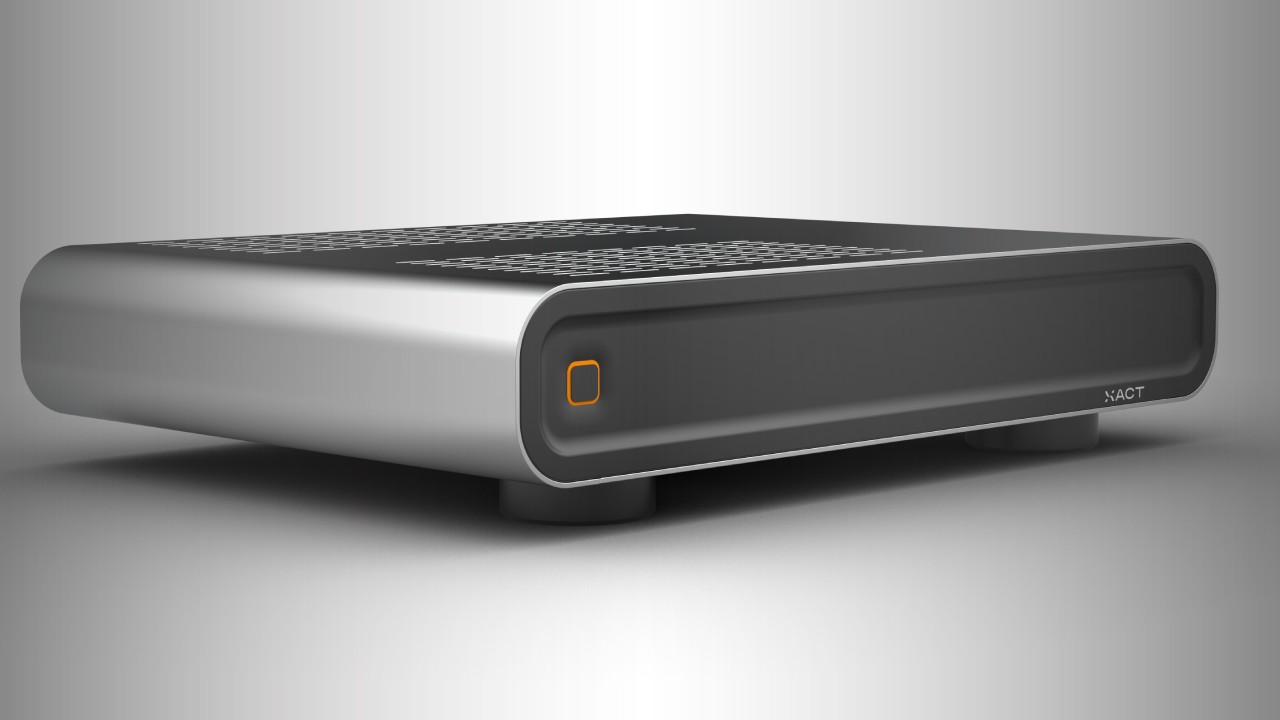
Cayin has announced the HA-300 MK3, the third generation of its flagship 300B valve headphone amplifier. It remains a distinctly uncompromising proposition: a two-box, single-ended Class A design with 300B output valves, an external power supply and a price-in-materials approach that includes output transformers, premium coupling capacitors and point-to-point wiring.
What is new is not a wholesale change of direction. Rather, Cayin has reworked the circuit, increased the available headphone output power, expanded the connection provision and introduced a three-position impedance-matching arrangement intended to make the amplifier usable with a substantially broader selection of headphones. Alongside its headphone outputs, it can also drive 4-8-ohm loudspeakers, giving the HA-300 MK3 a role beyond a conventional desktop headphone station.
That combination matters because 300B amplifiers are often associated with relatively specialised, high-sensitivity headphone or loudspeaker systems. Cayin’s stated aim here is to retain the appeal of a directly heated 300B output stage while making the amplifier less restrictive for an owner who alternates between sensitive in-ear monitors, conventional dynamic headphones, planar-magnetic models and high-impedance designs.

A 300B single-ended Class A design, revised for its third generation
The HA-300 MK3 continues to use a single-ended Class A topology with 300B valves in its output stage. In broad engineering terms, a single-ended amplifier uses one active output device, or valve, to reproduce the entire waveform rather than dividing positive and negative halves between a pair of devices as a push-pull circuit does. Class A operation means the output device is kept conducting throughout the signal cycle.
For a 300B amplifier, the output transformer is therefore especially important. Valves operate at high voltages and are not naturally suited to driving the relatively low impedances of headphones, let alone loudspeakers. The transformer couples the valve output stage to the load and provides the impedance transformation needed for effective power transfer. Its design affects bandwidth, distortion behaviour, low-frequency headroom and the way the amplifier responds to changing headphone loads. Cayin says the MK3 uses newly developed third-generation broadband EI output transformers; “broadband” is the relevant ambition here, suggesting attention to maintaining extension at both frequency extremes rather than treating the transformer as a simple power-delivery component.
Cayin also specifies regulated, low-noise voltage amplification with an independent stepped power supply. Regulation does not automatically determine sound quality, but stable, clean supply rails are valuable in a high-gain valve circuit: they can help reduce the intrusion of supply noise into the amplified signal and keep operating conditions more consistent as musical demand changes. The company presents the revised circuit as an effort to improve precision, noise immunity and everyday usability without abandoning the traditional 300B architecture.
There are no published measurements in the supplied information for noise, distortion, output impedance or frequency response. Those figures would be useful in assessing precisely how the HA-300 MK3 behaves with very sensitive earphones or difficult headphone loads. For now, the technical story is Cayin’s combination of a classic directly heated triode output stage with measures intended to make it quieter and more adaptable than a stereotypical 300B design.
Why the HA-300 MK3 uses two chassis

The amplifier and power supply occupy separate enclosures, as they did in the previous HA-300 MK2. This is more than a visual statement. A mains transformer and associated power-supply components generate magnetic fields and can introduce mechanical vibration. Keeping them physically away from the small-signal and gain stages is a well-established way of reducing the opportunity for hum and other interference to enter a sensitive analogue circuit.
It is a particularly logical arrangement in a valve headphone amplifier, where the gain can make residual noise conspicuous with efficient headphones. The external supply also frees space in the audio chassis for the valve circuit, output transformers and controls. Cayin specifies a toroidal transformer engineered for low magnetic noise and high efficiency. Toroidal transformers can offer compact dimensions and controlled magnetic-field leakage compared with some conventional transformer layouts, although execution and physical placement remain just as significant as transformer shape alone.
The two boxes connect via a lockable cable system, which Cayin says is intended to provide stable power transmission with minimal loss. A locking connector is a worthwhile practical detail on a component that is likely to remain installed on a desk, rack or sideboard: it reduces the chance of an accidental disconnection and avoids relying on a loose-fitting umbilical cable. Owners should nevertheless plan the installation as a two-component system, with enough shelf space, ventilation around the valve amplifier and a sensible route for the connecting cable.
Separating the supply does not make setup complicated, but it does mean the HA-300 MK3 is not a one-box solution for a cramped desk. The benefit is that it addresses a real design conflict in high-gain valve equipment: keeping mains-related hardware physically distant from the audio circuitry.
Output power, three impedance settings and headphone matching

Cayin has put considerable emphasis on the MK3’s wider usable headphone range. Its stated outputs are 6,500mW per channel from the balanced 4-pin XLR socket, 6,000mW + 6,000mW from the 6.35mm stereo output, and 1,600mW per channel from the 4.4mm Pentaconn output. The 4.4mm connection is specifically optimised for in-ear headphones, according to the manufacturer.
Those figures should be interpreted with care because output power is meaningful only when accompanied by the load impedance and distortion limit at which it is measured; neither is supplied here. Still, the published numbers establish the hierarchy Cayin intends. The 4-pin XLR and 6.35mm sockets are the high-power connections for full-size headphones, while the 4.4mm output is deliberately positioned for sensitive in-ear monitors.
Power alone is not the whole matching story. Sensitive IEMs need low residual noise and fine volume control at low listening levels at least as much as they need watts. Conversely, low-sensitivity planar headphones may demand substantial current, while high-impedance dynamic headphones require sufficient voltage swing. An amplifier capable of producing high power can still be awkward with an IEM if its gain is excessive or its noise floor is audible. Cayin’s revised supply architecture, dedicated 4.4mm output and stepped control arrangements are therefore at least as relevant to this claim of wider compatibility as the headline milliwatt numbers.
The HA-300 MK3 also has three impedance-matching positions: low, mid and high. This should not be confused with a simple volume adjustment. In a transformer-coupled valve amplifier, matching changes how the output stage is coupled to the headphone load. The appropriate setting can influence available voltage and current, damping behaviour, noise audibility and the usable range of the volume control. It gives an owner a more appropriate starting point for headphones with very different impedance and sensitivity characteristics.
It is not, however, a universal guarantee that every headphone will be optimally served. Potential owners should begin with Cayin’s recommended setting for their particular model, turn the volume down before changing connections or matching positions, and use the setting that provides controlled level adjustment without audible noise. Headphone makers’ sensitivity and impedance specifications remain useful guides, but practical compatibility is also dependent on the amplifier’s gain structure and output behaviour.

Inputs, headphone sockets and speaker capability
The HA-300 MK3 accepts both balanced XLR and single-ended RCA line-level sources. That makes it suitable for connection to a standalone DAC, streamer/DAC, phono stage or the preamplifier output of another component. It is important to note that Cayin has not specified an onboard DAC, streamer or phono stage in the supplied details. Digital and analogue source duties therefore remain external.
Three headphone connections are provided: 4-pin XLR, 6.35mm stereo jack and 4.4mm Pentaconn. The selection is sensible for a high-end headphone amplifier because it accommodates common full-size headphone terminations as well as modern balanced portable cables and IEMs. The physical connector alone should not be taken as proof of a specific circuit topology beyond Cayin’s stated balanced 4-pin XLR output; cable termination and a headphone’s wiring must be appropriate for the selected socket.
In an unusual but potentially useful addition for this category, Cayin also provides loudspeaker terminals for 4-8-ohm speakers. This allows the HA-300 MK3 to serve as the amplifier in a compact two-channel system as well as a headphone amplifier. Cayin does not state a loudspeaker power rating, so it would be unwise to make assumptions about how it will suit demanding speakers, large rooms or high playback levels. The most sensible application is likely to be a carefully chosen, reasonably accommodating 4-8-ohm speaker pair in a nearfield or small-room system, with expectations set by the published specification rather than by the presence of terminals alone.

For the right owner, the speaker connections offer a meaningful consolidation of equipment. A DAC or analogue source can feed the HA-300 MK3, which can then power headphones for private listening and a compact loudspeaker system at other times. The trade-off is that it is a specialised valve amplifier rather than an all-in-one hub: source selection, streaming and phono equalisation require separate components where needed.
Component choices: transformers, capacitors and volume control
Cayin specifies DUELUND coupling capacitors from Denmark, gold-plated valve sockets and point-to-point wiring. Coupling capacitors sit between gain stages, passing the audio signal while blocking the DC operating voltages that each valve stage requires. Their electrical values and quality are consequential in a valve design, though their contribution cannot be reduced to a brand name alone; circuit implementation is fundamental.
Point-to-point wiring dispenses with some or all of the conventional printed-circuit-board traces in favour of direct physical connections between components. It can make a design easier for an experienced technician to service and accommodate large, high-voltage components neatly, but it is not automatically superior to a well-executed PCB. In the HA-300 MK3 it fits the serviceable, transformer-led nature of the amplifier’s architecture.
Volume adjustment combines a JRC MUSES 72320V volume control with an ALPS 41-step attenuator. Accurate channel tracking is a practical concern, especially when listening through sensitive headphones at low levels: poor tracking can make the image pull to one side. Cayin’s specified arrangement suggests an attempt to unite controlled electronic attenuation with a tactile stepped interface. The supplied details do not describe the exact division of labour between the two components, so that should not be over-interpreted, but the inclusion of both is a notable part of the amplifier’s control design.

The physical finish has also been revised, with a fine sandblasted surface and new protective caps for the valves. Exposed valves are part of the appeal of a 300B amplifier, but protection is more than cosmetic when the component occupies a shared living space. Valves become hot in use, so the amplifier should be positioned where there is free air above it, away from children, pets and flammable materials. The two-chassis format gives some placement flexibility, but it does not remove the ventilation requirements of Class A valve operation.
Warm-up protection, VU meters and tube rolling

The front panel includes twin VU meters, giving a visual indication of signal level, and Cayin has incorporated a mute function with a 60-second delay after switch-on. The delay is a useful protection and convenience feature. Valve circuits need time for their heaters and operating voltages to stabilise, and muting the output during that interval can prevent turn-on noises reaching headphones or speakers.
It is worth separating that controlled startup sequence from broader claims about warm-up. A valve amplifier may change operating conditions as it reaches thermal equilibrium, but the specific 60-second function described by Cayin is principally an output-muting measure. It also encourages sensible ownership: connect headphones only when the amplifier has completed its startup cycle, lower the volume before changing headphones, and allow hot valves to cool fully before handling them.
All valves can be replaced with compatible alternatives, according to Cayin. Tube rolling can appeal to experienced owners because compatible valve types and production variants may alter operating characteristics and, potentially, the presentation of a system. It also introduces responsibility. Compatibility needs to be verified rather than assumed, and replacements should be obtained from a reputable supplier. The supplied information does not list the complete fitted valve complement, approved substitutes or required bias procedure, so prospective owners should confirm those details with Cayin or an authorised dealer before buying alternatives.
Who the HA-300 MK3 is for
The HA-300 MK3 is not positioned as a compact, low-maintenance headphone amplifier for someone who needs USB input, app-based streaming and a single small enclosure. Its appeal is for the listener who already has, or intends to build, a serious source chain and wants the particular architecture of a 300B, single-ended Class A amplifier without limiting themselves to one narrow headphone category.
Its strongest practical proposition is flexibility within that valve-first concept. Separate power supply hardware, a revised low-noise circuit, three impedance-matching settings, multiple headphone outputs and 4-8-ohm speaker terminals address the common reality of enthusiast ownership: headphones change, sources evolve and a dedicated listening desk can become a small loudspeaker system. The absence of published operating figures such as noise, output impedance and speaker power means careful matching and a dealer demonstration remain sensible, particularly for sensitive IEMs and difficult planar headphones.
What is clear from Cayin’s announcement is that the third-generation HA-300 is intended to be a broader, more usable flagship rather than a departure from the company’s established 300B formula. For buyers drawn to external supplies, transformer-coupled valves and the hands-on possibilities of tube ownership, that is likely exactly the point.