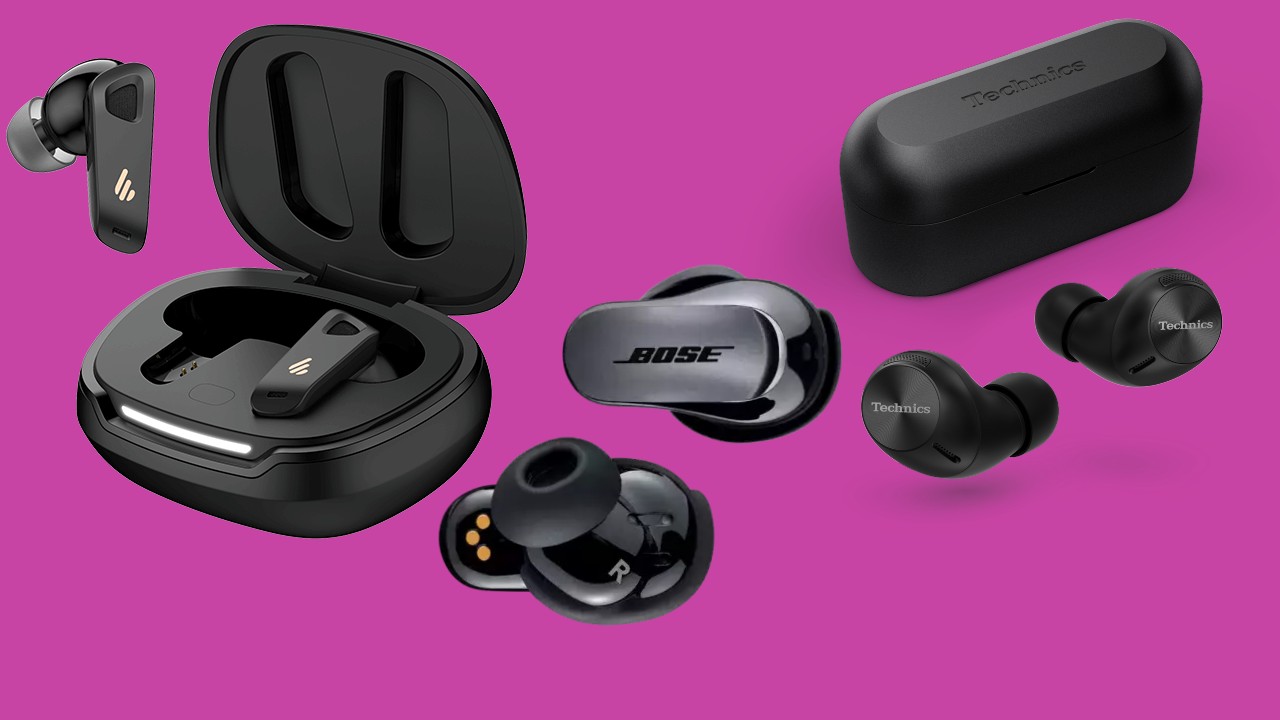
True wireless earbuds have become the default personal-audio purchase for many listeners, but choosing well involves more than comparing battery figures or counting ANC modes. The most convincing models balance driver design, fit, microphone performance, Bluetooth implementation and charging-case practicality—while also being honest about the compromises imposed by a tiny, cable-free form factor.
This selection highlights seven premium-leaning TWS models with distinct technical priorities. Some are principally travel earbuds, where active noise cancellation (ANC) and call quality matter most. Others pursue low-latency gaming, robust sports use or a more ambitious approach to sound. The listed prices are those supplied for each model and may vary by territory, retailer and current availability.
What separates a good TWS earbud from a merely convenient one?
Sound quality begins with the acoustic hardware, but it does not end there. Dynamic drivers use a moving diaphragm to produce sound and are the most common solution in earbuds because they can produce useful bass from a compact enclosure. Hybrid designs add a balanced-armature driver, usually to handle part of the midrange or treble; the potential benefit is greater bandwidth control, though implementation and crossover tuning remain more important than driver count alone.
ANC is similarly more complicated than a headline attenuation figure. Earbuds use external microphones to monitor ambient sound and internal microphones to account for what reaches the ear canal. Their processing generates an opposing signal, most effectively reducing steady low-frequency noise such as engine rumble. Seal is still fundamental: an open-fit earbud has less passive isolation, so even an adaptive ANC system has a harder job with voices and higher-frequency sounds than a well-sealed in-ear design.
Battery claims also need reading carefully. The earbud figure is the relevant measure for a single journey, while the total includes replenishments from the case. Enabling ANC, spatial processing or higher-bandwidth Bluetooth transmission can reduce runtime. In practice, fit, phone compatibility, control app and the connection method can be as decisive as the headline specification.

7. Edifier NeoBuds Pro 2
Price: $129.99
Pros: Advanced noise-reduction system; hybrid acoustic section
Cons: Design may divide opinion
Verdict: A feature-rich hybrid earbud with a strong stated ANC specification.
The Edifier NeoBuds Pro 2 is notable at this price for combining a hybrid driver arrangement with a multi-channel ANC system. Its acoustic section uses dynamic drivers alongside Knowles RAN balanced-armature drivers. In principle, this division of labour can allow the dynamic unit to deal with low-frequency displacement while the armature addresses finer upper-frequency detail. It is not an automatic guarantee of better sound, but it is a more involved engineering approach than a conventional single-driver earbud.
Edifier specifies up to -50dB of noise reduction and uses four microphones in each earbud. The wideband, multi-channel system is also intended to let the listener choose types of environmental sound that should remain audible. That is potentially useful for commuting or walking, where total isolation may not be appropriate. Support for LDAC gives compatible source devices a higher-data-rate Bluetooth option, although actual operation depends on the phone or player and connection conditions. Total quoted battery life is 20 hours with the case. A low-latency gaming mode and surround-sound mode broaden its appeal beyond music, but listeners should prioritise fit and app usability as carefully as its impressive feature list.

6. Technics EAH-AZ40M2
Price: $169.99
Pros: Attractive design; LDAC support; ANC system
Cons: No substantial limitation is identified in the supplied specification
Verdict: A well-rounded compact option with clear attention paid to airflow around its driver.
Technics fits a proprietary 6mm dynamic driver to the EAH-AZ40M2 and specifies an acoustic chamber designed to optimise airflow. In an in-ear enclosure, rear volume and venting affect how the diaphragm moves, especially at higher output levels. Careful pressure management can help reduce unwanted mechanical stress and distortion, although the final result depends on the complete acoustic tuning rather than chamber design alone.
LDAC support gives compatible devices access to a higher-bitrate Bluetooth route than basic SBC or AAC transmission. The earbuds also offer ANC plus Ambient and Attention modes. Ambient modes mix external sound into playback; an attention-oriented setting is useful where a brief conversation or station announcement matters more than uninterrupted listening.
Rated endurance is up to seven hours from the earbuds plus 24 hours from the case with ANC off. With noise cancelling engaged, Technics quotes 5.5 hours from the earbuds and a further 18 hours from the case. That distinction is useful: buyers who want ANC for every commute should judge the latter figure. Three finishes and an IPX4 rating complete a practical package. IPX4 indicates resistance to splashing water rather than dust protection or immersion, so it is appropriate for rain and workouts but not a substitute for a fully sealed sports design.

5. JBL Live Flex
Price: $199.95
Pros: Long quoted battery life; flexible sound settings; adaptive ANC
Cons: Limited passive isolation from the open design; relatively high price
Verdict: An open-fit alternative for listeners who do not enjoy the pressure of sealed ear tips.
The JBL Live Flex takes a different route from conventional sealed earbuds. Its open construction is likely to feel less occlusive for listeners who dislike a tightly sealed canal, but that same design inherently admits more environmental sound. This is the reason the model’s passive isolation is identified as a limitation: ANC has to work against a greater amount of incoming noise before it can make its correction.
JBL uses 12mm dynamic drivers with neodymium magnetic systems. A larger driver is not inherently superior, but it provides a different set of design possibilities in terms of diaphragm area and low-frequency output. Personi-Fi 2.0 is intended to tailor sound to individual preference, while the adaptive noise-reduction system uses six microphones. Such personalisation can be valuable, but it should be treated as an adjustment tool rather than a replacement for an earbud that already fits securely and sounds balanced.
The Live Flex has Bluetooth 5.3 and IP54-rated cases. Unlike IPX4, the IP54 designation addresses both dust ingress and splashing water, making the JBL a more plausible choice for everyday outdoor use. JBL quotes eight hours from the earbuds and 32 hours from the Qi fast-charge-compatible case, for 40 hours in total. For someone who values comfort, charging convenience and awareness of their surroundings over maximum isolation, its open format is the point rather than a flaw.

4. Sony Inzone Buds
Price: $199.99
Pros: Long stated operating time; low-latency dongle connection; gaming-focused features
Cons: Price
Verdict: A purpose-built gaming earbud rather than a standard music-first TWS design.
Sony’s Inzone Buds stand apart because their key connection is a dedicated USB-C wireless dongle. Bluetooth is convenient, but its transmission and buffering can add delay. For competitive games, where the timing between an onscreen event and its sound cue matters, a dedicated low-latency wireless link is a sensible solution. The dongle therefore makes the Inzone Buds particularly relevant to compatible PCs, consoles or portable devices with USB-C, rather than simply to phone listening.
The model uses Sony’s Dynamic Driver X transducer and supports 360 Spatial Audio, Sound Field Optimization and Sound Tone Personalization. Spatial playback can help communicate positional information in games when the software and source provide appropriate cues; it should not be confused with a guarantee that every stereo soundtrack becomes a convincing surround mix. Sony also includes ANC and an AI Noise Reduction system, the latter relevant to voice communication.
Quoted runtime is up to 12 hours from a single charge and up to 24 hours with the case. That is an important convenience advantage over many ANC-focused designs, especially for long sessions. Buyers should nevertheless check platform compatibility and dongle use before purchase: the low-delay connection is central to what differentiates this model.

3. Jabra Elite 10
Price: 249.99 euros
Pros: Dolby Atmos and Dolby Head Tracking support; IP57 protection
Cons: Price; no low-compression codec support is specified
Verdict: A robust all-rounder with immersive-format features and unusually substantial environmental protection.
Jabra equips the Elite 10 with 10mm dynamic drivers, Bluetooth 5.3 and the ability to connect simultaneously to multiple sources. Multi-source connection can be genuinely useful when alternating between a laptop and phone, reducing the need to manually disconnect and reconnect, though its real-world smoothness depends on the devices and operating systems involved.
Its Dolby Atmos and Dolby Head Tracking support are the headline features. Head tracking adjusts the perceived position of an audio image as the listener turns their head, seeking to keep a virtual soundstage anchored in front of them. It is most relevant with compatible immersive material and applications; it is an experience-led feature rather than a direct upgrade to driver resolution. The ANC system offers multiple modes.
The Elite 10 is rated IP57, with the supplied information describing both earbuds and charging case as protected against moisture and dust. This is a considerably more confidence-inspiring rating for active use than basic splash resistance. With ANC enabled, Jabra quotes six hours from the earbuds and 27 hours in total with the case. The stated downside for sound-quality purists is the absence of low-compression codec support, so prospective buyers with compatible Android hardware may want to decide whether the Elite 10’s ruggedness, multipoint-style convenience and Dolby feature set matter more than codec choice.

2. Bose QuietComfort Ultra Earbuds
Price: $299.99
Pros: Strong noise cancellation; comfortable fit; aptX Adaptive and Snapdragon Sound support
Cons: Modest battery endurance with Immersive Audio; price
Verdict: A travel-oriented flagship for listeners who place ANC and fit at the top of their list.
The QuietComfort Ultra Earbuds update the earlier QuietComfort Earbuds II with improved call sound quality and Snapdragon Sound support, according to the supplied information. Snapdragon Sound enables suitably equipped Android smartphones to use aptX Adaptive, a codec designed to vary its operation according to connection conditions and content. Compatibility is essential: neither a codec logo nor an Android phone alone ensures that the complete chain will use it.
Bose’s priority remains noise cancellation and comfort, two factors that often make a bigger practical difference than subtle codec distinctions on trains, aircraft and busy streets. The earbuds offer up to six hours per charge with Immersive Audio disabled, dropping to four hours with it enabled. This illustrates the power cost of additional spatial processing, and it makes the optional functions worth auditioning rather than leaving permanently active by default.
Total case endurance is not specified in the supplied material. Bose offers an optional $49 wireless charging case, backwards compatible with the QC Earbuds II, and the earbuds are available in black or white. For existing Bose users, that case compatibility may be a useful ownership detail; for new buyers, it is important to note that wireless charging is presented here as an option rather than an included assumption.

1. Devialet Gemini II
Price: 400 euros; 600 euros for the Opéra de Paris version
Pros: Titanium-diaphragm dynamic drivers; distinctive design; adaptive ANC
Cons: High price; five-hour ANC runtime
Verdict: The most lavishly specified audiophile-oriented option in this selection, with a premium price to match.
Devialet’s Gemini II combines a 10mm dynamic driver with a titanium diaphragm and aptX support. Diaphragm material is only one element of driver performance, but titanium is valued in audio engineering for its stiffness-to-mass characteristics. The relevant question for an earbud remains how well the diaphragm, motor, enclosure and DSP have been integrated—not the material name in isolation.
The revised adaptive ANC system uses three microphones and a bone-conduction sensor, with a claimed reduction of external noise by 40dB. Bone-conduction sensing can assist voice-related functions because it detects mechanical vibration rather than relying solely on airborne sound captured by microphones. Devialet has also reduced the earbud housings by 22 per cent and reshaped the charging case. Smaller housings can improve long-term comfort for some ears, although individual fit is inevitably personal.
With ANC on, the Gemini II is quoted at five hours from the earbuds and 22 hours including the case. It carries an IPX4 rating, so it is splash-resistant but not positioned as the most rugged model here. The standard version costs 400 euros. At 600 euros, the limited Opéra de Paris edition adds 22-karat gold plating to the metal elements of both earbuds and case. That edition is chiefly a luxury finish choice rather than a different technical proposition.
Choosing the right model for your use
There is no universal winner among these approaches. Frequent flyers and commuters should begin with ear-tip seal, ANC behaviour and call quality; Bose, Devialet, Edifier and Technics make the strongest feature-led cases in those areas from the specifications supplied. Gamers should look closely at Sony’s USB-C dongle, because a low-latency link is more consequential for play than a conventional Bluetooth codec label. Those who dislike sealed tips may find JBL’s open construction more comfortable, accepting weaker isolation as the trade-off. For exercise and outdoor use, Jabra’s IP57 rating deserves particular attention.
Finally, do not buy on driver diameter, codec support or ANC dB claims alone. Confirm that the earbuds fit, that their companion app works well with your phone, and that their quoted battery figure reflects the modes you will actually use. In true wireless listening, that complete system experience is what turns an attractive specification into an earbud worth keeping.