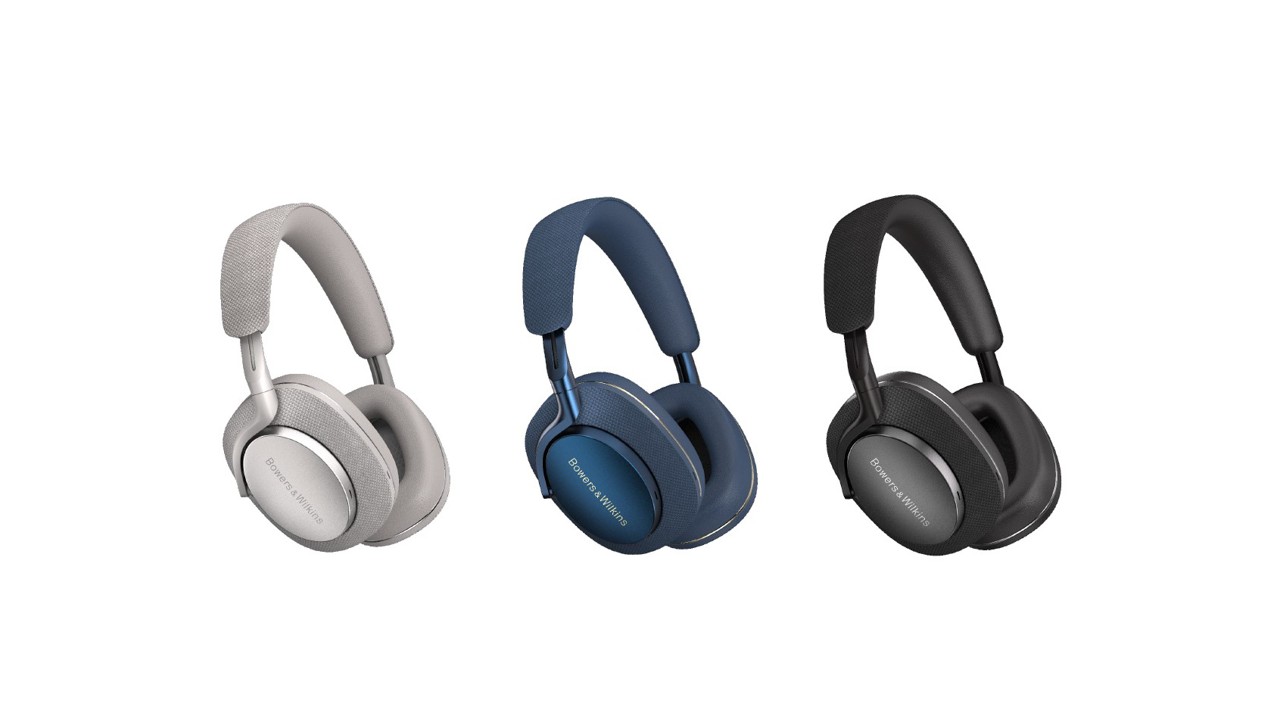
Bowers & Wilkins appears to be preparing a successor to its PX7 wireless noise-cancelling headphones. A product identified as the Bowers & Wilkins PX7 S2 was pictured on the aptX website before the page was removed, providing a limited but useful first indication of the features expected from the next-generation model.
There has been no formal announcement in the information supplied, so the listing should not be treated as a complete specification or confirmation of final pricing. Even so, the appearance matters: the original PX7 was a well-regarded premium wireless headphone, receiving five out of five in our review, and its replacement is likely to be closely watched by listeners seeking a travel-friendly, closed-back headphone with active noise cancellation.

What the aptX listing reveals about the PX7 S2
The removed page listed support for aptX, aptX HD and aptX Adaptive. These are Qualcomm Bluetooth codec families, and their inclusion suggests the PX7 S2 is intended to offer more than the baseline SBC and AAC Bluetooth experience commonly found on wireless headphones.
Codec support is important, but it needs to be put in context. Bluetooth audio is normally compressed before transmission, and the codec used is only one part of the chain. The source device must support the same codec for it to be used; otherwise, the connection falls back to another mutually supported option. Android devices are more likely to offer aptX variants than Apple devices, which generally use AAC over Bluetooth. In other words, aptX HD or aptX Adaptive on the headphone alone does not guarantee that every phone, tablet or computer will send audio using those modes.
Standard aptX is a long-established codec intended to provide a more robust alternative to basic Bluetooth transmission. aptX HD is associated with higher-quality audio transmission, while aptX Adaptive dynamically adjusts its behaviour according to connection conditions and can prioritise stability or lower latency where appropriate. The latter can be particularly relevant for video viewing and gaming, where a reduction in audio delay can matter as much as outright sound quality.
None of that confirms how the PX7 S2 handles Bluetooth reception internally, nor does the listing establish its supported sample rates, latency figures or whether it will offer wired digital audio. Those details will need to wait for Bowers & Wilkins’ full specifications. For prospective buyers, though, the codec list indicates that Bluetooth performance has not been ignored in the move from the original model.
Custom drivers, EQ and noise-cancelling use
The listing also refers to custom speakers. In headphone terminology, this is best understood as Bowers & Wilkins using purpose-developed drive units rather than treating the drivers as an incidental component. The term alone does not reveal the driver diameter, diaphragm material, magnet system or acoustic arrangement, so it cannot yet tell us how far the PX7 S2’s engineering differs from that of its predecessor.
That distinction is worth making because a wireless noise-cancelling headphone is a far more integrated product than a conventional passive wired design. The driver, internal amplifier, digital signal processing, microphone system and ear-pad seal all contribute to the result. A company can use an excellent driver, yet the final presentation will still depend on how the DSP equalisation and active noise-cancelling circuits are calibrated.
The reported EQ customisation and compatibility with the B&W Music App could therefore be meaningful features rather than simple conveniences. App-based EQ can let an owner make modest tonal adjustments to suit a personal preference, recordings or the way the headphones seal around their ears. It is not a substitute for getting the basic tuning right, but it can be useful when a headphone is used across varied material and environments.
The app connection may also serve as the route for firmware updates. That is especially relevant in active noise-cancelling models, where manufacturers can sometimes refine connectivity, control behaviour or DSP operation after launch. The listing does not state precisely what controls and settings the B&W Music App will provide on the PX7 S2, so it would be premature to assume feature parity with any other Bowers & Wilkins product.
Active noise cancellation itself is not detailed in the leak beyond the PX7 S2’s positioning as a wireless noise-cancelling headphone. The effectiveness of ANC depends on the microphone array, the processing and the physical isolation provided by the earcups and pads. It is generally most effective against the steady low-frequency noise associated with aircraft cabins, trains and air-conditioning systems; the fit of the headphones remains critical both for isolation and bass consistency. A full announcement should clarify whether Bowers & Wilkins has altered the noise-cancelling system, transparency mode or call-quality provision from the original PX7.
Thirty hours of playback and fast charging
Battery life is listed at up to 30 hours from a single charge, alongside fast charging. For a premium wireless headphone, a 30-hour claim is a practical target: it can cover several days of commuting and office use, or a long journey, without making charging a daily chore.
As always, “up to” matters. Wireless playback time changes with volume, the Bluetooth codec in use, the strength of the connection and, in particular, whether active noise cancellation is enabled. Manufacturers may quote a figure based on a particular test condition, and the aptX page information does not provide those conditions. The number is nevertheless useful as a broad ownership guide, while not being a guarantee of a fixed real-world result.
Fast charging is equally valuable in this category because portable headphones tend to be used away from a regular charging routine. The listing does not say how much listening time a short charge provides, or how long a complete recharge takes. Those are the figures that will determine whether the feature is genuinely helpful before a flight or a commute, rather than merely a marketing label.
Controls and day-to-day practicality
Bowers & Wilkins also lists a lightweight design and “full on-ear controls”. The latter phrase refers to the availability of physical controls on the headphone rather than proving that the PX7 S2 is an on-ear design. Physical buttons remain useful on a noise-cancelling travel headphone: they can allow changes to volume, playback or noise-control modes without taking out a phone or relying on touch gestures that may be less dependable with gloves, rain or imperfect taps.
Weight and comfort deserve particular scrutiny when the final model arrives. Comfort is influenced by more than the quoted mass: clamping force, pad depth, headband padding, cup shape and how evenly the weight is distributed can determine whether a headphone works for a 30-minute journey or an intercontinental flight. The present listing gives no weight figure and no construction details, so there is no basis yet for judging the PX7 S2’s ergonomics against the original PX7.
How the PX7 S2 could fit into a system
The PX7 S2 appears to be aimed at listeners who want one premium portable headphone for music, travel and everyday wireless use. Its proposed codec support makes it potentially relevant to Android owners and computers that can transmit aptX variants, while app-based EQ may appeal to listeners who want some control over tonal balance without adding separate hardware.
It should not be viewed as a direct replacement for a dedicated wired headphone and headphone amplifier in every situation. A wired system can avoid Bluetooth transmission and may offer greater flexibility over amplification and source choice. Conversely, a self-contained wireless headphone brings its own amplification, digital processing and noise cancellation, making it vastly simpler to use with a phone in a train, airport or shared office. The best choice depends less on a hierarchy of product types than on where and how it will be used.
Anyone considering the PX7 S2 specifically for high-quality streaming should check the codec options offered by their own source device and streaming app. They should also wait for confirmation of wired connections, charging connector, supplied accessories, microphone features and supported operating systems. None of those details are established by the information currently available.
Price remains unconfirmed
The aptX listing reportedly showed a three-out-of-five dollar-sign price indicator rather than a retail price. That is not enough to establish what the PX7 S2 will cost in any market. The original PX7 was priced at £350 ($400), which provides the most relevant historical reference, but it should not be read as confirmation that the successor will launch at the same figure.
For now, the PX7 S2 looks like an evolutionary update rather than a product whose headline technical change has been revealed in advance. The early information points to familiar priorities—adaptive Bluetooth capability, app integration, equalisation, battery endurance and portable controls—but the crucial questions remain open. Bowers & Wilkins will need to disclose the driver design, full connectivity, noise-cancelling implementation, comfort details and final price before enthusiasts can make a meaningful comparison with the current premium wireless market.
Until then, the now-removed aptX page is best treated as an intriguing early signal that the PX7 line is set to continue, rather than the complete story of what the PX7 S2 will offer.