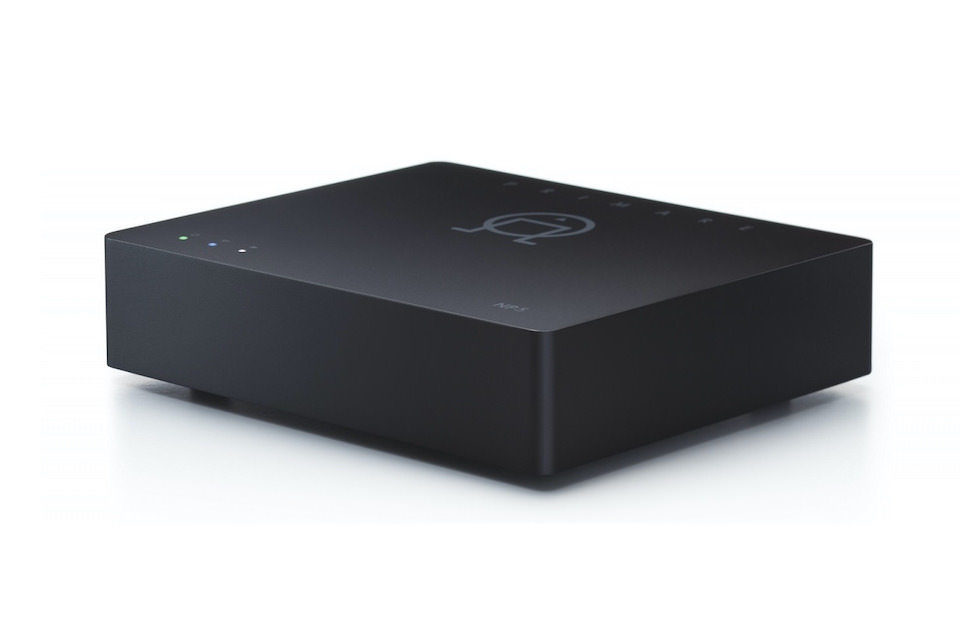
Primare’s NP5 Prisma network player has received Roon Ready certification, adding native compatibility with Roon’s music-management and multi-room ecosystem through a firmware update already available to owners. For a compact component conceived to bring modern network streaming to an established hi-fi system, that certification is more significant than a simple new app option: it gives the NP5 Prisma a direct route into one of the best-known library-centric playback platforms without requiring a wholesale change of amplification.
Introduced in Primare’s line-up in autumn 2019, the NP5 Prisma is not presented as an all-in-one streaming amplifier or a DAC-equipped network player. Instead, it is a network transport and control component based around the company’s Prisma platform. Its role is to add streaming services, network playback and system control to a digital audio chain that may already include a suitable DAC, integrated amplifier or processor.
That distinction matters. A network player with its own analogue outputs can be the obvious one-box answer for some systems, but a transport-style streamer can make more sense where an owner already values the digital-to-analogue conversion in an existing amplifier, standalone DAC or AV processor. It also makes the NP5 Prisma potentially relevant to owners of older Primare electronics that pre-date the company’s current network-enabled range.

What Roon Ready means for the NP5 Prisma
Roon is much more than a streaming-service control app. Its core appeal is a unified music library that can combine locally stored files with compatible streaming services, then enrich that collection with artist credits, release links, versions, editorial metadata and search tools. It also provides multi-room playback across compatible devices, with grouping and zone control handled from Roon’s own interface.
For the hardware side of that arrangement, Roon Ready certification identifies a component that can receive audio over Roon’s RAAT protocol. In practical terms, the NP5 Prisma becomes a Roon endpoint: Roon Core software running on a computer, server or supported appliance manages the library and sends music to the streamer across the local network. The NP5 then feeds the rest of the hi-fi system through its available digital connection path.
Certification is important because it is different from merely being able to play music from a computer or phone. Roon Ready devices are validated for operation within the Roon ecosystem, including device discovery and playback control. The experience is intended to be more integrated than selecting a generic network output or relying on a Bluetooth link. Roon’s interface remains the main point of control, while the NP5 Prisma handles network reception and delivery into the attached system.
“Adapting the versatile and feature-rich NP5 Prisma to Roon was challenging. The Primare team put in the effort and did it. We highly appreciate the work done. Primare has proven to be an excellent partner and we look forward to new Prisma models with Roon Ready certification in the future,”
Rob Darling of Roon Labs said of the certification.
As with any Roon installation, users should remember that Roon Ready status for the endpoint does not remove the need for a Roon Core. The Core is the part of the system that organises the library and performs Roon’s processing and distribution duties. It must be running somewhere on the network when Roon is being used. That is a worthwhile consideration for buyers comparing an ecosystem-based solution with a streamer designed principally around its manufacturer’s own app.
Prisma: a streaming platform rather than a single-service solution
Roon support sits alongside, rather than replaces, the NP5 Prisma’s existing Prisma functionality. Primare describes Prisma as the network-player technology used across its Prisma-enabled models, with control available through the Prisma app on mobile devices. The app provides a route to operate the streamer without making Roon the centre of the system.
The platform supports Bluetooth, Spotify Connect, AirPlay 2 and built-in Chromecast. These options address different listening habits, and it is useful to understand their respective roles rather than treating them as interchangeable badges on a specification sheet.
Spotify Connect hands playback from the Spotify app to the network player, allowing the NP5 Prisma to stream directly once it has been selected as the playback device. AirPlay 2 is chiefly useful in households built around Apple devices and also supports Apple’s multi-room framework. Bluetooth offers a quick, local wireless connection where convenience is more important than using the home network. Chromecast support widens the number of compatible music and radio applications, since many Android and cross-platform services can hand off playback to a Chromecast-enabled device.
The NP5 Prisma can also play content from a network hard disk. This is relevant to listeners with a locally stored collection—whether ripped CDs, downloaded albums or high-resolution files—who want that library available throughout the home network rather than connected directly to a laptop. The supplied information does not specify supported file formats, resolutions or network protocols, so buyers with particular PCM, DSD or library-server requirements should confirm those details before purchase. It is especially worth checking where a collection contains uncommon formats or where gapless operation and metadata handling are priorities.
The broader value of this collection of protocols is flexibility. A household might use the Prisma app for local-library browsing, Spotify Connect for casual listening, AirPlay 2 for an Apple-based family setup and Roon for a more deeply curated listening library. The NP5 Prisma is designed to accommodate those different routes rather than tie the owner to one service or control application.

A route to update older Primare systems
One of the NP5 Prisma’s more purposeful features is its ability to provide volume control and selectable inputs for earlier Primare models equipped with RS232 inputs. RS232 is a long-established serial control interface, commonly found on higher-end hi-fi and custom-installation equipment. It is not an audio connection; instead, it allows compatible components to exchange control commands.
In the NP5 Prisma’s intended application, this means the streamer can do more than deliver music to an existing Primare system. It can also act as part of a more unified control experience, allowing the user to select inputs and adjust volume on supported older models. For someone adding streaming to a traditional integrated amplifier, that can reduce the friction of operating separate boxes and remotes.
Compatibility is necessarily the key word here. The draft specifies earlier Primare models with RS232 inputs, but does not list the supported products or describe the exact connection arrangement. Owners should therefore check that their particular amplifier or processor is supported and establish which cable and setup procedure are required. It is also sensible to confirm how volume control behaves in each playback mode, particularly if an external DAC or another preamplifier is included in the signal chain.
System integration: where the NP5 Prisma makes sense
The NP5 Prisma is best understood as an upgrade component for a system that already has a digital input stage. It can be an elegant match for an existing Primare amplifier, particularly one that can take advantage of RS232 control, but its use case is broader: any system with an appropriate digital-input route may benefit from a dedicated network source.
Separating streaming from digital-to-analogue conversion has practical advantages. It allows the owner to retain a preferred DAC, whether that conversion is built into an amplifier or housed in a standalone component. It can also simplify future upgrades: a change of DAC need not require a change of streaming platform, and a change of streaming service does not automatically make the rest of the system obsolete.
Conversely, this architecture demands a little more attention to system planning than a fully featured streamer with analogue outputs. Prospective owners should verify the available digital connections on both the NP5 Prisma and their downstream DAC or amplifier, as the supplied information does not enumerate the NP5’s inputs and outputs. They should also decide which control environment will be used most often. Roon users will generally operate through Roon; listeners using Spotify Connect, AirPlay 2 or Chromecast will normally begin in the respective service app; and Prisma provides Primare’s own platform-level control.
Network quality also deserves consideration. Streaming reliability is determined at least as much by the home network as by the audio component. A stable network connection, sensible router placement and a robust local-library server are more likely to improve day-to-day ownership than chasing settings for their own sake. The draft does not specify whether the NP5 Prisma uses wired Ethernet, Wi-Fi or both, so installation requirements should be confirmed for the intended location.
What the update adds—and what it does not change
The Roon Ready firmware update expands the NP5 Prisma’s software and ecosystem compatibility; it does not turn the component into a different category of product. Its appeal remains its ability to bring current streaming methods to a conventional hi-fi chain, particularly one based around Primare electronics. The Roon addition is valuable for listeners who want Roon’s library presentation, multi-room control and certified endpoint operation, while the continued presence of Chromecast, AirPlay 2, Spotify Connect, Bluetooth and network-drive playback keeps the component useful for less specialist listening.
For an owner whose primary aim is to add streaming without abandoning a trusted DAC or amplifier, that is a coherent proposition. The trade-off is that the NP5 Prisma depends on the rest of the system for conversion and amplification, and buyers need to confirm connection compatibility and the particular format support they require. But for the right system, it is a focused way to add the conveniences of modern network audio while preserving the established core of a two-channel setup.
The Primare NP5 Prisma has a suggested retail price of €500.