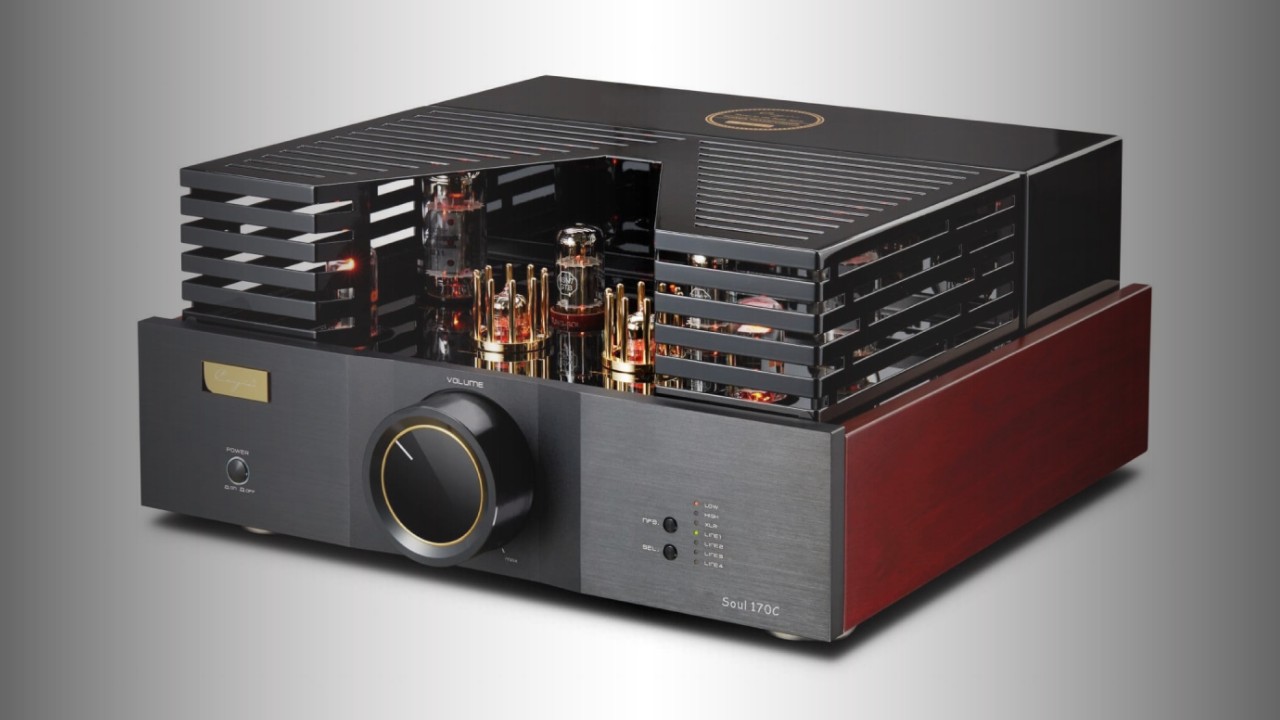
Cayin has added the Soul 170C to its premium Soul range, a two-channel tube preamplifier conceived as the control centre and intended partner for the recently announced Soul 170P stereo power amplifier. It is priced at €4,500.
The headline feature is not simply that the 170C uses valves—many high-end line preamplifiers do—but that Cayin gives the owner a choice of two negative-feedback settings. In principle, that makes this a preamp aimed at those who want to tune the behaviour of the gain stage around a particular power amplifier and loudspeaker combination, rather than treating the preamp as a fixed, opaque component.
The Soul 170C also uses an all-valve signal and power-supply arrangement, separate voltage regulation for its two channels, point-to-point wiring and a motorised ALPS volume control. Those details point to a traditionally engineered valve preamp, rather than a modern product using a valve merely as a cosmetic or buffer-stage addition. However, Cayin has not supplied connection details, gain figures or output-impedance specifications, so prospective owners should confirm those particulars—especially compatibility with a chosen power amplifier—before buying.
Cayin Soul 170C: a valve preamp for a separate power amplifier
A preamplifier sits between sources and a power amplifier. Its fundamental jobs are source selection, volume control and providing sufficient, low-noise voltage gain to drive the power amplifier cleanly. In a high-resolution system, it can also have a substantial influence on noise floor, channel balance, dynamic headroom and the practical ease of combining sources with amplification.
The Soul 170C is a line preamplifier, so the supplied information does not indicate that it includes a phono stage for a turntable cartridge. Vinyl users would therefore need an appropriate external phono preamplifier between the turntable and the 170C, unless their source already provides line-level output. Likewise, there is no indication of DAC, streaming or Bluetooth functionality: this is an analogue control amplifier, designed to be used with separate digital and analogue source components.
Cayin positions it as the visual and technical companion to the Soul 170P. Buying both components gives a conventional two-box pre/power system, where the voltage-gain and source-control duties are separated from the speaker-driving output stage. This arrangement can offer greater flexibility than an integrated amplifier: a listener can change power amplification or speakers without replacing the source-control section, and the power amplifier can be positioned according to speaker-cable requirements while the preamp remains with the sources.
It is not automatically a better solution than a high-quality integrated amplifier, however. A pre/power system needs an additional interconnect, an extra mains connection and careful attention to gain structure. The appeal here is control, flexibility and the opportunity to build a system around complementary separate components.
Eight valves, with separate regulation for each channel
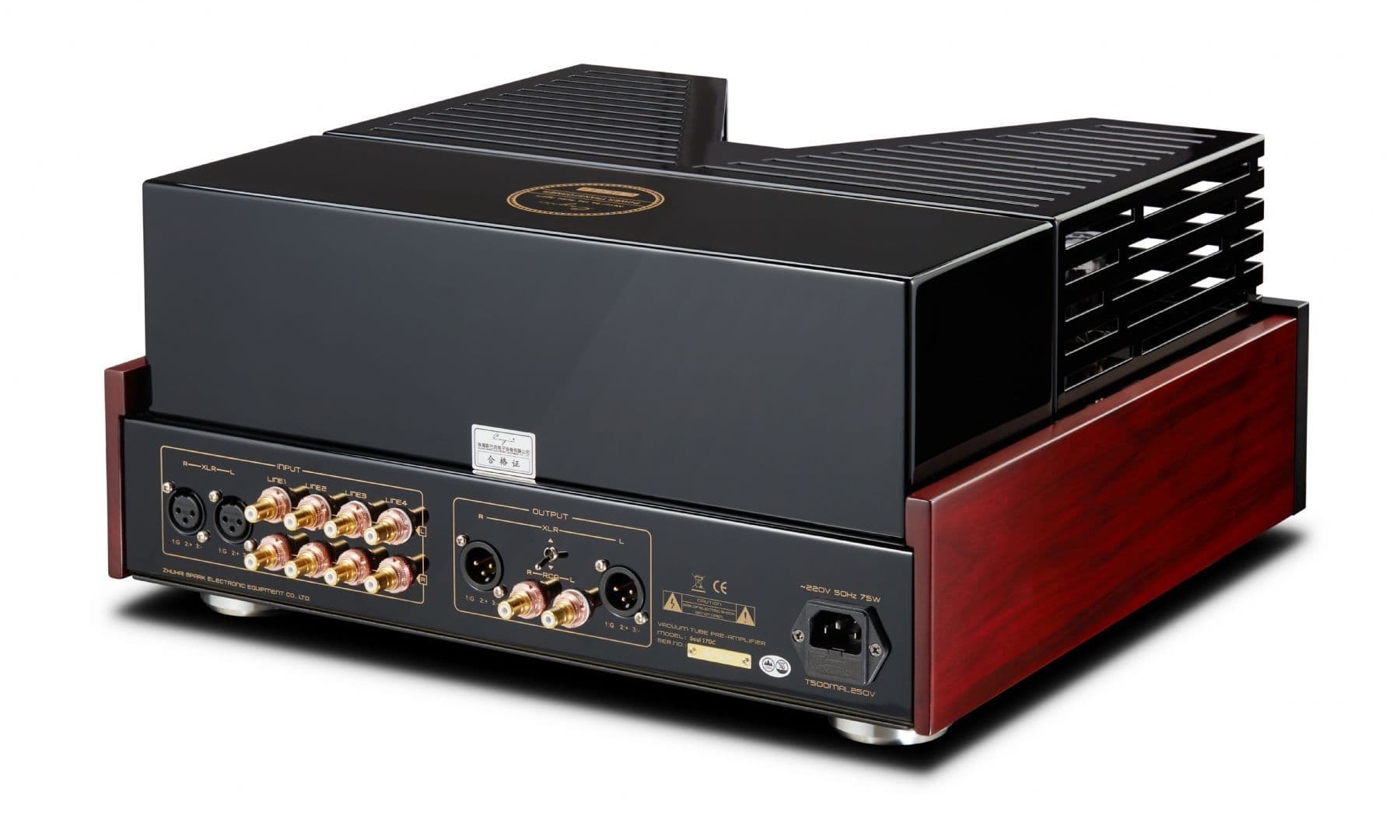
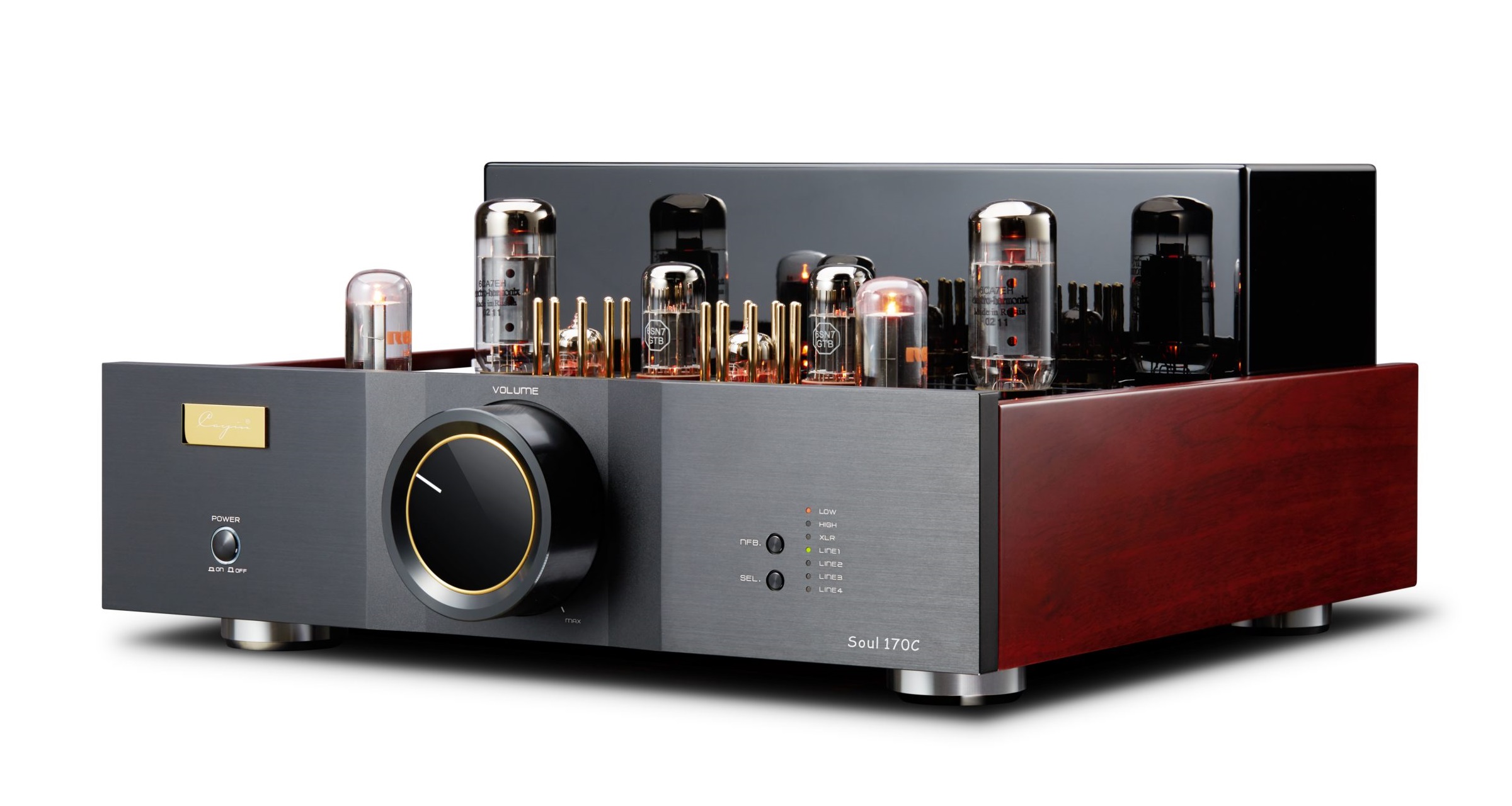
The Soul 170C employs eight valves in total, four for each channel: one ECC83, one 6SN7GTB, one 6CA7 and one 17AX4GT. Cayin assigns the ECC83 and 6SN7GTB to line amplification, while the 17AX4GT is used in the rectification stage and the 6CA7 is used for channel-separated voltage regulation.
That allocation is worth unpacking. The ECC83, also widely known as the 12AX7, is a high-gain dual triode often used where a circuit needs voltage amplification. The 6SN7GTB is another dual-triode type with a long history in line-level audio circuits. In broad terms, pairing valve stages can allow a designer to distribute gain and buffering duties rather than demanding everything from one stage. The exact circuit topology is not stated, so it would be wrong to infer the precise role of each valve beyond Cayin’s description, but the tube complement confirms that the line stage is not a single-valve affair.
The power-supply arrangement is equally significant in a preamplifier. A valve rectifier converts transformer-supplied AC into DC for the circuit, while voltage regulation aims to keep that supply stable as operating conditions change. Cayin says the 17AX4GT provides low-resistance DC rectification and that a 6CA7 regulates the supply independently for each channel. Separating the regulation by channel is intended to reduce the degree to which one channel’s changing signal demands can modulate the other channel’s supply. That can be relevant to channel separation and stereo stability, although no measured separation figure has been published.
Cayin specifies a signal-to-noise ratio of 100dB, A-weighted. A-weighting is a measurement convention that places less emphasis on frequencies to which human hearing is less sensitive; it is useful for comparing like-for-like published specifications, but should not be directly equated with an unweighted noise measurement. In practical terms, a low-noise preamp is important because it amplifies every source signal—including any residual hiss or hum—before the power amplifier adds further gain.
The stated frequency response is 8Hz–35kHz via XLR and 8Hz–100kHz via RCA. Both quoted ranges extend well beyond the conventional audible band at the bass end and, at least at their upper limits, above it too. The figures should not by themselves be read as a guarantee of audible superiority: bandwidth depends on the measurement conditions and tolerances, which have not been stated. They do show, however, that Cayin is quoting different bandwidth limits for the balanced and unbalanced signal paths. Users choosing between XLR and RCA should consider the complete system, the available sockets and cable runs rather than assuming one connection type is inherently preferable in every installation.
Two negative-feedback settings and what they can change
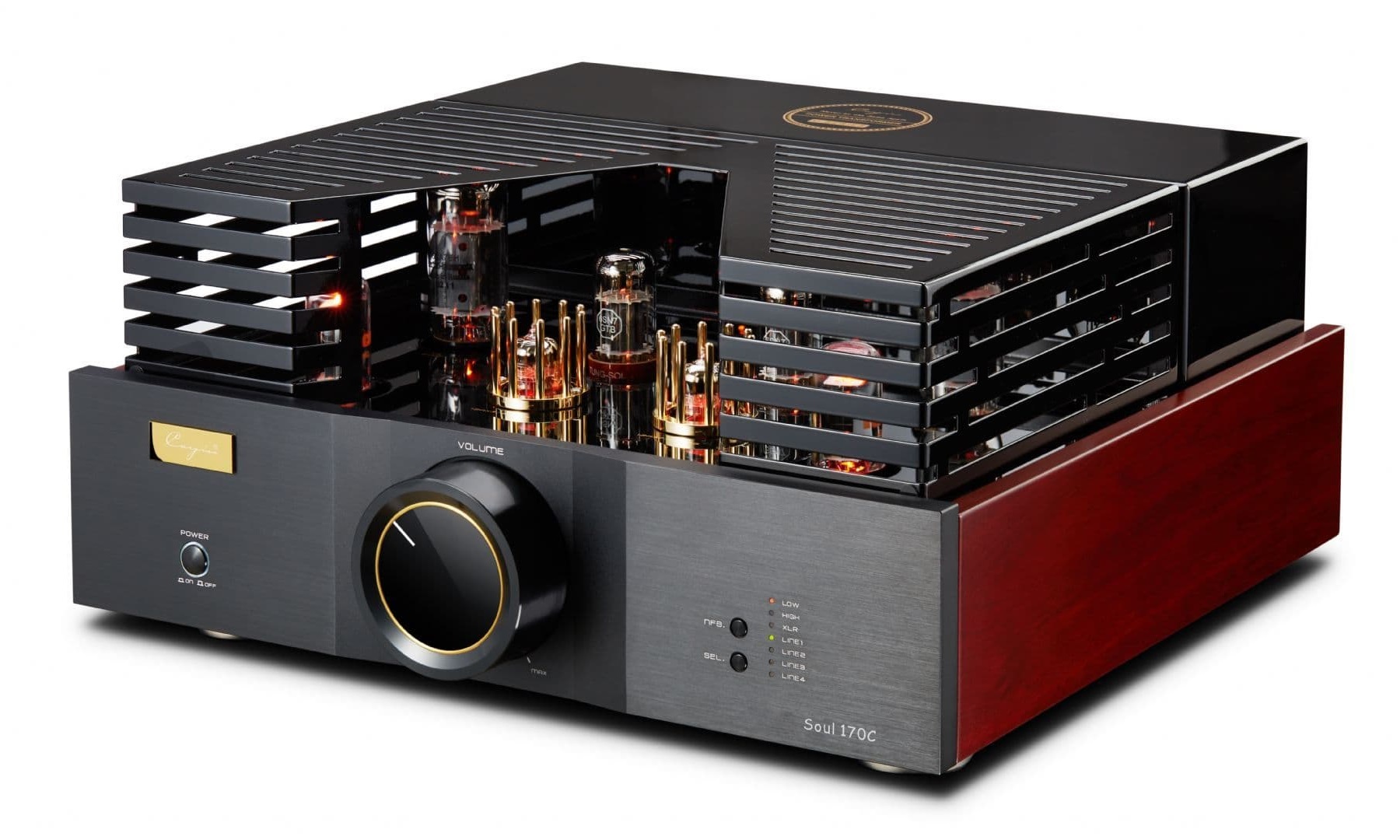
The 170C’s most unusual control is its selectable negative feedback. Negative feedback returns a controlled portion of an amplifier’s output to an earlier part of the circuit in opposite phase. Used carefully, it can reduce distortion, lower noise, improve linearity and make an amplifier’s behaviour more consistent. It can also alter gain, bandwidth and output characteristics. How those variables trade against one another depends heavily on the individual circuit; there is no universal “more feedback is always better” rule.
Cayin provides two settings:
- Low negative feedback: Cayin says this setting opens the soundstage and brings greater expression and naturalness, and suggests it for a more emotionally involving presentation.
- High negative feedback: Cayin says this setting prioritises precision and control for a more focused, analytical presentation.
These descriptions remain the manufacturer’s stated voicing goals, not independent listening findings. Nevertheless, the feature has a clear practical rationale. Power amplifiers and loudspeakers do not represent identical loads, and some systems are already inclined towards a tightly controlled, explicit presentation while others may benefit from a different balance of drive and openness. Offering two feedback levels gives the owner a genuine variable to explore once the system is installed.
The sensible approach is to compare the modes at matched volume, using familiar recordings and allowing enough time to hear changes in image focus, tonal balance, low-level detail and bass definition without mistaking a small loudness difference for a quality difference. The setting should be viewed as system tailoring rather than a substitute for correct speaker placement, suitable source matching or well-chosen amplification.
Hand-wired construction and the importance of layout
Like the Soul 170P, the Soul 170C is hand-wired using point-to-point connections. In this approach, components are linked directly by wire and terminals rather than being mounted primarily on a conventional printed circuit board. Point-to-point construction is often associated with valve equipment because it can give an experienced designer direct control over component placement, wire routing and the physical separation of sensitive signal wiring from power-supply wiring.
It is not a magic route to better sound: execution matters more than the construction label. A well-designed circuit board can be extremely quiet and reliable, while poorly laid-out hand wiring can create unwanted noise pickup or inconsistency. But in a valve preamp, where high voltages and sensitive low-level audio stages coexist, careful physical layout is a meaningful engineering concern. Cayin says the hand-wired arrangement is intended to minimise signal loss and crosstalk.
The specified component selection includes silver-plated terminals, premium coupling capacitors, a hand-wound transformer and a motorised ALPS volume control. Coupling capacitors are used in many valve circuits to pass the audio signal between stages while blocking DC voltage; their values and implementation form part of the circuit’s low-frequency behaviour. The transformer is central to a valve component’s power supply, and a hand-wound example gives Cayin control over its design, although its electrical specification is not supplied.
The motorised ALPS control is an ownership-relevant detail. ALPS potentiometers are widely used in serious audio products, while motorisation generally enables remote-controlled volume adjustment. Cayin has not listed the remote-control arrangements, channel-tracking tolerance or control facilities, so these remain points to verify for buyers who need a particular installation or usability feature.
System matching: what to establish before buying
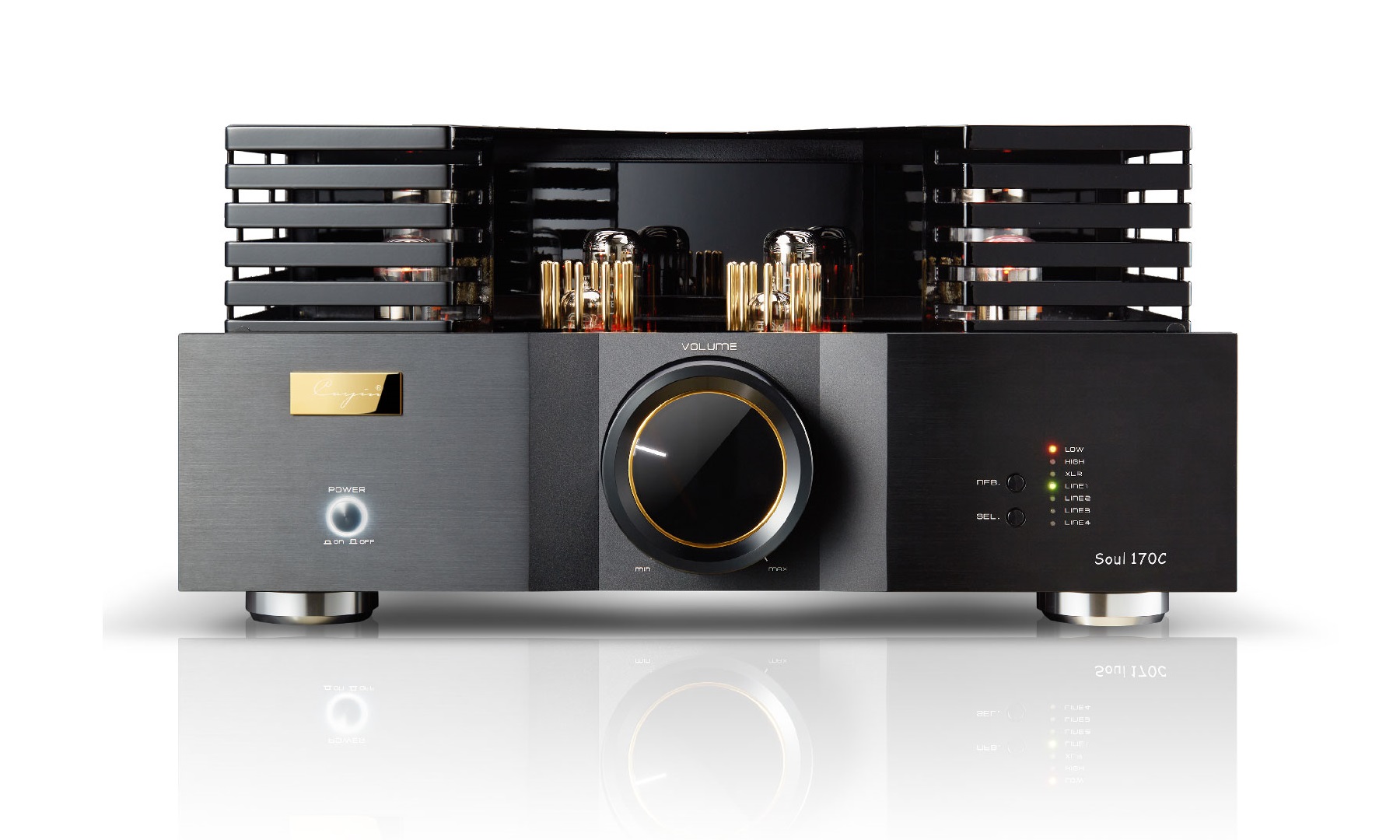
On the information available, the most natural pairing is Cayin’s Soul 170P power amplifier, which shares the series styling and hand-wired approach. The Soul 170C should also be considered by listeners with another power amplifier who specifically want a valve line stage and adjustable feedback, but a few compatibility checks are essential.
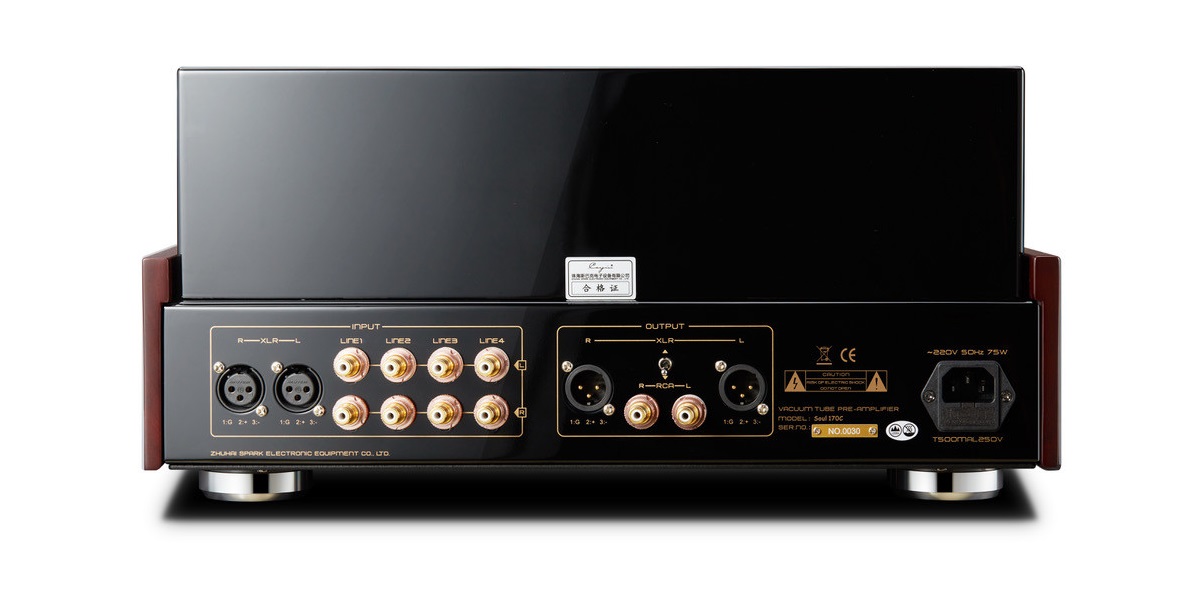
First, confirm the available input and output connections. Cayin quotes separate XLR and RCA frequency-response figures, indicating both connection formats are relevant to the product, but the supplied information does not provide a full socket count or routing scheme. A buyer with several analogue sources, a record player requiring a phono stage, a DAC and a streamer should ensure there are enough suitable inputs before committing.
Second, establish the preamp’s gain and output impedance alongside the power amplifier’s input sensitivity and input impedance. These relationships affect usable volume-control range, noise and the preamp’s ability to drive the amplifier and interconnect cable without unintended tonal or dynamic effects. This is particularly important with long interconnects or unusual amplifier input stages. Neither figure is given here, so it is a question for the retailer or distributor.
Finally, allow for normal valve ownership. Valves generate heat, so the preamp needs ventilation and should not be enclosed tightly in furniture. Valves also age and can eventually require replacement. The stated tube types are useful because they identify the complement an owner will need to maintain, but Cayin has not provided expected valve life, replacement pricing or bias requirements. Those practical details are worth clarifying, particularly for a component positioned at €4,500.
Early verdict
The Cayin Soul 170C presents a focused proposition: a dedicated, all-valve line preamplifier with separate channel regulation, traditional point-to-point construction and an unusually explicit means of altering negative feedback. Its strongest appeal is likely to be for listeners assembling a Soul 170P-based system, or for experienced separate-component users who value the ability to fine-tune the preamp’s operating character around their existing power amplifier and speakers.
At this stage, the omissions matter as much as the published specifications. There is no full connectivity list, gain specification, output-impedance figure, dimensions or independent performance data in the available information. Those details will determine how straightforward the Soul 170C is to integrate outside its intended partner system. What is clear is that Cayin has made the preamp’s valve circuit and feedback architecture central to the product, rather than presenting it as a generic control unit.