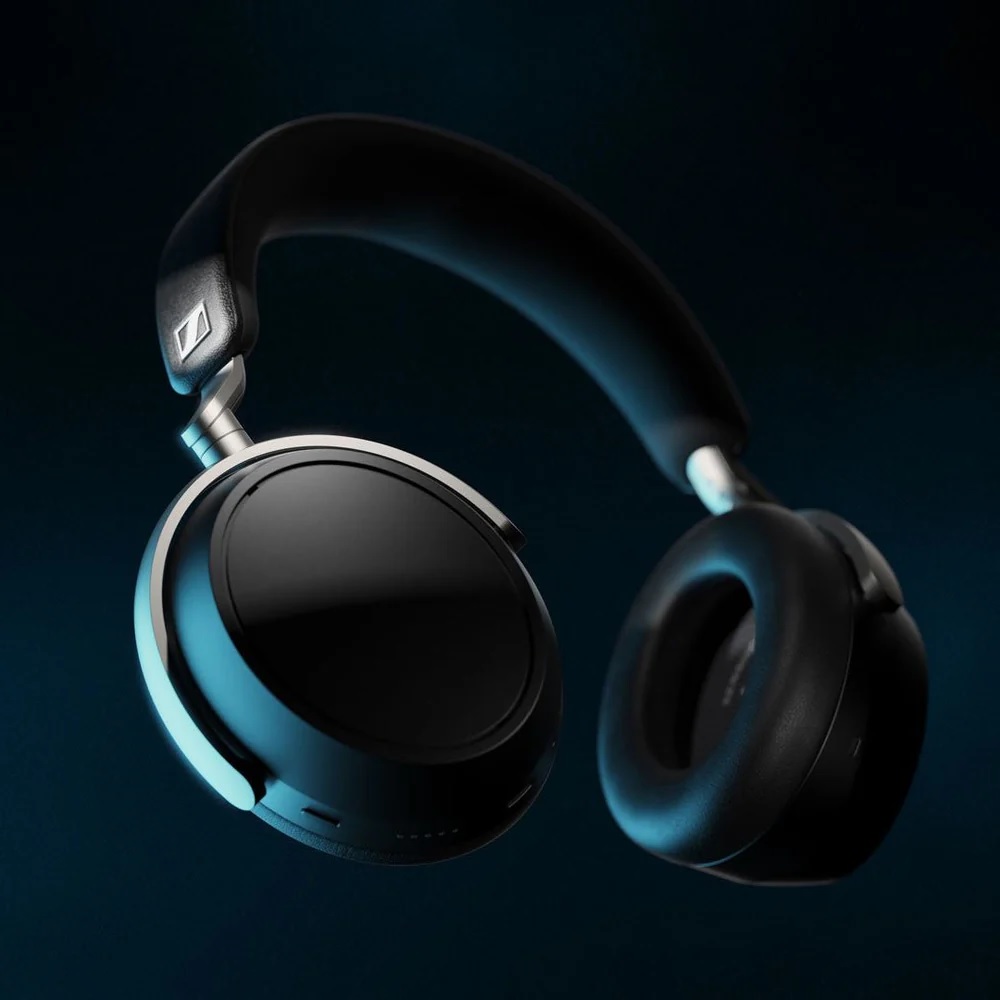
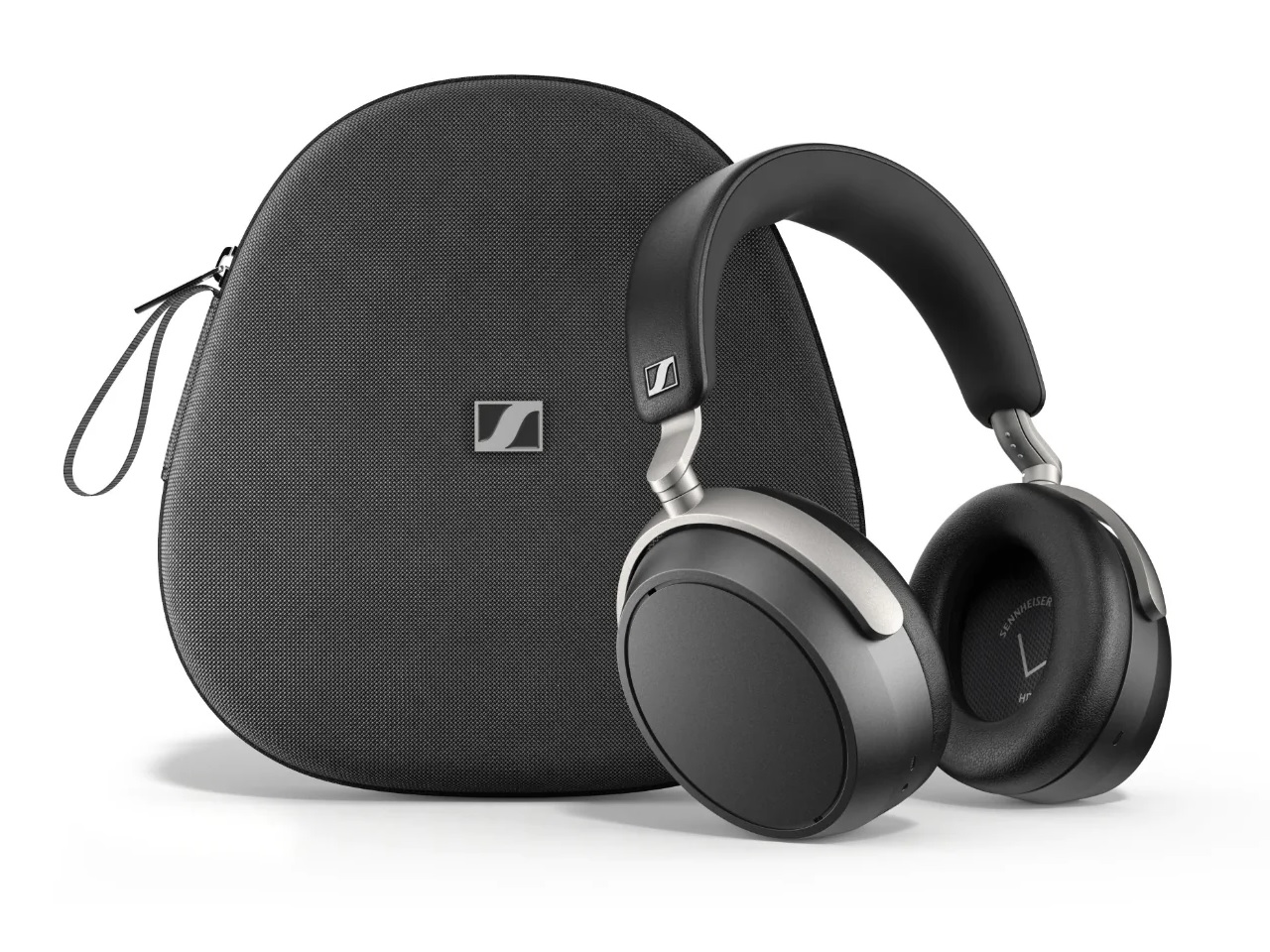
Sennheiser has announced the HDB 630, a new flagship in its wireless over-ear headphone range. Positioned above the Momentum 4, it combines 42mm drivers, adaptive active noise cancellation, Bluetooth 5.2 and a notably broad set of listening and connection options: conventional wireless operation, analogue 3.5mm input and USB-C wired audio.
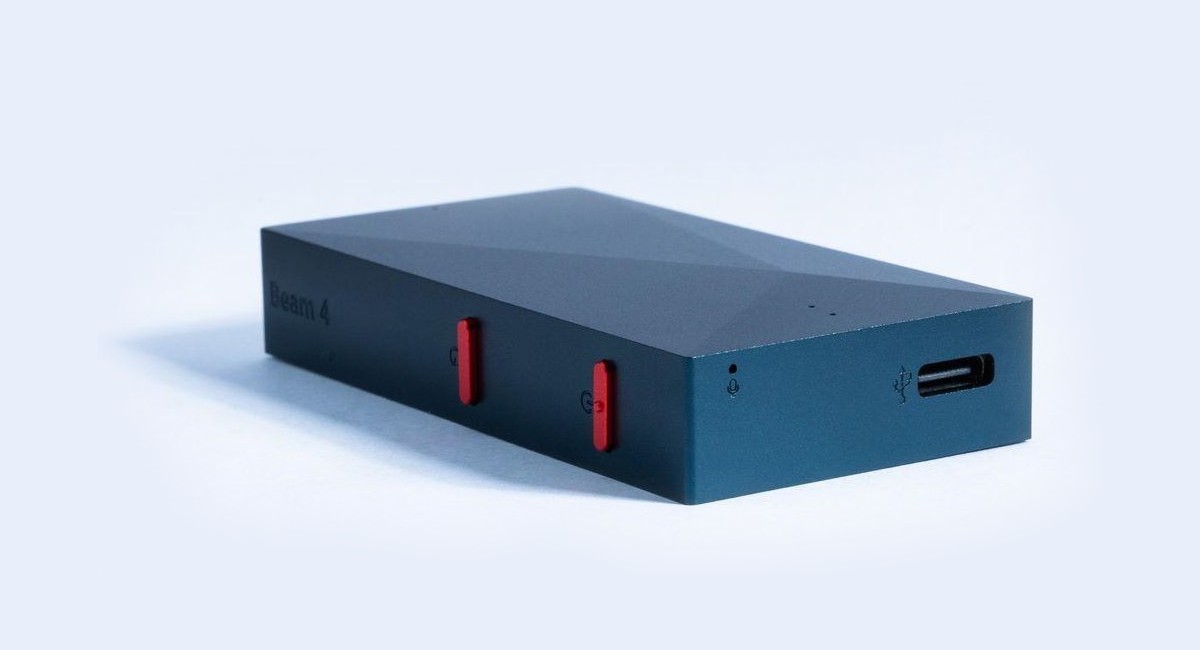
The headline feature is the supplied BDT 700 USB Type-C transmitter, which adds aptX Adaptive capability to compatible USB-C source devices that do not offer the codec natively. Alongside a claimed 60-hour battery life, Japanese protein-leather ear cushions and Sennheiser’s Smart Control Plus app with parametric EQ and crossfeed, the HDB 630 is aimed at listeners who want more control over a portable headphone’s sound than a simple preset-based implementation permits.
Sennheiser HDB 630: a flagship wireless design built on Momentum 4 architecture
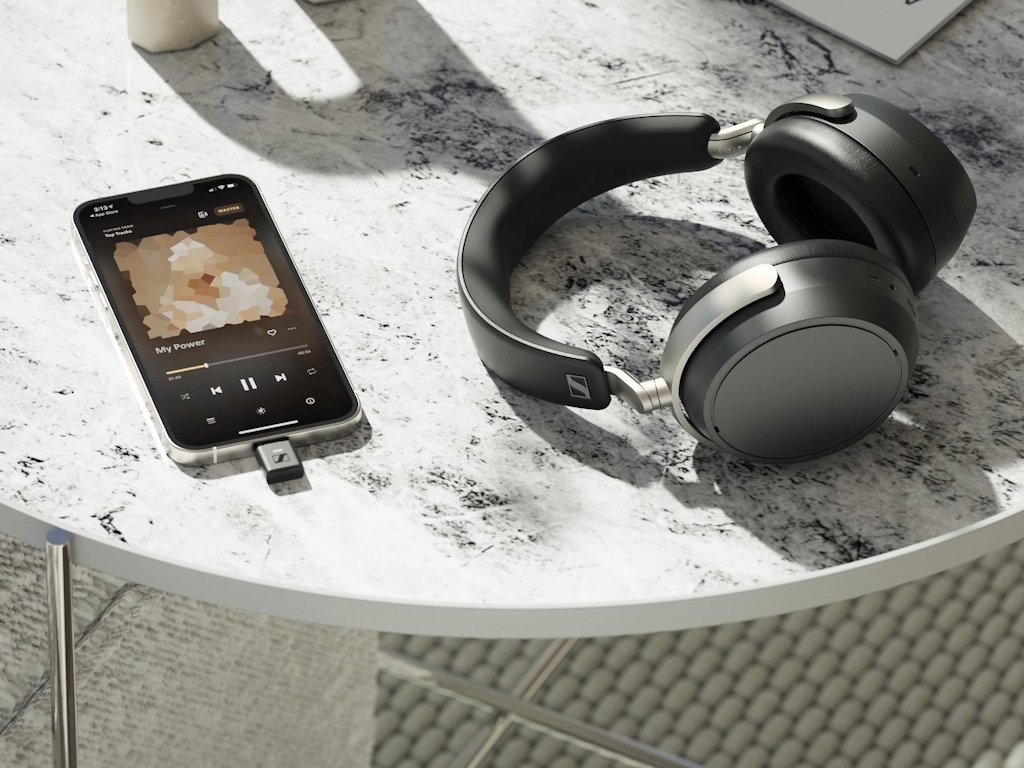
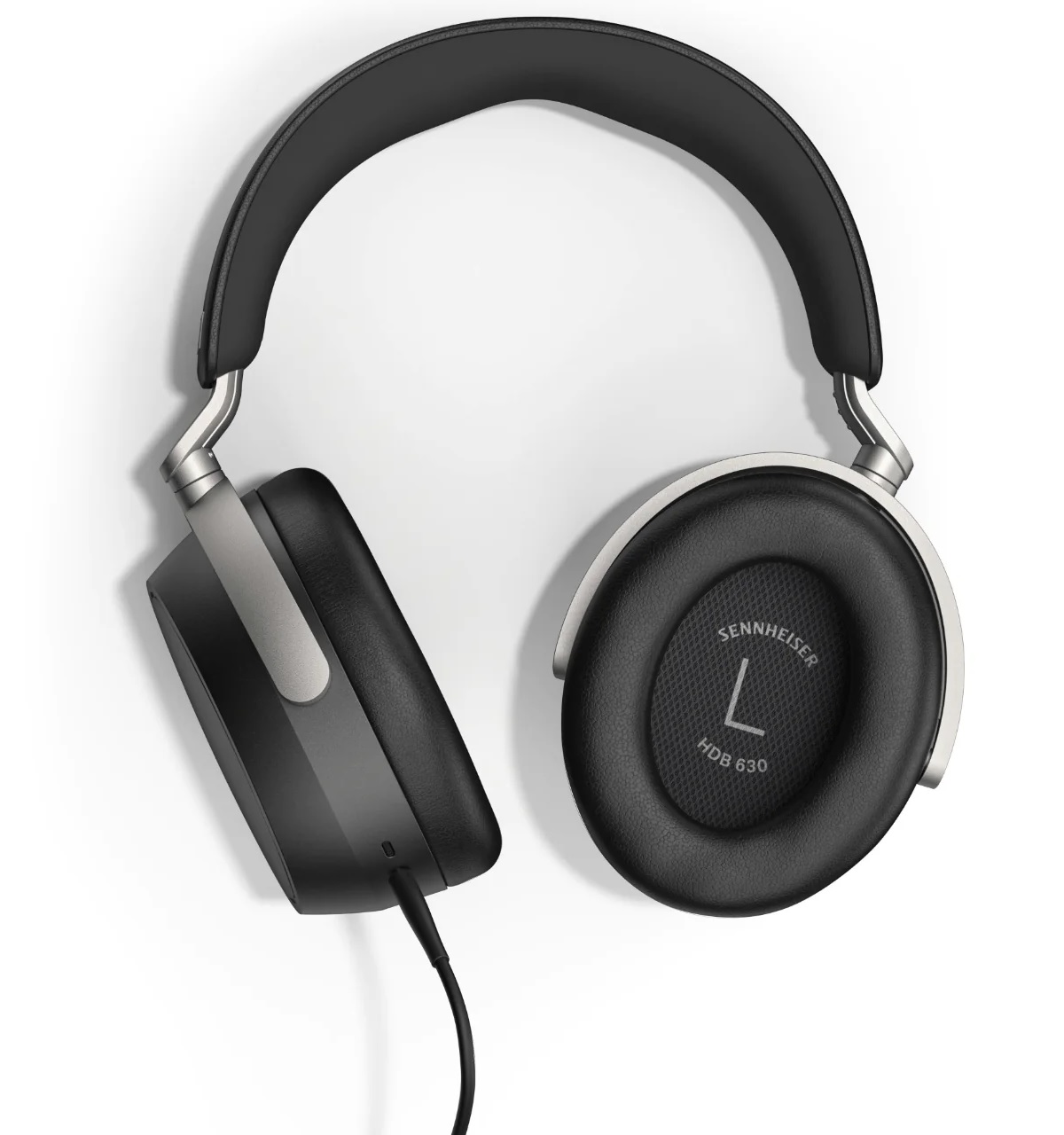
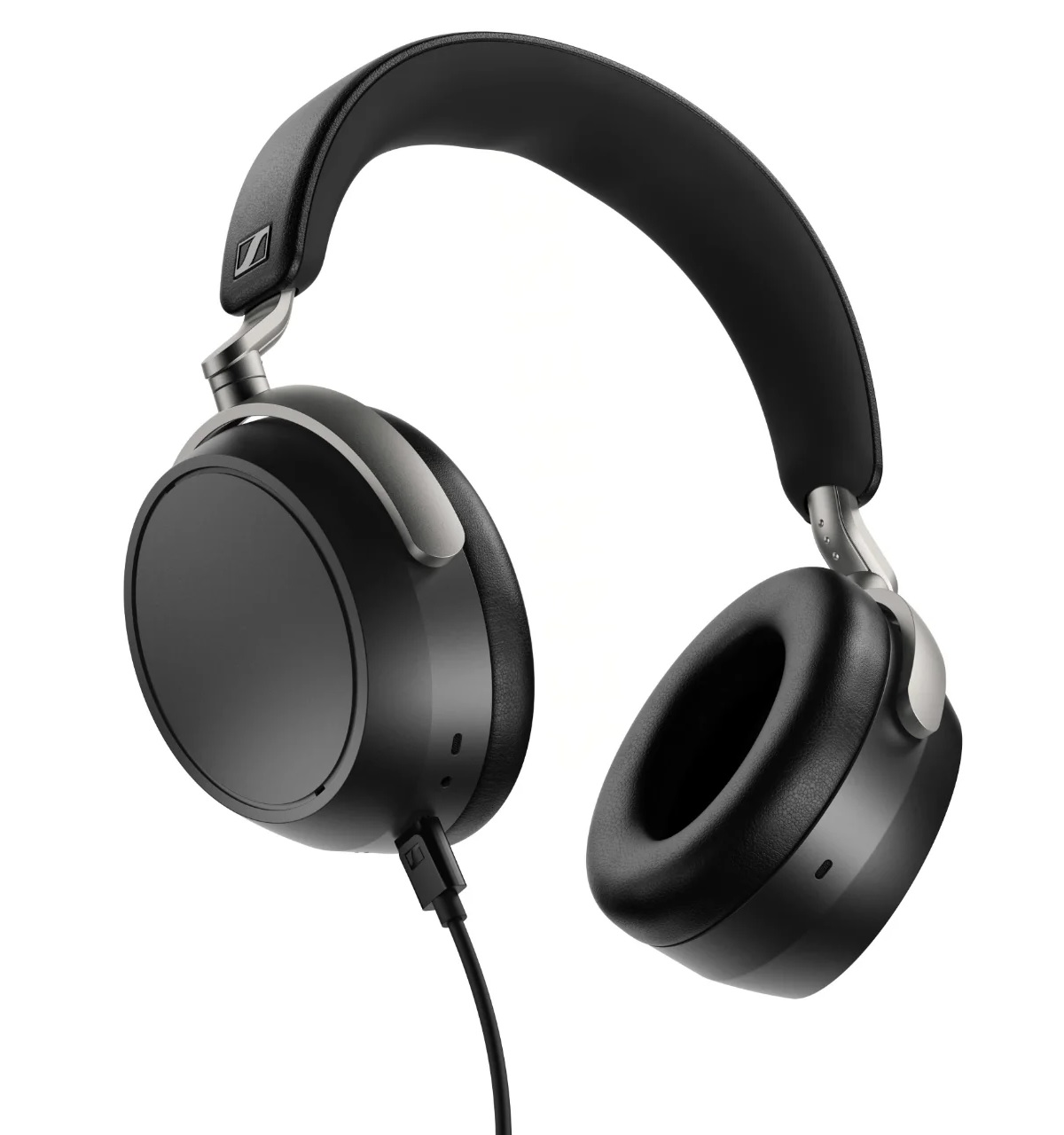
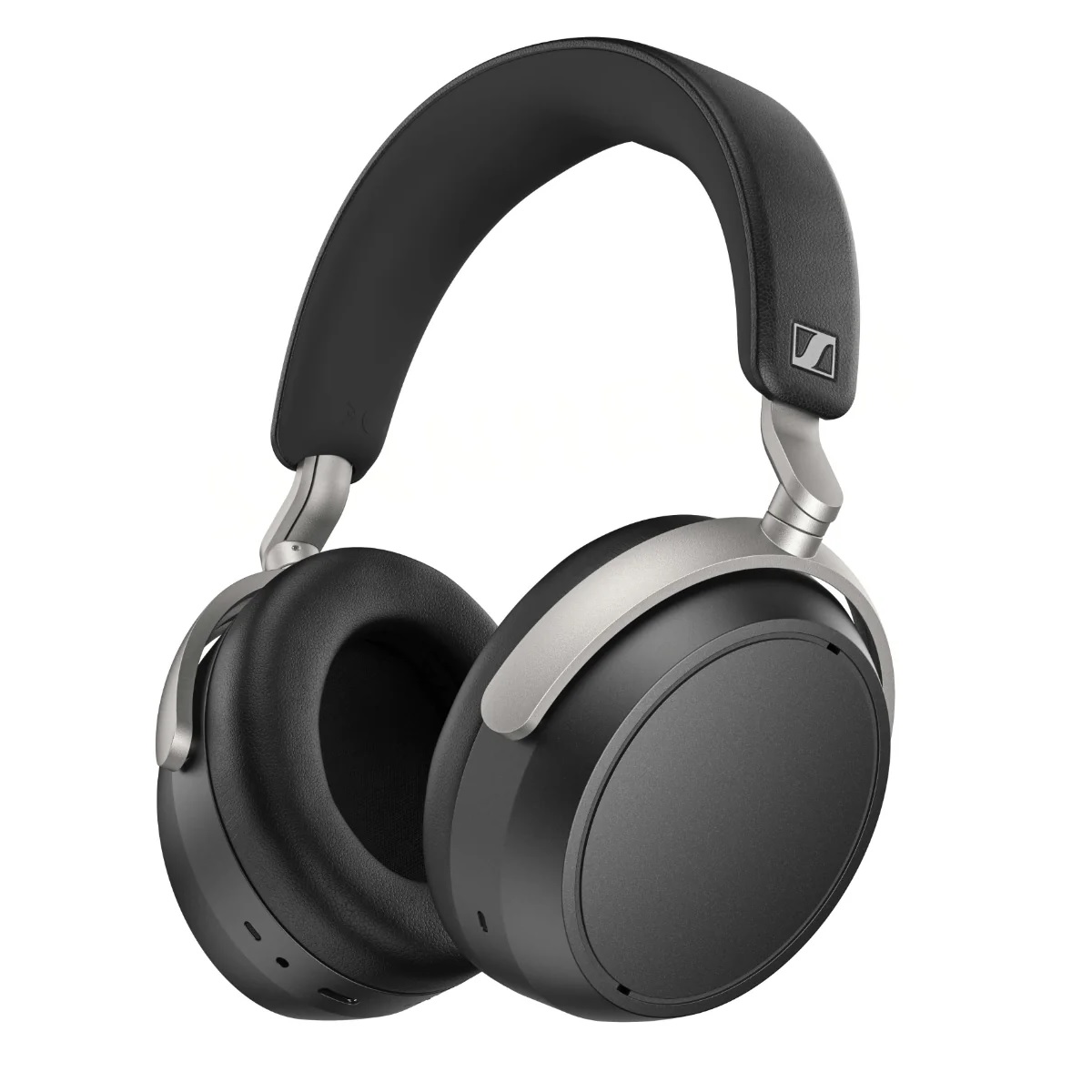
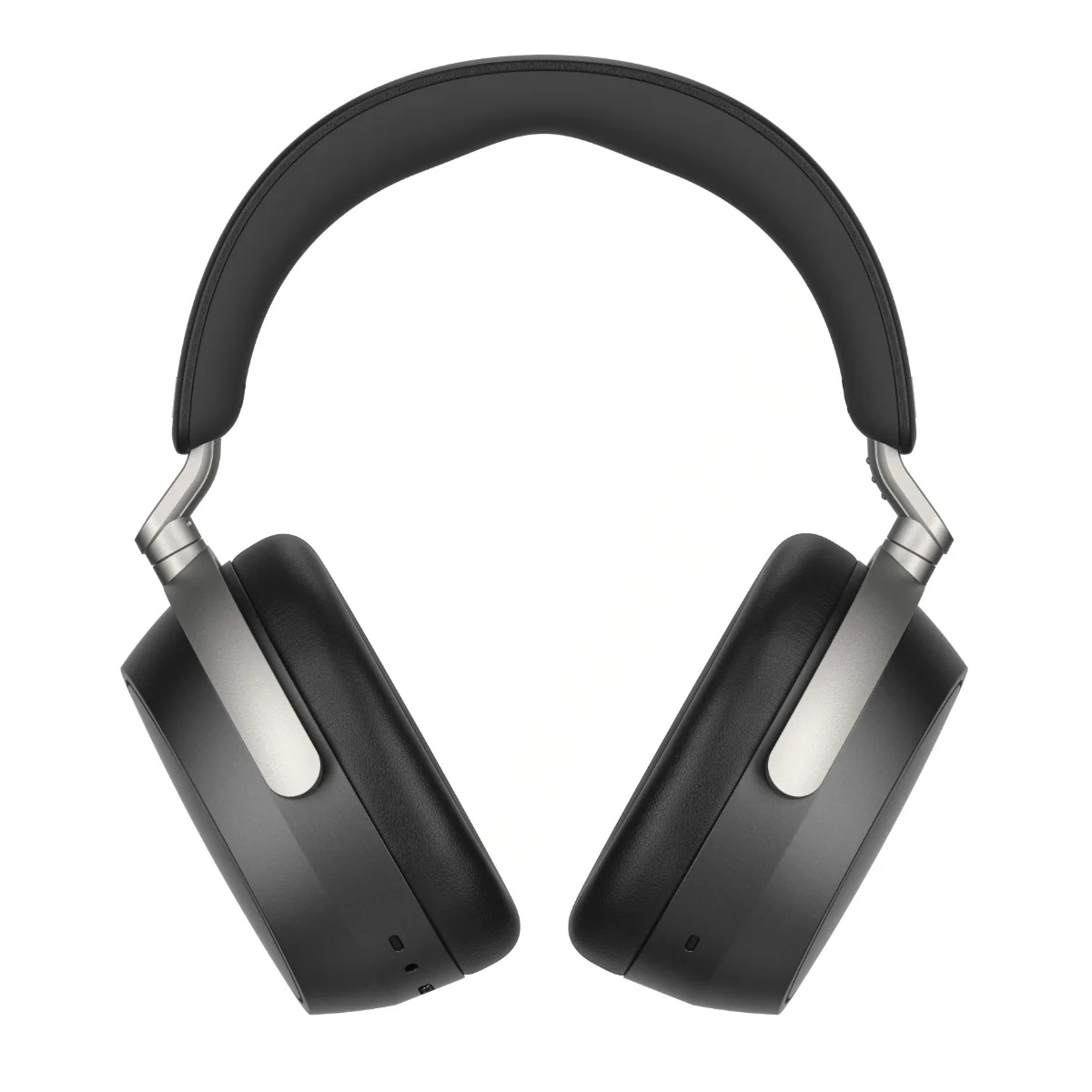
The HDB 630 is an over-ear, closed-back wireless headphone. Its earcups are mounted in a frame derived from the Momentum 4, so its physical platform comes from an established Sennheiser portable design, while the HDB 630 takes on the role of the company’s new wireless flagship.
At its centre are 42mm drivers. Driver diameter is not, by itself, a guarantee of a particular tonal balance or level of bass extension: diaphragm material, motor design, enclosure acoustics, seal around the ear and digital signal processing all matter. But a 42mm unit is a substantial driver for an over-ear headphone and gives the designer useful diaphragm area to work with. In a closed portable model, maintaining a consistent seal is particularly important, since even small leaks around the pads can reduce low-frequency output and alter the intended balance.
Sennheiser specifies ear cushions made from Japanese protein leather. For owners, the relevant consideration is less the terminology than the job the pads perform. They are the contact point that determines long-session comfort, but are also an acoustic component: pad shape, compliance and surface material affect the seal, the distance between driver and ear, and therefore the headphone’s repeatable sound. Replacement-pad availability, long-term durability and how the material behaves in warm conditions remain details to establish separately.
Parametric EQ and crossfeed make tuning central to the HDB 630
Most wireless headphones offer a handful of broad tonal presets. The HDB 630 instead works with Sennheiser’s Smart Control Plus app, which includes a parametric equaliser. That is a more meaningful provision for enthusiasts because it can allow adjustment of a selected frequency range rather than simply applying a fixed, manufacturer-chosen profile.
In general, a parametric EQ gives the user control over the frequency being addressed, the amount of boost or cut, and often the width of the affected band. The practical advantage is restraint and precision. A listener who finds a narrow region too prominent can potentially reduce it without heavily changing the rest of the spectrum; equally, one can make modest changes to account for personal preference, recording variation or the way the headphone seals around an individual’s ears. The exact controls and range of adjustment offered in Smart Control Plus have not been detailed in the announcement, so prospective buyers should not assume studio-style flexibility until Sennheiser confirms it.
Crossfeed is the other unusually hi-fi-minded processing option. With loudspeakers, each ear hears both left and right speakers, with small time and level differences created by the room and the listener’s position. Headphones normally keep the channels strongly separated: the left channel goes primarily to the left ear and the right channel to the right ear. That can make some recordings, particularly older hard-panned stereo mixes, appear artificially wide or place instruments entirely at one ear.
The HDB 630’s crossfeed control mixes a measured amount of each channel into the other to moderate that effect. Used carefully, it can make an extreme left-right presentation feel closer to a conventional two-speaker image. It is not a universally preferable setting, and it cannot reproduce the acoustics of a room, but it is a useful option for listeners who find intense channel separation fatiguing or distracting. Its inclusion reflects an approach that lets the owner choose between maximum channel separation and a more speaker-like presentation.
Adaptive ANC for travel, with a transparency option for everyday use
The HDB 630 uses adaptive Active Noise Cancellation (ANC), with a transparency mode for hearing conversations or surroundings without taking the headphones off. ANC uses microphones to monitor ambient sound and generates an opposing signal intended to reduce what reaches the ear. It is typically most effective against steady, low-frequency noise such as aircraft cabin rumble, rail noise or ventilation systems. Its effectiveness against irregular higher-frequency sounds, including nearby speech, is inherently more limited.
“Adaptive” means the system is intended to respond to changing external conditions rather than applying one fixed cancellation profile. In day-to-day terms, that is useful for a headphone likely to move between home, office and transport environments. Transparency mode reverses the priority, using the microphones to feed in external sound so a wearer can speak to someone, hear an announcement or maintain awareness without removing the HDB 630.
There is an inevitable ownership trade-off with any ANC headphone. Noise cancellation and its microphones are valuable where the environment is noisy, but they add signal processing to the listening chain. The supplied information does not say whether the HDB 630 offers separate ANC modes when operating over cable, or how its sound changes between ANC and non-ANC operation. These are worthwhile points to check for anyone intending to use it principally as a wired headphone at home.
Bluetooth 5.2, aptX Adaptive and the BDT 700 transmitter
For wireless playback, the HDB 630 uses Bluetooth 5.2 and supports aptX Adaptive. This Qualcomm codec is designed to vary its operating parameters dynamically, balancing connection stability, delay and audio quality according to the conditions of the wireless link. Sennheiser states that aptX Adaptive can deliver audio up to 24-bit/96kHz at 420kbps, with latency as low as 80ms.
Those figures need appropriate context. A 24-bit/96kHz input capability describes the format accepted by the Bluetooth transmission system; it does not mean that the wireless signal is uncompressed or bit-perfect in the way a direct USB digital connection may be. Bluetooth codecs encode the audio for radio transmission, and actual performance can change with source support, interference and distance. The adaptive element is intended to make that compromise more graceful, prioritising a robust link when radio conditions demand it and higher quality when they permit.
Latency of up to 80ms is relevant to video and gaming as well as music. Lower delay can help keep lips and picture cues aligned, though the complete result also depends on the source device, operating system, application and display. For music-only listening, stability and sound quality are normally the more important benefits of an adaptive codec.
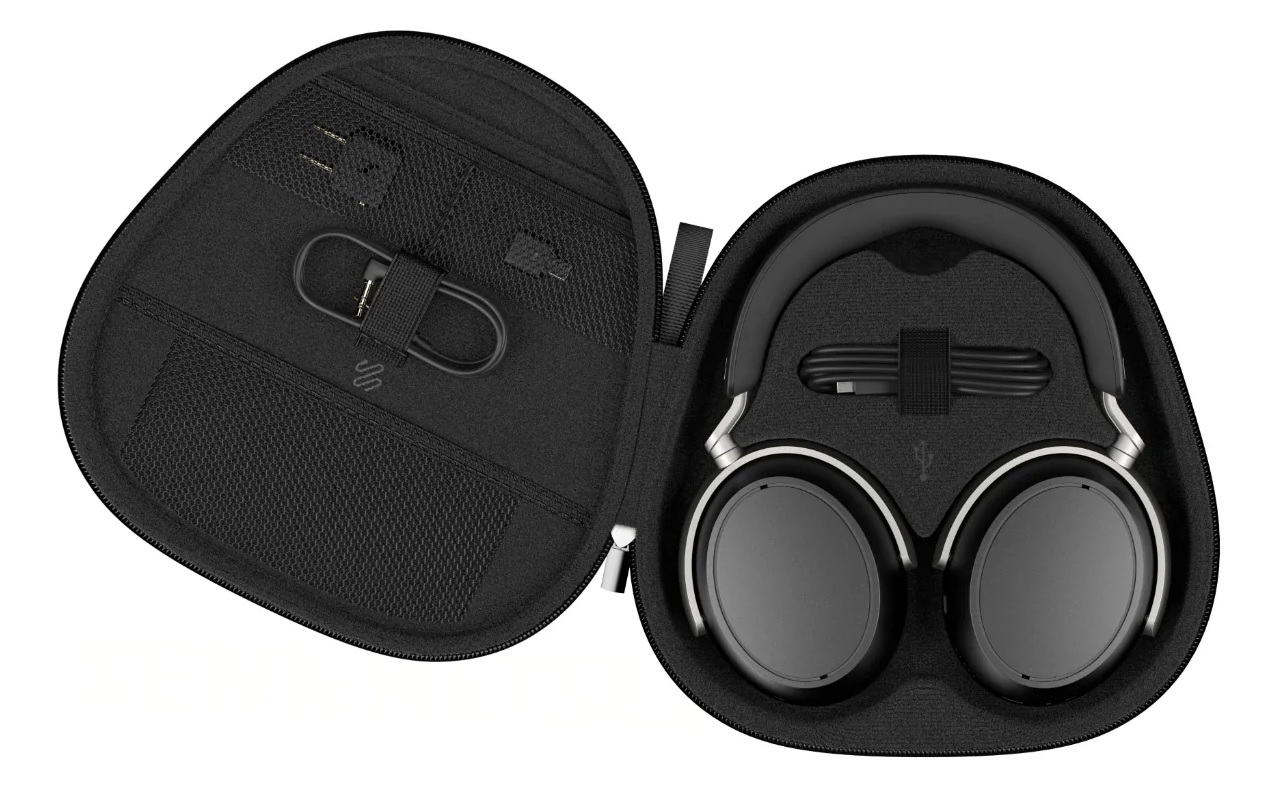
The included BDT 700 USB Type-C dongle transmitter is therefore more than a token accessory. It provides an aptX Adaptive transmission route for devices that lack native support, with Sennheiser specifically identifying phones such as Apple iOS devices. This could simplify use with a compatible USB-C host because codec support is often determined by the source rather than the headphone. Buyers should nevertheless verify compatibility with their particular phone, tablet, computer or other USB-C device, and consider the practical implications of a dongle occupying its USB-C port.
No information has been released on LDAC support. That matters chiefly to Android users whose existing phone supports Sony’s higher-bitrate Bluetooth codec and who want to know whether it remains available with this model. aptX Adaptive and LDAC are separate codec ecosystems; support for one should not be taken as confirmation of the other. Until Sennheiser publishes a full codec list, LDAC capability should be treated as unconfirmed.
Wired USB-C and 3.5mm connections widen the system possibilities
Wireless convenience is only part of the HDB 630’s proposition. Sennheiser says the headphones can also connect via a 3.5mm cable and a USB-C cable. These two routes can serve different roles in a system.
A 3.5mm connection is the familiar analogue option for a headphone socket on a laptop, portable player, integrated amplifier, DAC/headphone amplifier or airline adaptor arrangement. Its final sound quality will depend in part on the analogue output feeding it. The announcement does not specify whether the HDB 630 must be powered on during analogue listening, whether ANC remains available, or whether the analogue input is converted to digital internally. Those details make a real difference to how a headphone behaves in a traditional hi-fi chain and need confirmation before treating it as a direct substitute for a passive wired headphone.
USB-C wired audio can be attractive for computer, tablet and phone listeners because it can avoid relying on the source’s analogue headphone output. However, Sennheiser has not disclosed the HDB 630’s USB audio formats, its internal DAC implementation, or whether USB-C operation is handled as a fully digital audio path. It would be premature to infer these specifications from the presence of the connector alone.
What is clear is that the three connection routes give the HDB 630 considerable practical flexibility. Bluetooth is the obvious choice for roaming around a home or travelling; the BDT 700 offers a dedicated aptX Adaptive link where a source lacks that codec; and cables provide alternatives where radio transmission is inconvenient, undesirable or unavailable.
Battery life and who the HDB 630 is for
Sennheiser quotes battery life of 60 hours, with a 10-minute quick charge claimed to add a further seven hours. If achieved in the owner’s preferred mode, that is a long interval between charges for a full-size wireless headphone, and the fast-charge figure is particularly useful before a commute or flight. As with any battery-life claim, real results can vary with volume, noise-cancellation use, wireless conditions and the selected connection mode.
The HDB 630 looks most relevant to a listener who wants a travel-capable, noise-cancelling headphone without accepting a wholly simplified feature set. The parametric EQ and crossfeed tools should appeal to users prepared to tailor playback rather than rely on a fixed house voicing, while the USB-C, 3.5mm and Bluetooth options make it easier to move between a phone, computer and conventional hi-fi equipment.
Its limits are mainly areas where the announcement remains incomplete: there is no stated LDAC support, no published detail on USB audio operation or DAC hardware, and no specified information on its wired/ANC behaviour. Those omissions do not negate the stated specification, but they are important purchasing questions for listeners whose priority is high-resolution wired playback or an established Android LDAC workflow.
Sennheiser HDB 630 price and availability
The Sennheiser HDB 630 has a suggested retail price of just under €500. Orders open on 8 October, with shipping scheduled to begin on 21 October 2025.