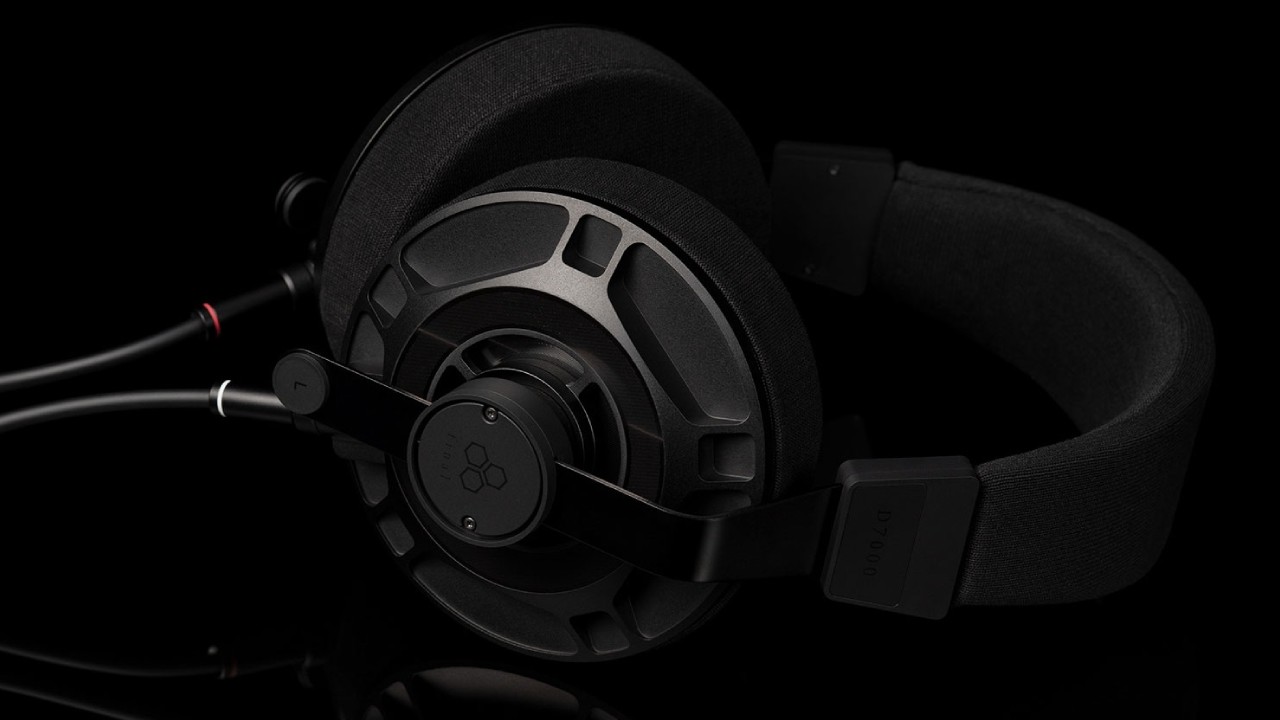
Final has added a fourth model to its D Series with the D7000, an over-ear headphone centred on an unusual interpretation of planar magnetic driver design. The Japanese manufacturer’s headline technology is AFDS, short for Air Film Damping System: a damping approach intended to control diaphragm movement at low frequencies before it can approach the magnets too closely.
That is a significant engineering focus. Planar magnetic headphones are valued for using a very thin, broad diaphragm driven across much of its surface, rather than a conventional dynamic driver’s voice-coil-driven cone or dome. But extracting the theoretical benefits of low moving mass and evenly distributed drive depends heavily on magnetic geometry, diaphragm tension, damping and extremely tight manufacturing tolerances. Final’s D7000 attempts to address one particular limitation of this architecture while combining it with a deliberately serviceable physical design.
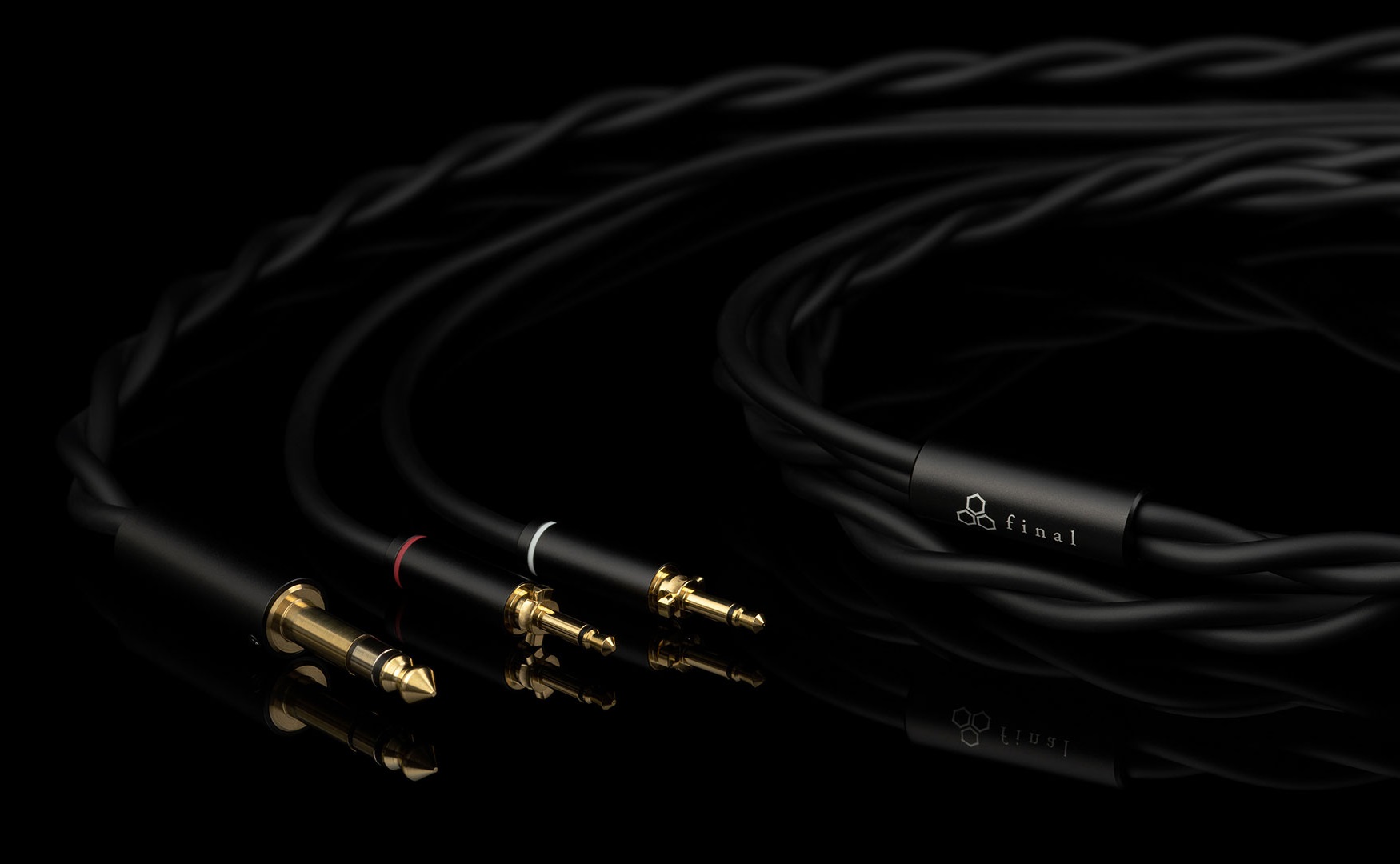
The D7000 is assembled at Final’s headquarters in Kawasaki, Japan, uses machined aluminium-magnesium-alloy housings, and arrives with a three-metre OFC cable terminated in a 6.35mm plug. Final specifies 50-ohm impedance, 89dB/mW sensitivity and a 437g weight. Official price and availability details have not yet been announced; a price just under €3,300 has been seen, but this should be treated as an indication rather than confirmed retail pricing.
AFDS: Final’s approach to planar diaphragm control
In a planar magnetic headphone, conductive traces on an exceptionally thin diaphragm sit within a magnetic field. When the music signal passes through those traces, the diaphragm moves and produces sound. Because the driving force can be spread over a large area, planar designs can avoid some of the break-up behaviour associated with a more conventionally driven cone. The challenge is that the diaphragm has very little clearance relative to the magnet structure, and its excursion rises substantially when reproducing bass at meaningful volume.
Final says a conventional planar magnetic diaphragm can contact the magnets at low frequencies. Contact would be undesirable not only because of potential distortion, but because it limits how predictably the diaphragm can operate as playback level and bass demand increase. The company’s solution is the Air Film Damping System, or AFDS. Its stated purpose is to brake the diaphragm efficiently before that contact can occur.
This is not simply a case of making a driver more rigid. Damping is a balancing exercise: too little control can permit excessive motion and resonant behaviour, while excessive damping can restrict movement and reduce efficiency. Final says it used finite-element-method membrane simulations and laser Doppler vibrometer measurements in developing its damping technology. Finite-element modelling is widely used to predict how a structure flexes and moves under load, while laser Doppler vibrometry is a non-contact measurement technique capable of mapping vibration behaviour. Together, those methods can help identify where a very light diaphragm moves in ways that are not desirable.
For the D7000, Final says it has revised the AFDS geometry to brake the diaphragm more efficiently before it reaches the magnets. The company describes the result as, to some extent, a reinvention of the planar magnetic field type. Without independent measurements or listening tests, it would be premature to attach a definite sonic outcome to that claim. In practical terms, however, the intended benefit is clearer control of diaphragm travel where bass reproduction places the greatest demands on a planar driver.
Final also describes the D7000 diaphragm as weighing only a fraction of those used by other manufacturers, and links that low mass to precise high-frequency reproduction and fine detail. No diaphragm mass has been published, so the comparison cannot be quantified. The underlying principle is sound: reducing moving mass can improve a diaphragm’s ability to respond to rapid signal changes. Yet it is only one part of headphone performance; motor strength, trace layout, damping, enclosure acoustics and earpad seal are all consequential too.
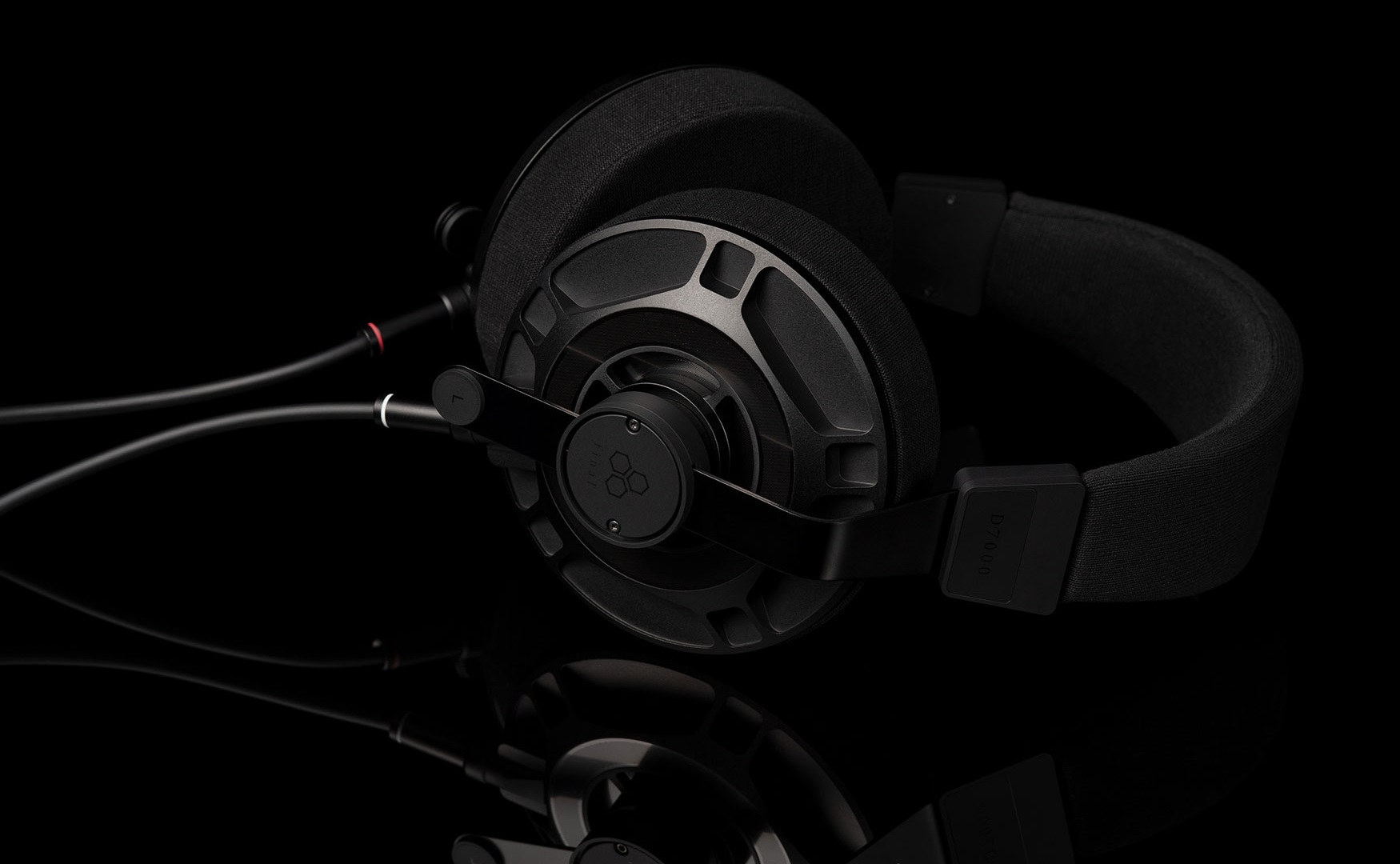
Fit is part of the acoustic design, not merely comfort
Final is unusually direct in acknowledging that headphone measurements made on an ideal test fixture cannot account for every listener’s outer ear. The pinna, the visible portion of the ear, varies considerably in shape, and those differences affect the reflections and resonances that occur between driver, ear and earcup. This is particularly important through the upper midrange and treble, where small changes in the ear-to-driver relationship can change the perceived tonal balance and spatial cues.
The company says it carried out simulations and listening experiments involving different outer-ear shapes, arriving at a diffuser shape intended to optimise sound quality for the majority of users. In headphone terms, a diffuser can shape the acoustic path from the driver to the ear, helping manage reflections and the way high frequencies reach the pinna. It cannot make every listener hear exactly the same response, but it is a sensible area of attention in a high-end over-ear model.
Ear cushions are equally integral to the final voicing. Their depth sets the distance from driver to ear; their internal opening and angled surfaces influence reflections; and their seal affects bass level and consistency. A small leak around the jaw or glasses frame can have a disproportionate effect on low-frequency output in a sealed or semi-sealed headphone design. Final has redesigned the D Series cushions for the D7000, using highly breathable foam and a special surface fabric containing Japanese paper.
The company says this material is intended to remain dry to the touch and offer long-term durability. The same material is used on the headband. Breathability may be welcome over extended sessions, especially with a 437g headphone, although the draft does not specify whether the D7000 uses an open, closed or other enclosure arrangement. Prospective buyers should therefore avoid assuming its degree of sound isolation or sound leakage until Final confirms that aspect of the design.
Aluminium-magnesium housings and a repair-led construction
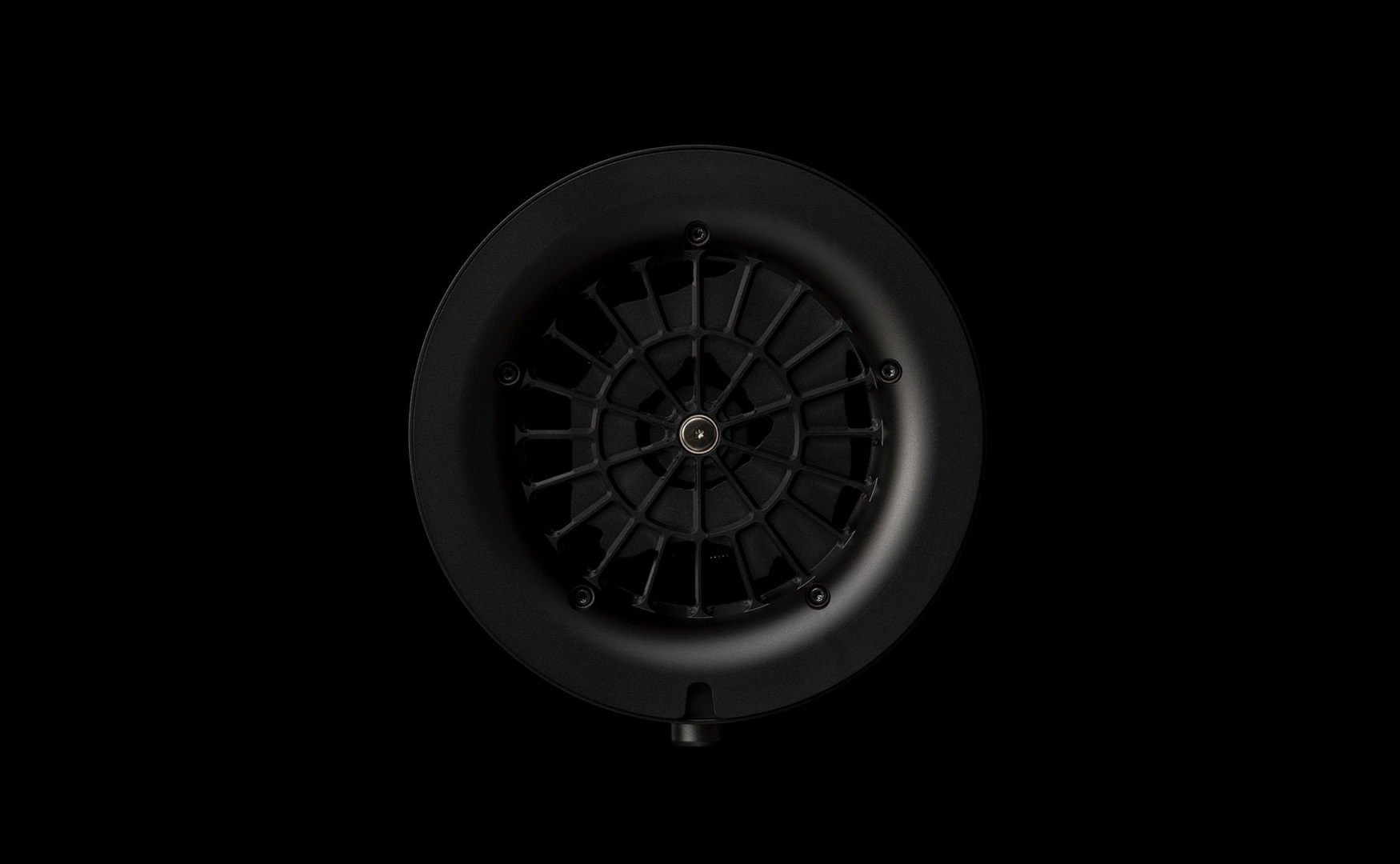
Final makes the D7000 housing from an aluminium-magnesium alloy, describing the precision requirements of AFDS as higher than those of traditional driver units. The draft also refers to finely machined aluminium earcups; taken together, the key point is a metal, precision-machined housing structure rather than a lightweight moulded-plastic approach.
Housing stiffness and dimensional consistency matter in a headphone at this level. The driver needs to be held securely and at the intended distance from the acoustic components around it. In a design with narrowly controlled diaphragm-to-magnet clearances, repeatable geometry during manufacture is especially relevant. A rigid metal structure may also help resist cosmetic and mechanical wear, though material choice alone does not establish an audible advantage.
The more notable ownership proposition is Final’s claim that almost all parts are secured with screws and can be removed. That approach should make repairs more straightforward than in products built around adhesives, permanently bonded pads or non-serviceable assemblies. It also creates a route for possible future changes and improvements. Final does not state which individual parts will be available separately, at what cost, or in which territories, so buyers should confirm parts support and warranty arrangements with their retailer before treating this as a guaranteed long-term upgrade programme.
Final says the D Series is made at its Kawasaki headquarters and that it designs and manufactures its assembly fixtures in-house. Fixtures are the tooling used to locate parts accurately while they are assembled. This is less glamorous than a driver material or a premium finish, but it is central to repeatability: very small variations in component positioning can matter where a diaphragm, magnetic system and acoustic diffuser need closely controlled alignment. The company says in-house fixture production enables small component variations to be corrected during assembly.
Amplifier matching: 89dB/mW sensitivity deserves attention
The D7000’s published electrical specifications are 50 ohms and 89dB/mW. Impedance tells us something about the electrical load the headphone presents, while sensitivity indicates how loudly it plays for a given amount of input power. At 50 ohms, the D7000 is not an especially low-impedance headphone; nevertheless, its 89dB/mW sensitivity is low enough that source selection should not be an afterthought.
In simple terms, a low-sensitivity headphone requires more power to achieve a given listening level than a more sensitive alternative. That does not automatically mean a portable device cannot make sound through it, but it does suggest that modest headphone outputs may offer limited headroom on dynamic recordings. Headroom matters because music contains short-lived peaks far above its average level. An amplifier that is working near its limit can lose composure on those peaks or simply fail to reach the desired level cleanly.
A capable dedicated headphone amplifier or integrated amplifier with a properly engineered headphone output is therefore the more sensible starting point. Buyers should look beyond a vague claim of compatibility and check a manufacturer’s published power capability into 50 ohms, along with its output impedance and gain options. A low output impedance is generally desirable for predictable electrical behaviour, while a sensible gain setting helps maintain useful volume-control range and low background noise.
None of this means that maximum wattage is the sole criterion. The D7000’s supplied cable ends in a 6.35mm jack, a connector commonly found on desktop headphone amplifiers, dedicated DAC/headphone amplifiers and full-size hi-fi amplifiers. It is a practical clue to the system context Final envisages: this is a headphone likely to be used in a stationary, serious listening setup rather than plugged directly into a phone without an appropriate adaptor and amplification.
Cable, case and day-to-day implications
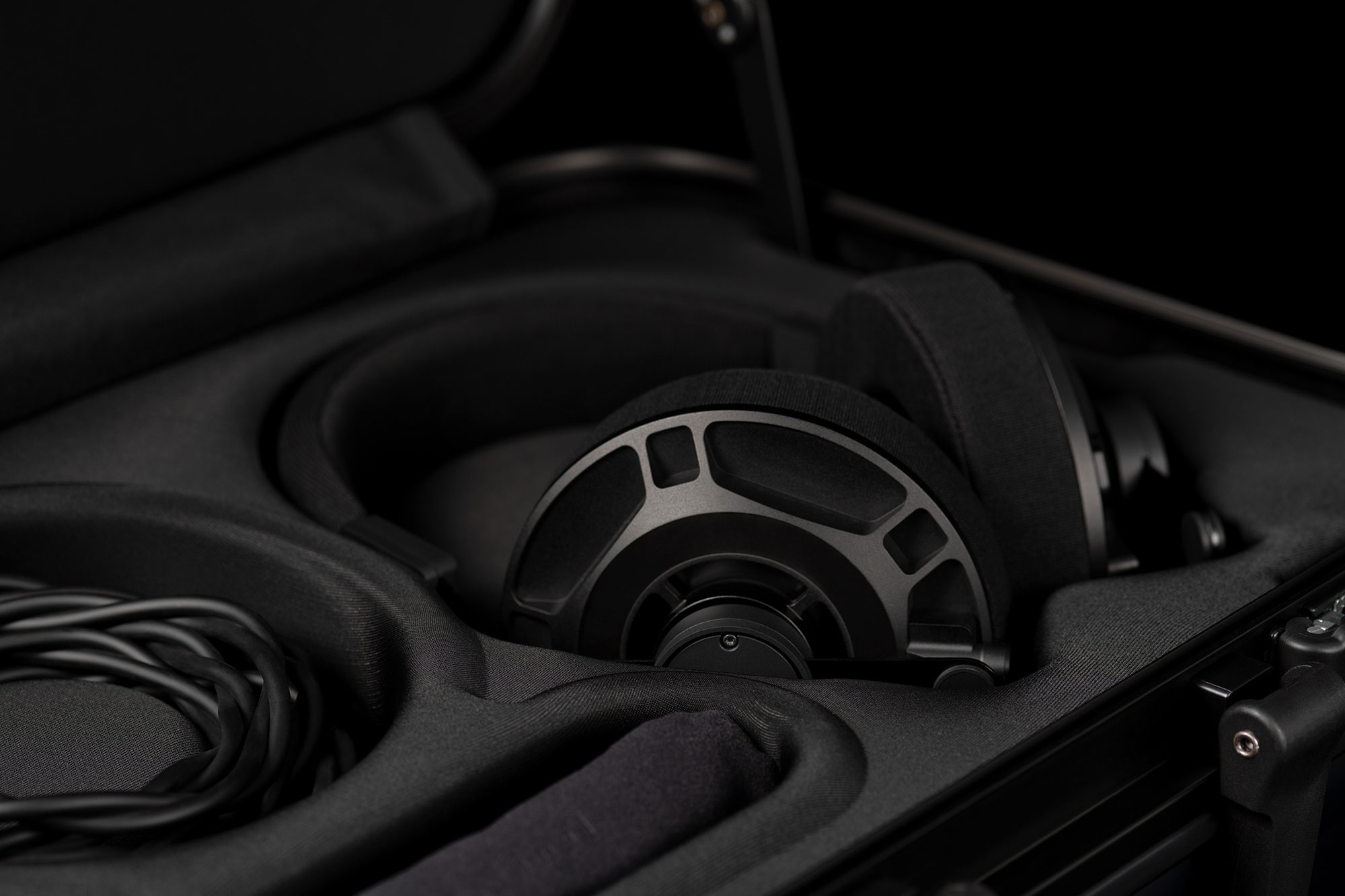
Final supplies a three-metre OFC cable with a 6.35mm plug and an aluminium carrying case. OFC, or oxygen-free copper, is a familiar cable conductor material; the supplied information does not provide a conductor gauge, cable geometry or balanced termination options, so no further performance claim should be assumed from the designation alone.
The three-metre length is useful in a living-room or desk-based system where the amplifier sits some distance from the listening chair. Conversely, it will be more cable than many listeners want at a compact desktop. The 6.35mm termination is robust and well suited to full-size equipment, but owners of sources with 3.5mm, 4.4mm or XLR headphone outputs will need to establish compatibility and any available manufacturer cable options rather than assuming an adapter is the best route.
At 437g, the D7000 is not a featherweight. Weight by itself does not decide comfort: clamping force, headband contact area, earpad shape and how evenly the load is distributed are at least as important. Final’s breathable cushion and headband materials may be relevant to comfort during longer sessions, but personal fit remains crucial. A dealer audition remains worthwhile, both to assess comfort and to make sure the cushions form a stable seal around the listener’s ears.
What the D7000 appears to offer
The Final D7000 is a technically ambitious high-end headphone proposition rather than a specification-led portable model. Its distinguishing feature is not a fashionable wireless platform, noise cancellation or an unusually broad list of connections; it is Final’s AFDS planar magnetic driver, backed by simulation and vibration-measurement work intended to control low-frequency diaphragm excursion.
Its other strengths are equally practical: precision metal construction, an explicitly repair-conscious screw-fastened architecture, Japanese assembly, redesigned breathable pads and a substantial supplied case. The trade-offs are mostly implicit. Its 89dB/mW sensitivity makes amplifier capability important, its 437g mass means fit will matter, and the included 6.35mm, three-metre cable favours home use. There are also still key details to confirm, including official price, delivery timing, enclosure type and the full range of available cable and spare-part options.
For listeners seeking an over-ear planar magnetic headphone for a dedicated system, the D7000’s driver-control approach is the central reason to pay attention. Final has provided a thoughtful account of the engineering it believes separates AFDS from a conventional planar implementation. The next questions, once full commercial details emerge, will be how that technology is supported in real-world servicing, how easily the headphone can be driven by a range of amplifiers, and how its fit-led acoustic design translates across different listeners.