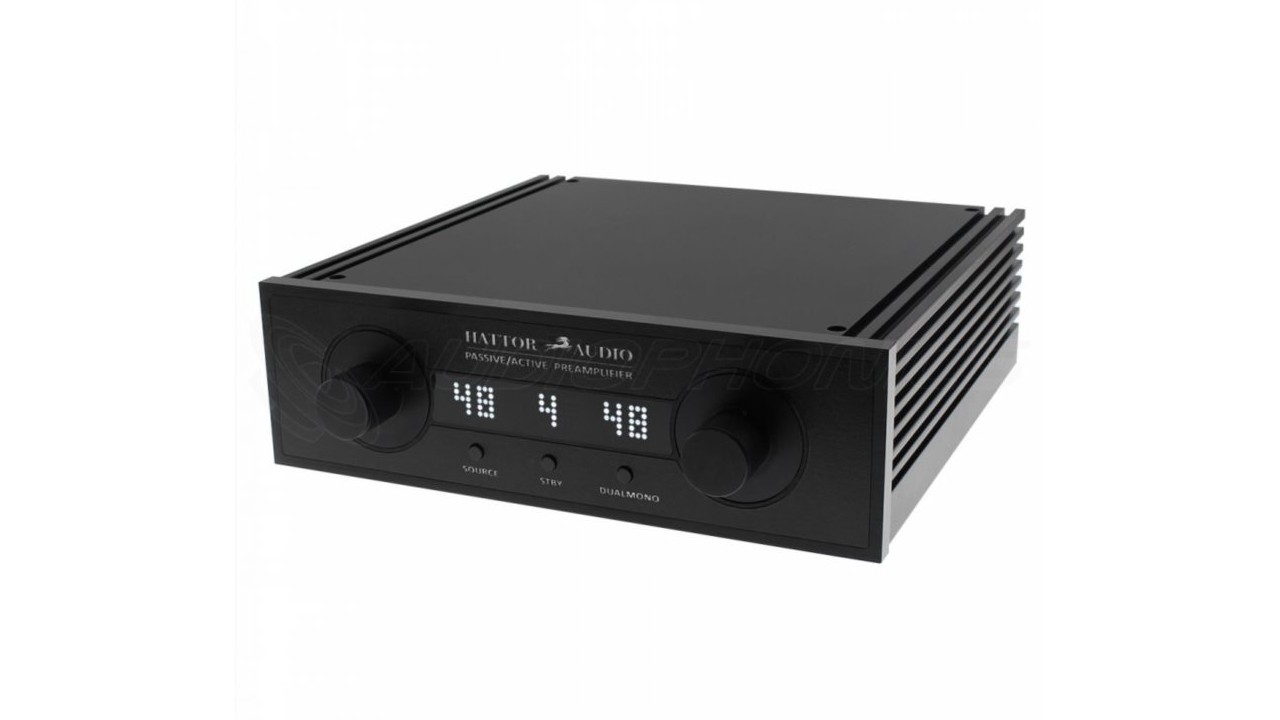
Hattor Audio’s Takman REX AMRT is a line-level control preamplifier for systems where volume control, source selection and signal-path simplicity are as important as outright feature count. Its central proposition is unusual but useful: it can work as a passive preamp, or bring a switchable active buffer stage into circuit when the rest of the system calls for more drive or gain.
That flexibility is paired with a resistor-ladder volume control based on Takman REX AMRT carbon-film resistors, balanced and single-ended connections, dual output sets and individual left/right channel adjustment. It is therefore aimed less at an all-in-one integrated-amplifier buyer than at the enthusiast using separate power amplification, active loudspeakers or a system with several analogue sources.
The model’s specification is also refreshingly specific in a few important areas. The attenuation system has 64 steps in 1dB increments, while the active section offers selectable +3dB, +6dB and +9dB gain. Those are meaningful provisions for tailoring a preamp to the output voltage of a DAC, phono stage or other line source, and to the sensitivity of the amplifier that follows.
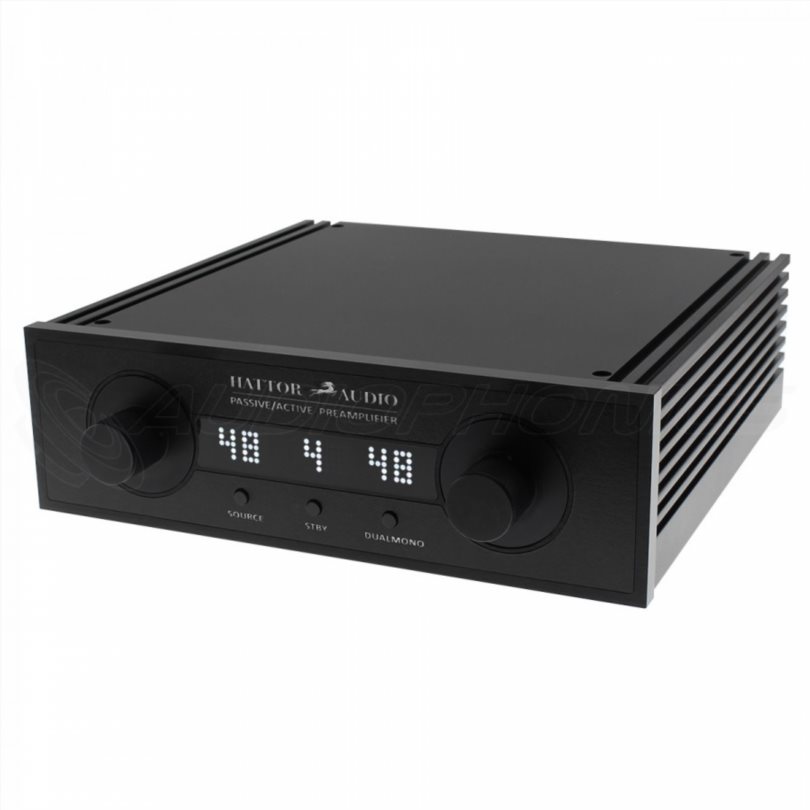
A passive control preamp, with an active option when it is needed
A passive preamp does not use an active gain circuit to amplify the music signal. In its simplest form, it selects an input and attenuates that source before passing it to the power amplifier. The attraction is directness: with no conventional active line-gain stage permanently imposed between source and amplifier, there are fewer circuit elements in the signal route.
That approach is not automatically the best answer in every installation. Passive operation depends heavily on the electrical relationship between source, cables and power amplifier. Long interconnects, a power amplifier with a relatively demanding input impedance, or a source that has limited output voltage can make it harder to achieve the desired level or maintain consistent performance at all volume settings. A passive control can be excellent in a carefully matched system, but it is not a universal substitute for a conventional active preamp.
The Takman REX AMRT addresses that practical limitation with a selectable active buffer based on two OPA2134 devices and a separate amplification section. A buffer is intended to present a more manageable load to the source and provide a stronger signal drive to the following component. Rather than forcing owners to choose permanently between a passive controller and an active preamp, Hattor Audio allows the active stage to be engaged or bypassed with the supplied infrared remote control.
Its three gain choices provide further latitude. +3dB is a modest lift, +6dB represents a doubling of voltage, and +9dB raises level further for combinations that genuinely require it. In use, the sensible choice is normally the lowest gain that permits comfortable listening levels and full use of the volume range. Excess gain can make the control feel overly sensitive and may leave less headroom with unusually high-output sources; insufficient gain, on the other hand, may limit maximum volume. The value here is not simply having gain available, but being able to choose an appropriate amount.
Why the 64-step resistor attenuator matters
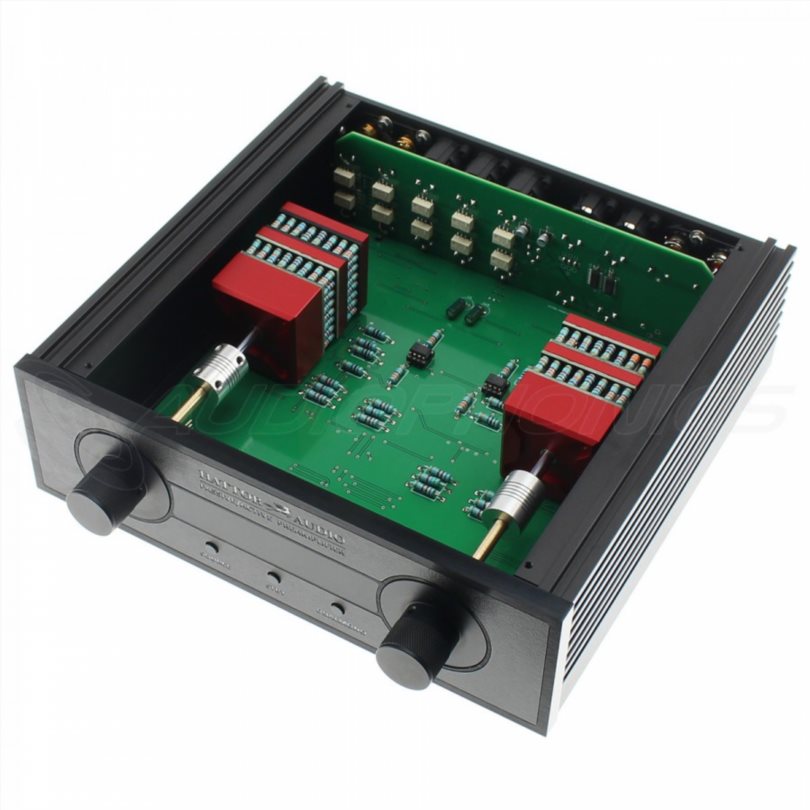
Volume controls are often treated as a minor convenience feature, yet they are fundamental to a preamplifier. They set the level of every signal passing through the system and can affect channel balance, impedance behaviour and the consistency of level changes. Rather than employing a conventional continuously rotating carbon-track potentiometer, Hattor Audio uses two mono, 64-position attenuators with 1dB steps.
In a stepped-resistor attenuator, the selected volume is determined by a repeatable network of resistors rather than by the position of a wiper moving across a resistive track. The potential advantages include accurate level recall and closer left/right tracking, particularly at lower listening levels where channel mismatch from an ordinary analogue pot can be most apparent. A 1dB increment is also fine enough for normal listening adjustment without requiring an impractically large number of remote-control clicks.
The resistors specified here are custom-tested Takman REX AMRT carbon-film types. Hattor Audio describes them as ultra-low-distortion components and uses solid-gold traces in the attenuation stage. The company also specifies constant-impedance inputs. In broad terms, keeping the input loading behaviour stable as volume changes is a desirable design objective, because it makes the preamp a more predictable partner for connected source equipment. The exact audible outcome will still depend on the source and amplifier connected to it, rather than on a resistor description alone.
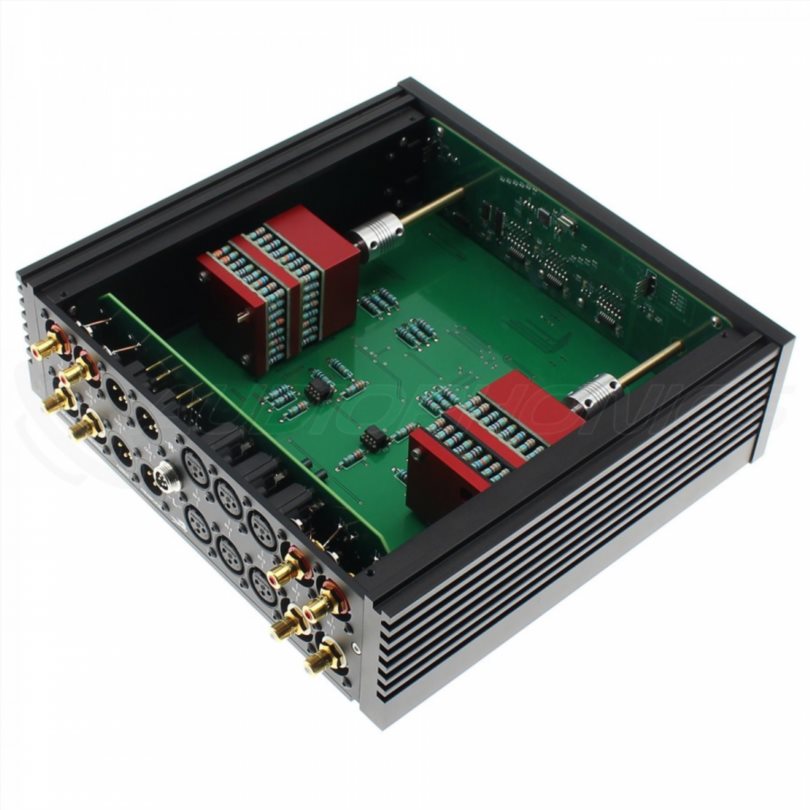
Each mono attenuator is shielded by insulated aluminium. Physical separation and shielding are relevant in a stereo control unit because they help reduce unintended interaction between the left and right signal paths. Hattor Audio cites very low crosstalk, although no numerical crosstalk figure is supplied. The important point is that the design uses separately shielded left and right attenuation sections rather than treating stereo level control as a single shared mechanical assembly.
Independent channel adjustment is useful beyond system correction
The preamp includes two switchable potentiometers that can be used to adjust the left and right channels independently, or combined while retaining individual channel levels. This is a more specialised facility than a standard balance control, but it can be genuinely useful in real rooms.
For example, a listening room may place one loudspeaker closer to a side wall, an open doorway or more absorbent furnishings than the other. A small level correction can help centre a vocal image without altering speaker position. Separate adjustment can also assist when matching source components whose output levels differ, or when accommodating an imbalance elsewhere in an analogue chain. It is not a substitute for good speaker placement, level matching and acoustic treatment, but it provides a practical final adjustment.
Owners should approach channel trim methodically. Begin with both controls matched, set loudspeaker placement as accurately as the room allows, then make only small corrections while listening to a well-recorded mono vocal or pink-noise test signal. Large channel offsets can disguise a placement or room issue and may produce an unnaturally skewed stereo image.
Connection count and system integration
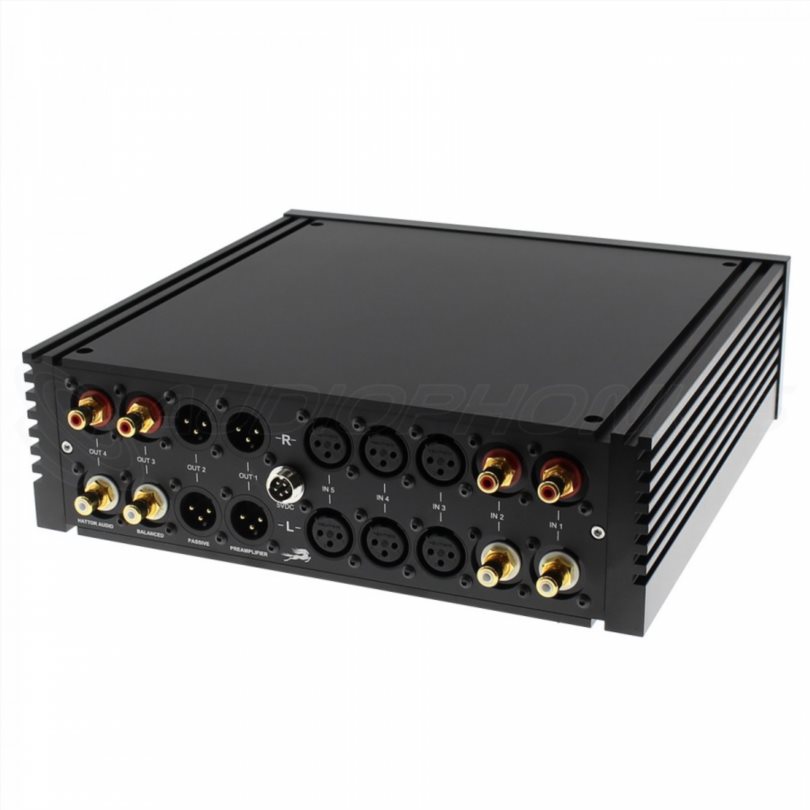
The Takman REX AMRT offers five line inputs in total: two single-ended RCA inputs and three balanced XLR inputs. On the output side, there are two balanced XLR pairs and two single-ended RCA pairs. This is substantial connectivity for a compact line preamp and makes it suitable as the central controller in a mixed-format separates system.
The balanced connections are especially relevant where the associated source and power amplifier both provide genuinely balanced XLR interfaces. Balanced transmission is commonly used to reject noise picked up along long cable runs, which can be advantageous when power amplifiers sit close to the loudspeakers or are some distance from the equipment rack. It does not make an XLR connection inherently superior in every short domestic installation, however; correct gain structure and component compatibility remain more important.
Two sets of each output format create several possibilities. A user might feed a main power amplifier from one output and a second amplifier or active subwoofer system from another, subject to the input requirements of those components. Equally, they can support a more complex installation without relying on external signal splitters. Hattor Audio lists the unit’s impedance as 10K, but does not specify whether this figure refers to input or output impedance in the supplied information. Prospective owners planning unusual cable lengths, transformer-coupled equipment or multiple parallel loads should confirm the relevant electrical specifications with the manufacturer or dealer.
There are no digital inputs, streaming facilities, phono input or headphone output listed. That is a deliberate consequence of the product’s role: it is a line preamp rather than a digital hub or analogue front-end. A turntable will need an external phono stage, while digital sources require their own DAC or streamer/DAC. For a system built around dedicated source components, that narrow focus may be preferable; for someone seeking one-box versatility, it will be a clear limitation.
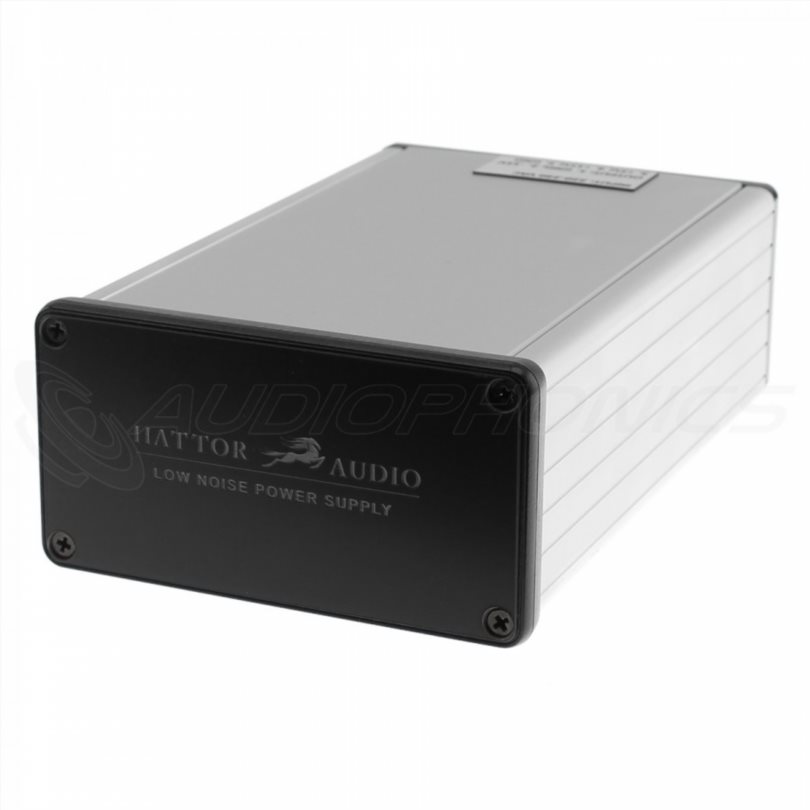
Construction, control and day-to-day operation
Hattor Audio describes the unit as hand-built and impeccably finished, with gold-plated CMC and Neutrik 24k PTFE connectors and internal silver-wire cabling. Connector quality matters chiefly in mechanical and electrical terms: securely mounted, durable sockets with reliable contact surfaces help preserve a stable connection over repeated use. PTFE is widely valued as an insulating material in connector construction for its electrical and thermal properties, although the system-level result will depend on the complete implementation rather than any one premium part.
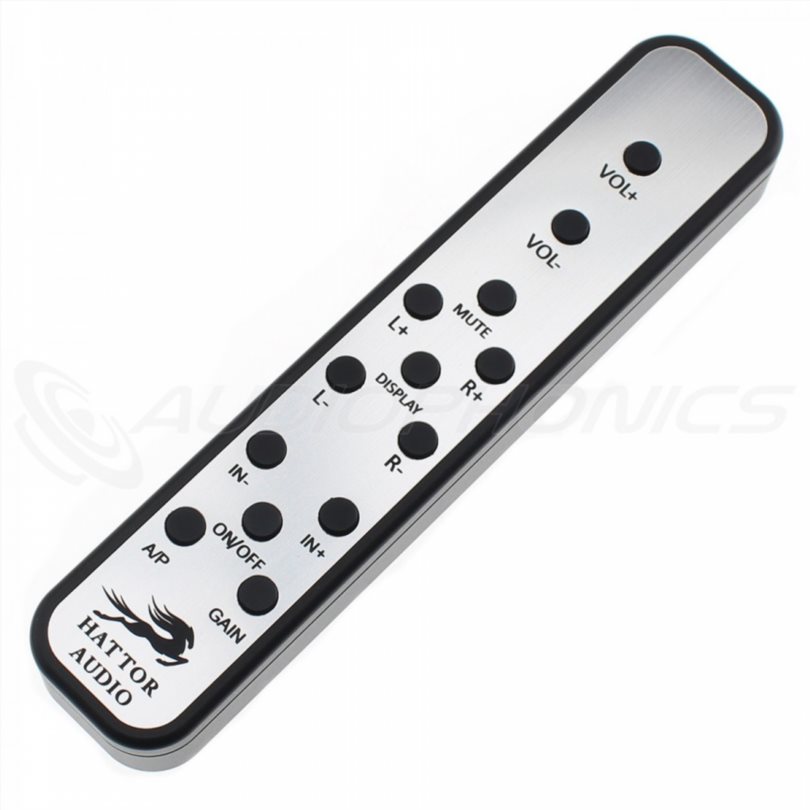
For operation, the preamp combines infrared remote control with an LED matrix display. The remote is specified to activate or deactivate the active buffer stage, while the 64-step architecture means volume changes are discrete and repeatable rather than continuously variable. Buyers who prefer the tactile sweep of a traditional knob should note that a stepped attenuator has a different character in use: each setting is intentional, and the chosen level can be returned to precisely.
At 263 x 288 x 85mm and 4.1kg, the Takman REX AMRT is relatively compact for a full-function control preamp with multiple XLR sockets. Its 85mm height should make rack placement straightforward, but the rear-panel XLR connections and cable bend radius still need to be considered when allowing shelf depth. It is supplied in black.
Who should consider the Hattor Audio Takman REX AMRT?
The Takman REX AMRT will make the most sense for an owner who has already chosen separate source and power-amplification components, wants balanced connectivity and values the option of a passive signal path. Its switchable buffered mode is the key practical feature: it acknowledges that an ultra-simple passive arrangement can be highly system-dependent, then gives the user an active alternative rather than demanding a change of preamp.
Its appeal is also likely to extend to listeners who want precise level setting and the ability to correct small left/right discrepancies. The 64-step, 1dB resistor ladder and separate mono attenuator arrangement are considerably more purposeful than a basic input selector with a volume knob.
Before buying, the essential questions are system questions. Does the existing power amplifier have sufficient sensitivity for passive use? Are the source output levels suitable? Are cables short and sensibly routed? Is balanced operation needed for the system layout, or simply available? And, if level matching or unusually long cables are involved, is the active buffer the better default setting? Hattor Audio’s design does not prescribe one answer. Instead, it provides the facilities to explore both passive transparency and buffered drive within the same compact chassis.
Hattor Audio Takman REX AMRT specifications
- Product type: Passive/active preamplifier
- Impedance: 10K
- Inputs: 2 x single-ended RCA; 3 x balanced XLR
- Outputs: 2 x balanced XLR; 2 x single-ended RCA
- Active buffer: Two OPA2134s, with +3dB, +6dB and +9dB gain settings
- Remote control: IR remote supplied
- Display: LED matrix
- Volume adjustment: 64 steps, 1dB per step
- Dimensions (W x D x H): 263 x 288 x 85mm
- Weight: 4.1kg
- Finish: Black