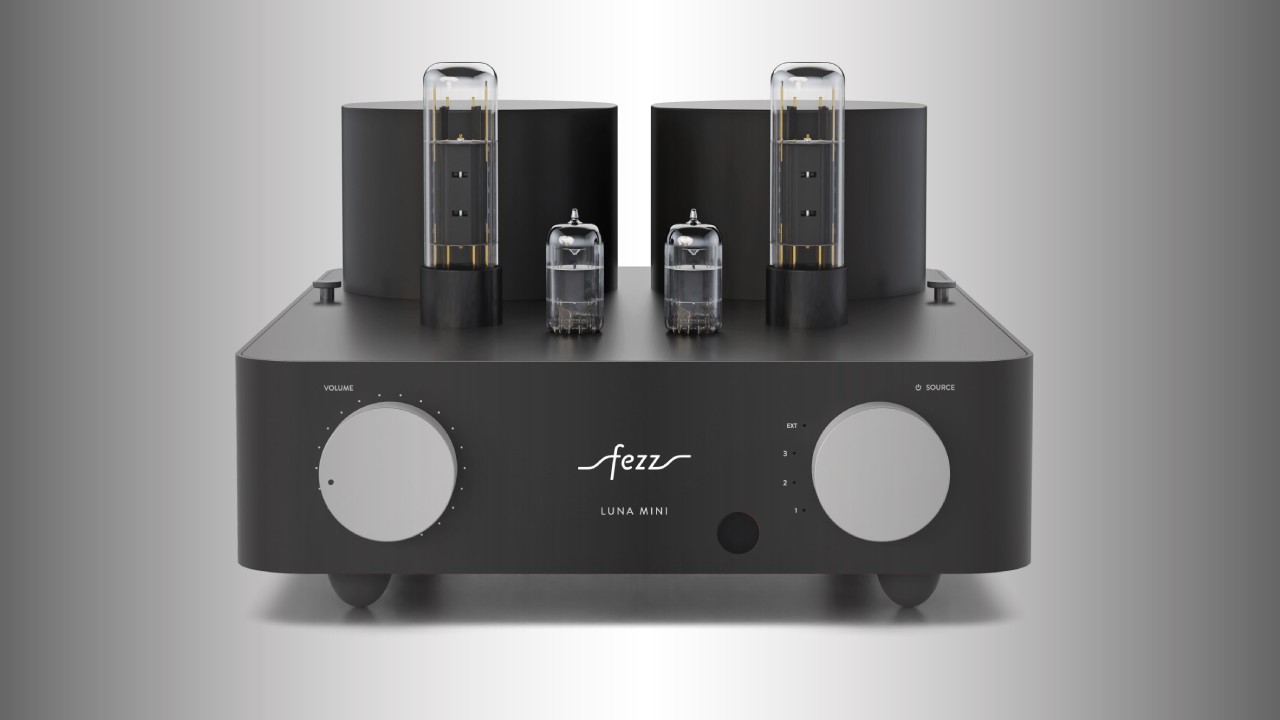
Fezz Audio has announced the Luna Evo and Luna Mini Evo, two valve integrated amplifiers that replace the long-running Silver Luna and Alpha Lupi models. Both retain the manufacturer’s EL34-and-12AX7 tube-based approach, conventional RCA-line-level connectivity and a distinctly visible valve-amplifier aesthetic, but they address very different loudspeaker and room requirements.
The compact Luna Mini Evo is a 10-watt-per-channel, single-ended Class A design intended for efficient speakers and modest listening spaces. The full-size Luna Evo takes the more broadly accommodating route: it uses a push-pull Class AB output stage rated at 40 watts per channel, adds a triode/ultralinear operating-mode switch and includes a home-theatre input. In practical terms, this is not simply a choice between a smaller and a larger chassis. It is a choice between two established valve-amplifier circuit approaches, each with particular system-matching consequences.
Both amplifiers are due to be available from November 2025. Fezz Audio has not specified pricing, speaker impedance ranges, sensitivity recommendations, input sensitivity or output-transformer details in the information supplied, so prospective buyers should confirm those important compatibility details with a dealer before committing.
Two successors, two approaches to valve amplification
Although the new models share the Luna name and EL34 output valves, their architectures are fundamentally different. That distinction matters more than their common feature list.
The Luna Mini Evo succeeds the Alpha Lupi and uses a single-ended Class A circuit. In a single-ended output stage, one active device—or, in this case, one side of the output arrangement—amplifies the full waveform rather than handing positive and negative waveform halves between paired devices. Class A operation means the output valves remain conducting throughout the signal cycle. It is an inherently inefficient method of generating power, and consequently produces considerable heat for its output, but it is valued by many valve enthusiasts for its circuit simplicity and operating consistency.
The Luna Evo, meanwhile, replaces the Silver Luna with a push-pull Class AB topology. Push-pull amplification uses output valves in complementary pairs to share amplification duties. Class AB allows the circuit to deliver substantially more power than a comparably sized Class A design without the same constant power consumption. The 40W-per-channel Luna Evo therefore has four times the stated power of the Luna Mini Evo. That figure is meaningful, though it should not be read as four times the perceived loudness: a fourfold increase in amplifier power corresponds to roughly 6dB of additional maximum sound-pressure capability, assuming the same loudspeaker and listening conditions. It can nevertheless make the difference between a relaxed amplifier and one approaching its limits on musical peaks.
Neither design is automatically “better”. The right choice depends on speaker sensitivity, impedance behaviour, room size, desired playback level and the listener’s priorities. The Mini Evo is the more specialised option; the Luna Evo should be the more flexible partner where speaker demands are less predictable.
Fezz Audio Luna Mini Evo: compact, single-ended and Class A
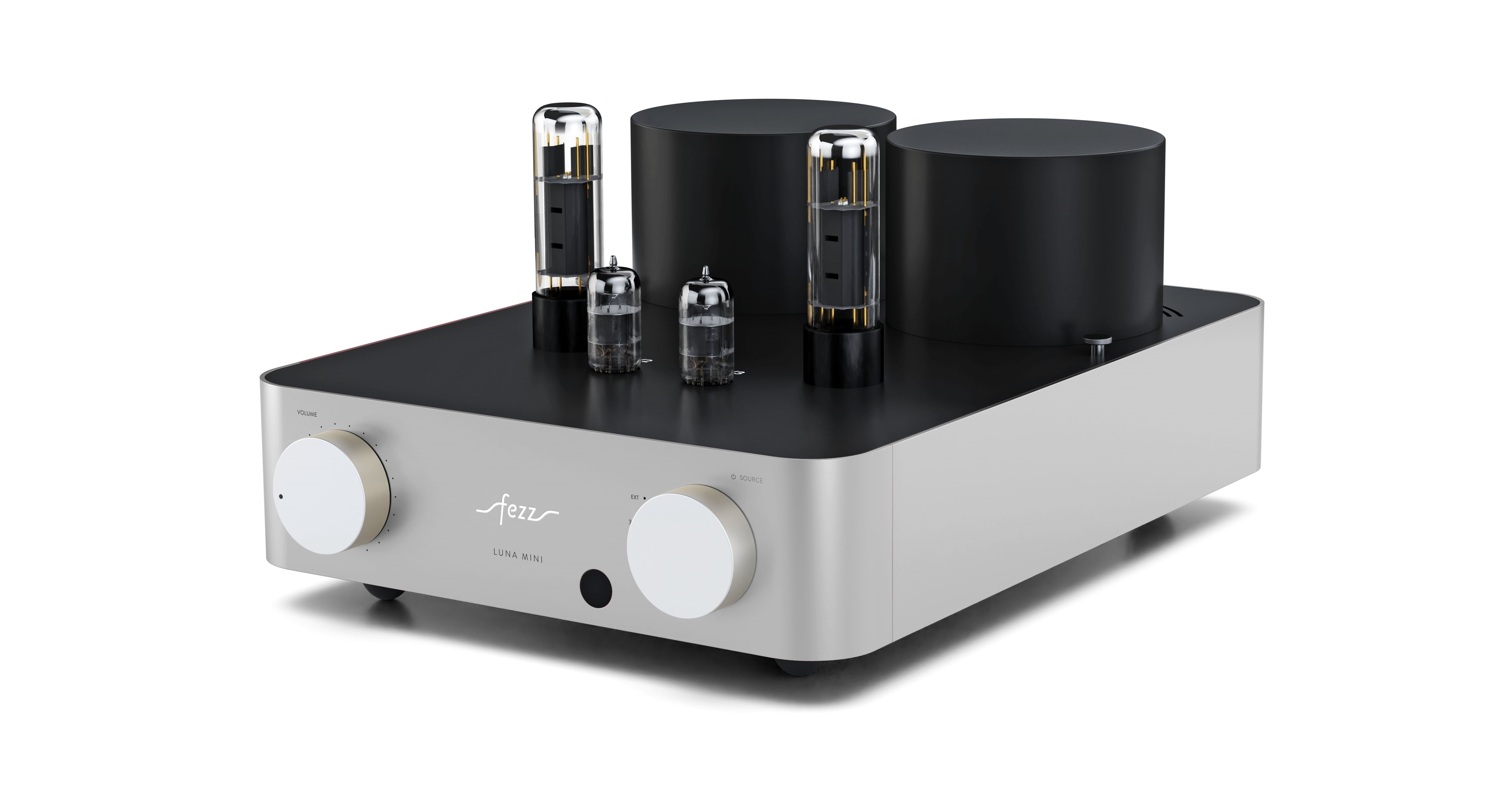
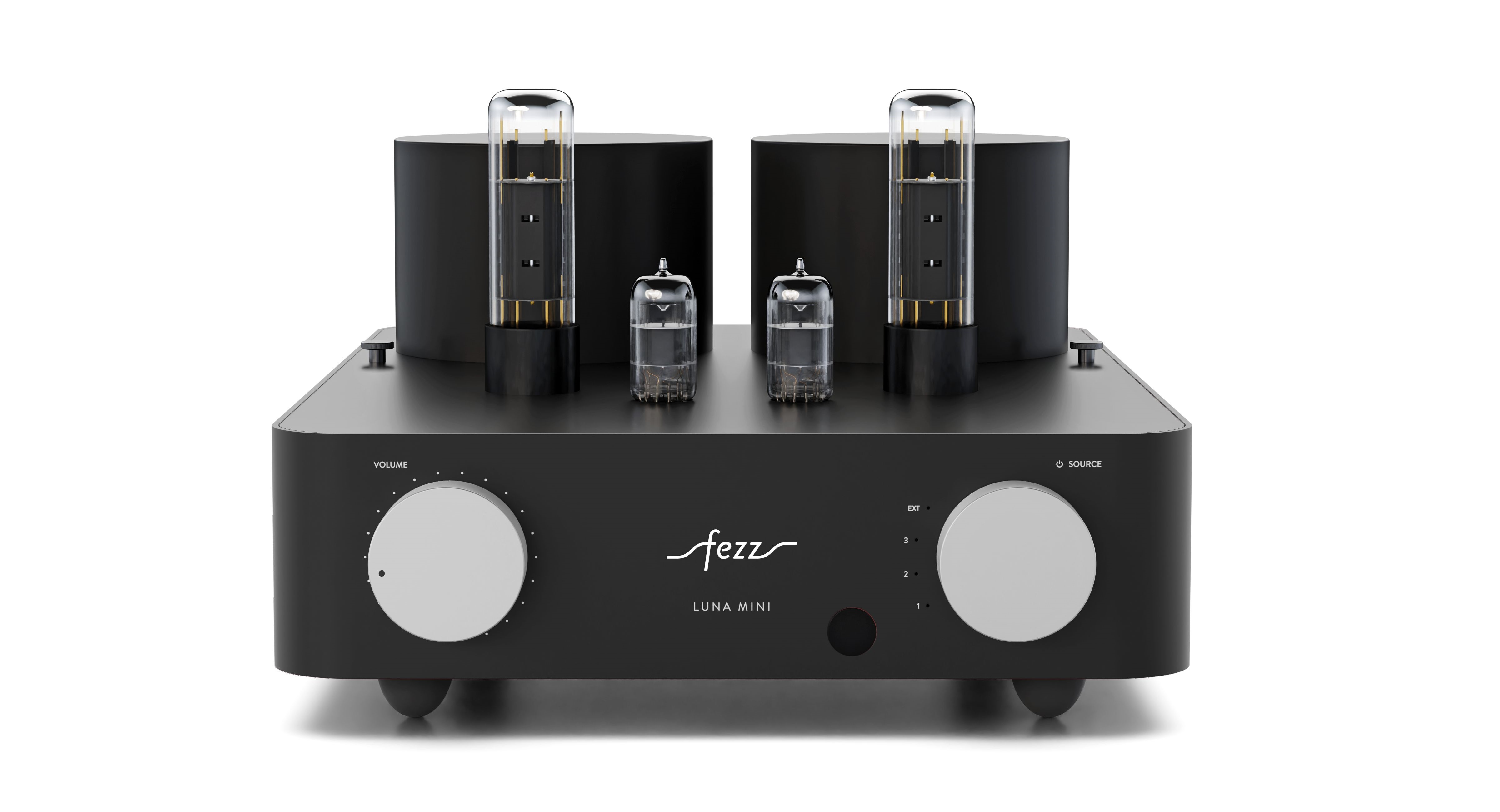
The Fezz Luna Mini Evo is specified at 10 watts per channel and employs two EL34 output tubes with two 12AX7 driver tubes. The EL34 is one of the classic octal power valves used in audio amplification, while the 12AX7 is a high-gain dual-triode commonly used in input and driver stages. Their inclusion identifies the Luna Mini Evo as a traditional all-valve integrated amplifier rather than a hybrid design with a solid-state output stage.
At 10W per channel, loudspeaker selection becomes central to the ownership experience. Fezz Audio positions the Luna Mini Evo for efficient standmount speakers or floorstanders, and that is sensible advice. Speaker sensitivity determines how much acoustic output a loudspeaker produces from a given electrical input; an efficient speaker requires less voltage and power to reach satisfying levels. Just as important, however, is impedance behaviour. A speaker with a nominally benign rating can still present difficult impedance dips or demanding phase angles at certain frequencies. Since neither a recommended speaker impedance range nor low-impedance power figures have been supplied for the Luna Mini Evo, it would be prudent to seek advice on any speaker with a reputation for being a tough electrical load.
That need not mean a 10W Class A amplifier is restricted to low-level background use. With suitable speakers in a sensibly sized room, modest power can be ample. The limitation becomes more apparent with low-sensitivity speakers, large rooms, long listening distances or music with wide dynamic swings played at realistic levels. In those situations, clipping can occur on transient peaks before the average volume appears excessive. Choosing a speaker that lets the amplifier work within its comfort zone is more valuable than treating the power rating as a standalone measure of quality.
Inputs, subwoofer support and practical features
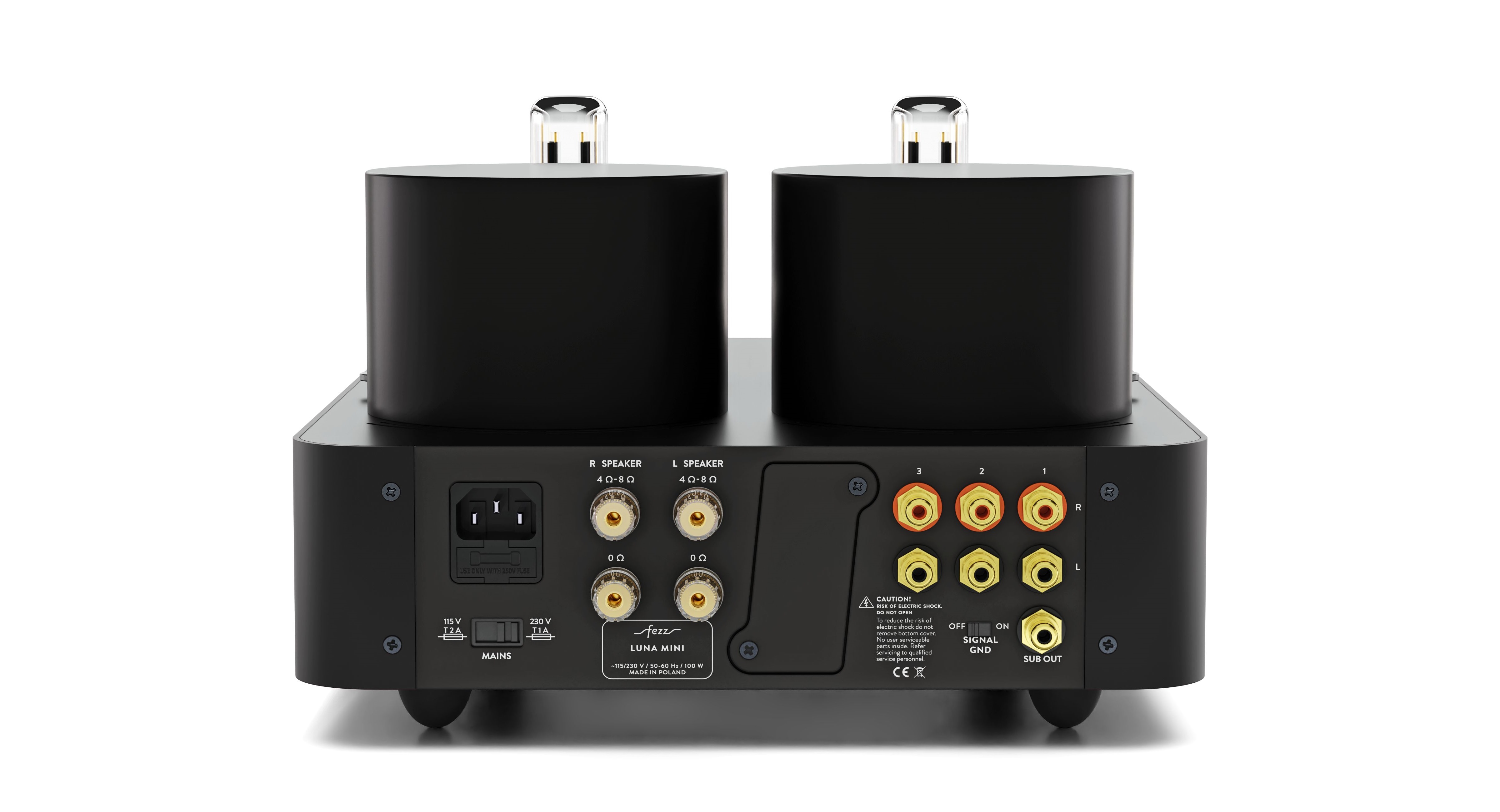
The Luna Mini Evo provides three RCA inputs, making it suited to a straightforward all-analogue system: perhaps a separate phono stage for a turntable, a standalone DAC or network streamer, and a CD player or other line-level source. There are no digital inputs listed, so digital sources will require their own DAC before connection to the amplifier.
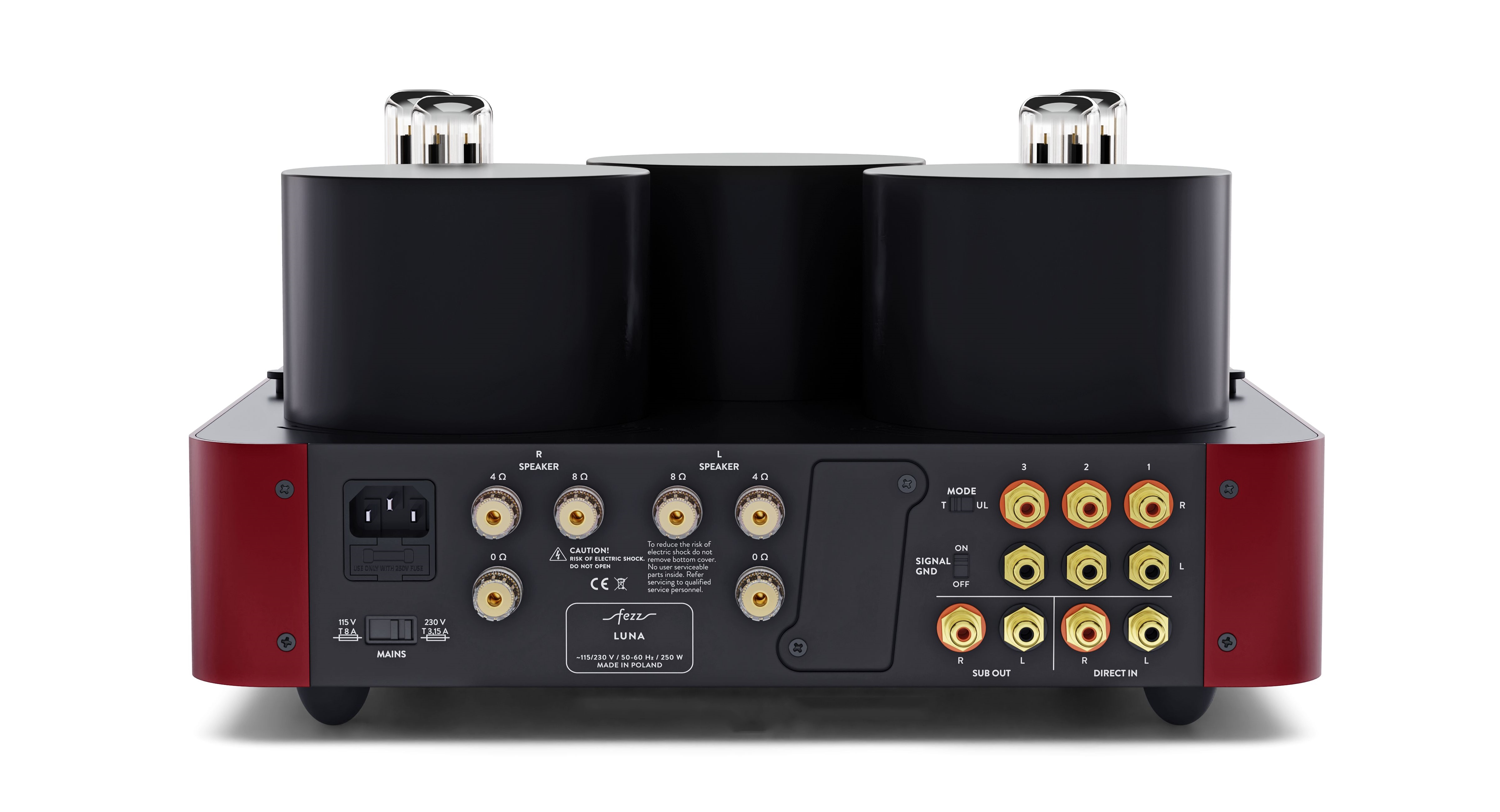
A subwoofer output broadens the scope of a low-power integrated amplifier. It can be useful in a compact system where an efficient monitor provides the midrange and treble performance desired, while an active subwoofer takes care of the lowest octave. This can improve bass extension and allow more flexibility in room placement. The supplied information does not state whether the output is fixed or variable, filtered or full-range, so users should establish how it is implemented and how it is intended to be connected before planning a satellite-and-subwoofer system.
Fezz Audio also includes a tube preheat mode, intended to extend tube life. Valves are consumable components, and the stress around switch-on—when filaments warm and operating voltages stabilise—is one factor in their long-term wear. The exact sequence used by Fezz Audio has not been detailed, but a controlled preheat function is a welcome practical provision on a valve amplifier. The Luna Mini Evo also carries a grounding switch, which may be useful when addressing hum in systems with multiple mains-powered components. It is a troubleshooting facility rather than a substitute for correct installation and safe mains grounding.
An expansion slot for future upgrades is included, although Fezz Audio has not announced the available or planned modules. Buyers should therefore regard it as upgrade potential rather than assume a particular digital, wireless or phono capability.
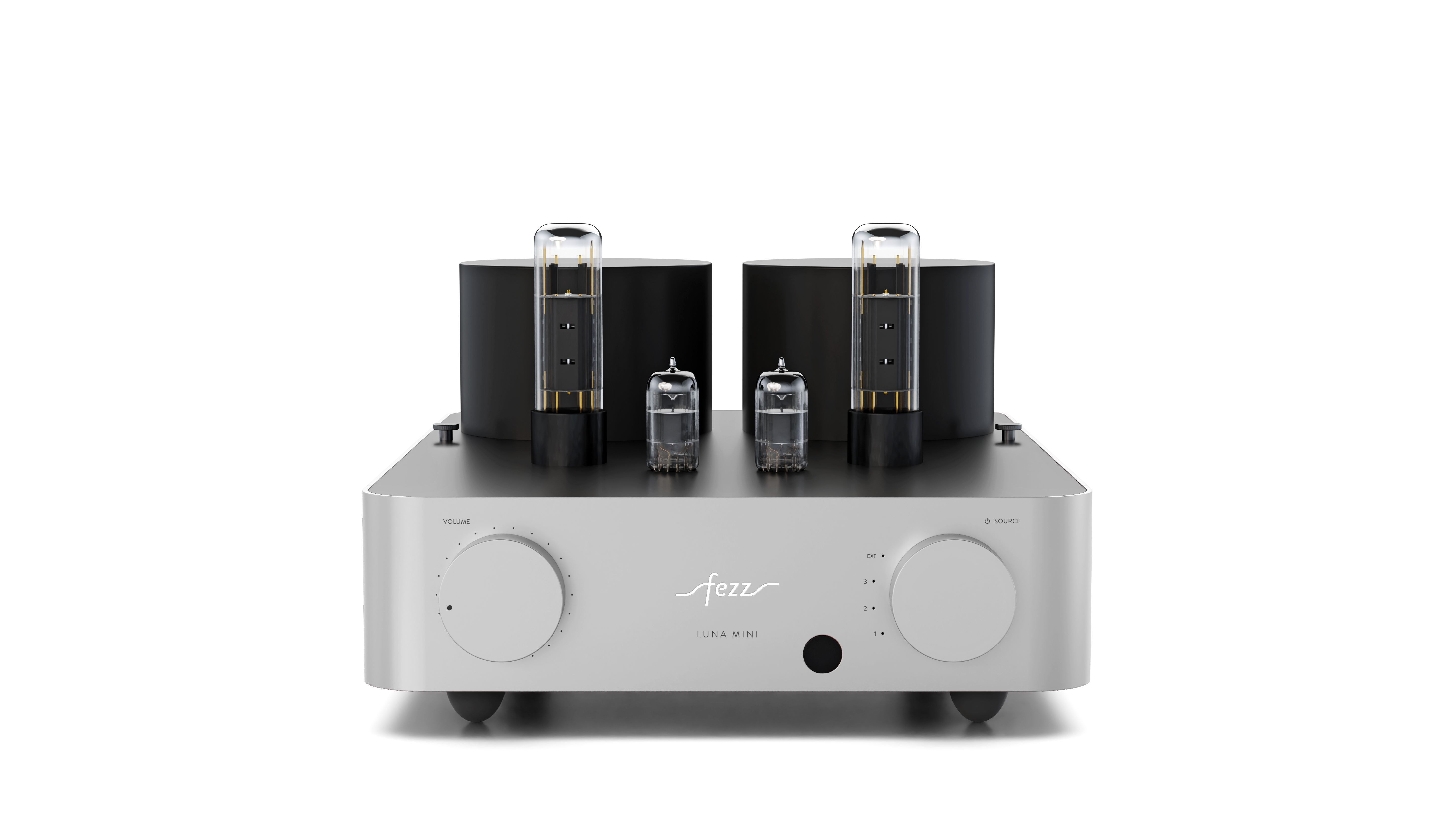
A tube cover and remote control are supplied as standard. The cover is particularly relevant in homes with children or pets, where exposed hot valves deserve care, while leaving it off may appeal to owners who want direct access and the traditional visual presence of the tube array. As with any Class A valve amplifier, the unit should be placed on a stable, well-ventilated surface with space above it; enclosing it in a tight cabinet is unlikely to be a good thermal arrangement.
The Luna Mini Evo is available in Black Ice and Moonlight finishes. Its compact enclosure and restrained presentation should appeal to listeners who want a visibly valve-led amplifier without making it the physically dominant item in the system.
Fezz Audio Luna Evo: more power and selectable output-stage behaviour
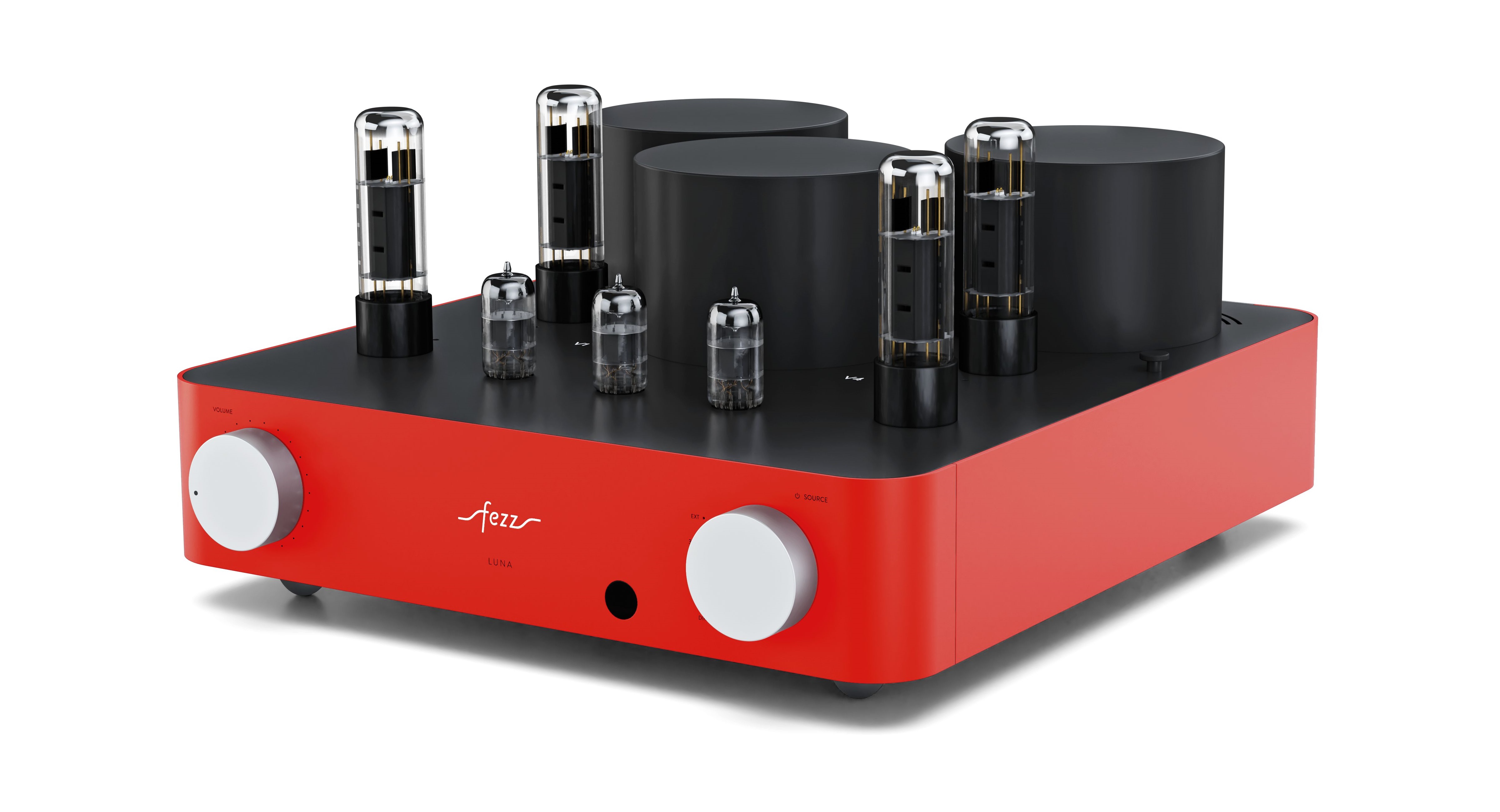
The larger Luna Evo uses four EL34 output tubes and three 12AX7 driver tubes in a push-pull Class AB circuit rated at 40 watts per channel. This is the model to consider where greater headroom is needed: for moderately sensitive loudspeakers, larger listening areas, seats farther from the speakers or simply more convincing freedom on dense and dynamic recordings.
More power is only one advantage of the push-pull approach. By arranging output valves in pairs, designers can increase available output and manage certain forms of distortion differently from a single-ended circuit. The actual outcome depends on the complete circuit, output transformers, biasing and implementation, so it would be wrong to predict a precise sonic character from topology alone. Still, the headline distinction is clear: the Luna Evo is designed to accommodate a wider range of speakers than the 10W Mini Evo.
Triode and ultralinear modes explained
The Luna Evo’s most notable extra facility is its triode/ultralinear mode switch. These modes alter how the EL34 output valves are connected and operated in relation to the output transformer.
In broad terms, triode mode configures a pentode-type output valve to behave more like a triode. It commonly trades some available power for a different balance of output characteristics. Ultralinear operation uses transformer taps to feed part of the output signal back to the valve screen grids, aiming to combine some of the power potential of pentode operation with aspects of triode linearity. Fezz Audio describes the choice as one between a smoother, more relaxed presentation and a more dynamic, defined one.
The practical attraction is that owners can try both modes with their own speakers and room rather than treating the amplifier’s operating character as fixed. It is not merely a tonal control: changing output-stage operation can affect available headroom and how the amplifier interacts with a loudspeaker load. The most appropriate setting may depend on speaker efficiency, programme material and listening level. Owners should follow Fezz Audio’s instructions regarding when switching is permitted; output-stage mode switches should never be treated casually while an amplifier is operating unless the manufacturer explicitly says that is safe.
Connections for stereo and home-cinema systems
Alongside three RCA inputs and a subwoofer output, the Luna Evo adds a home-theatre input. This is useful for a mixed-use system in which the Fezz powers the front left and right loudspeakers for music, while an AV processor or receiver handles surround decoding and movie playback. Such an input normally provides a route intended for integration with an external volume-control system, but the supplied material does not define its gain behaviour. It is important to confirm the setup procedure and volume-control arrangement before connecting it to an AV component.
Like the Luna Mini Evo, the Luna Evo has tube preheat and a grounding switch, plus a tube cover and remote control. The remote handles volume, input selection and power, which should make the amplifier more practical in a main listening-room system than a purely manual valve integrated. The source material does not list balanced XLR inputs, digital inputs, a phono stage, headphone output or network streaming features. Those requiring any of these functions should plan on suitable external components.
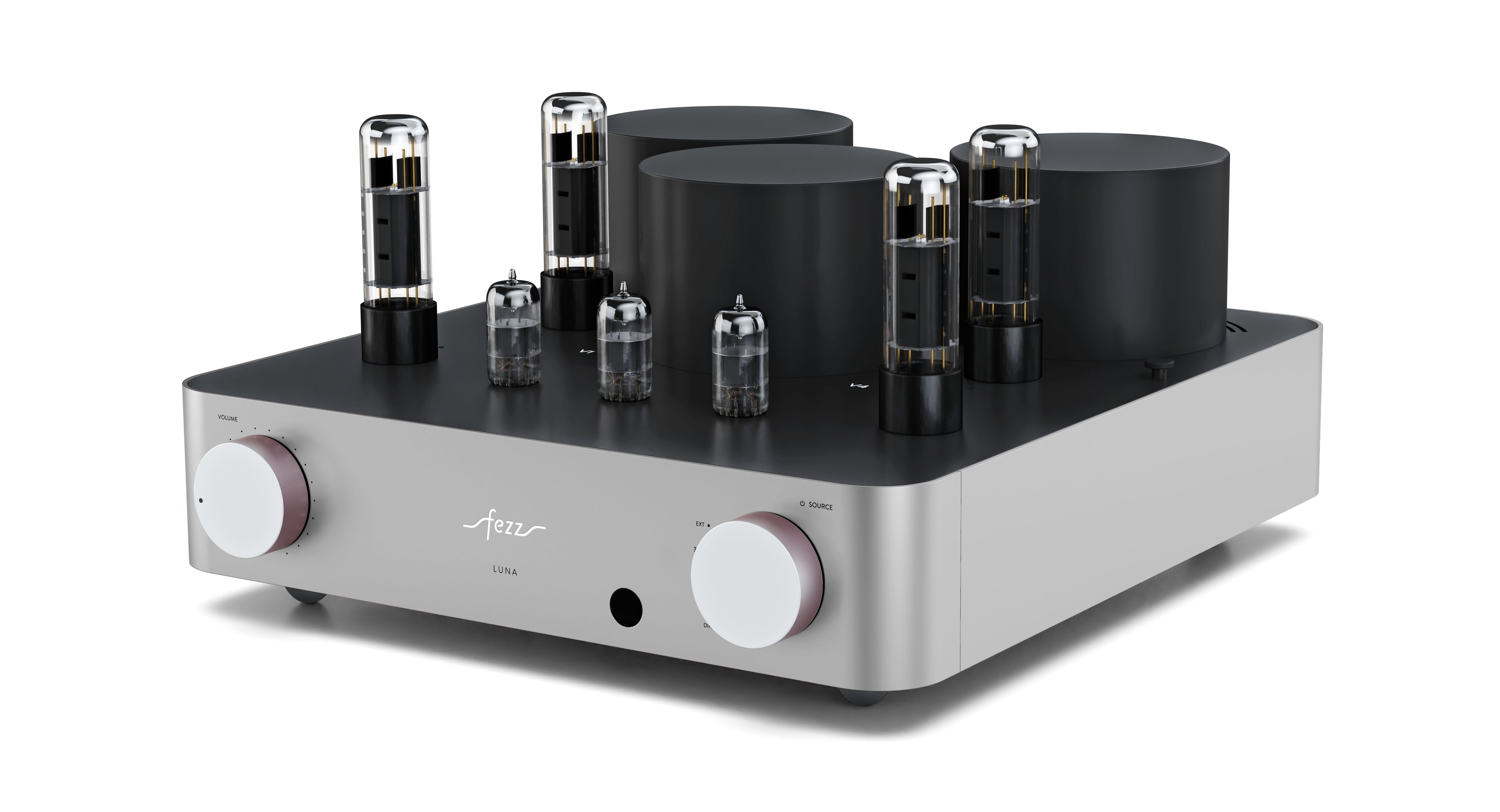
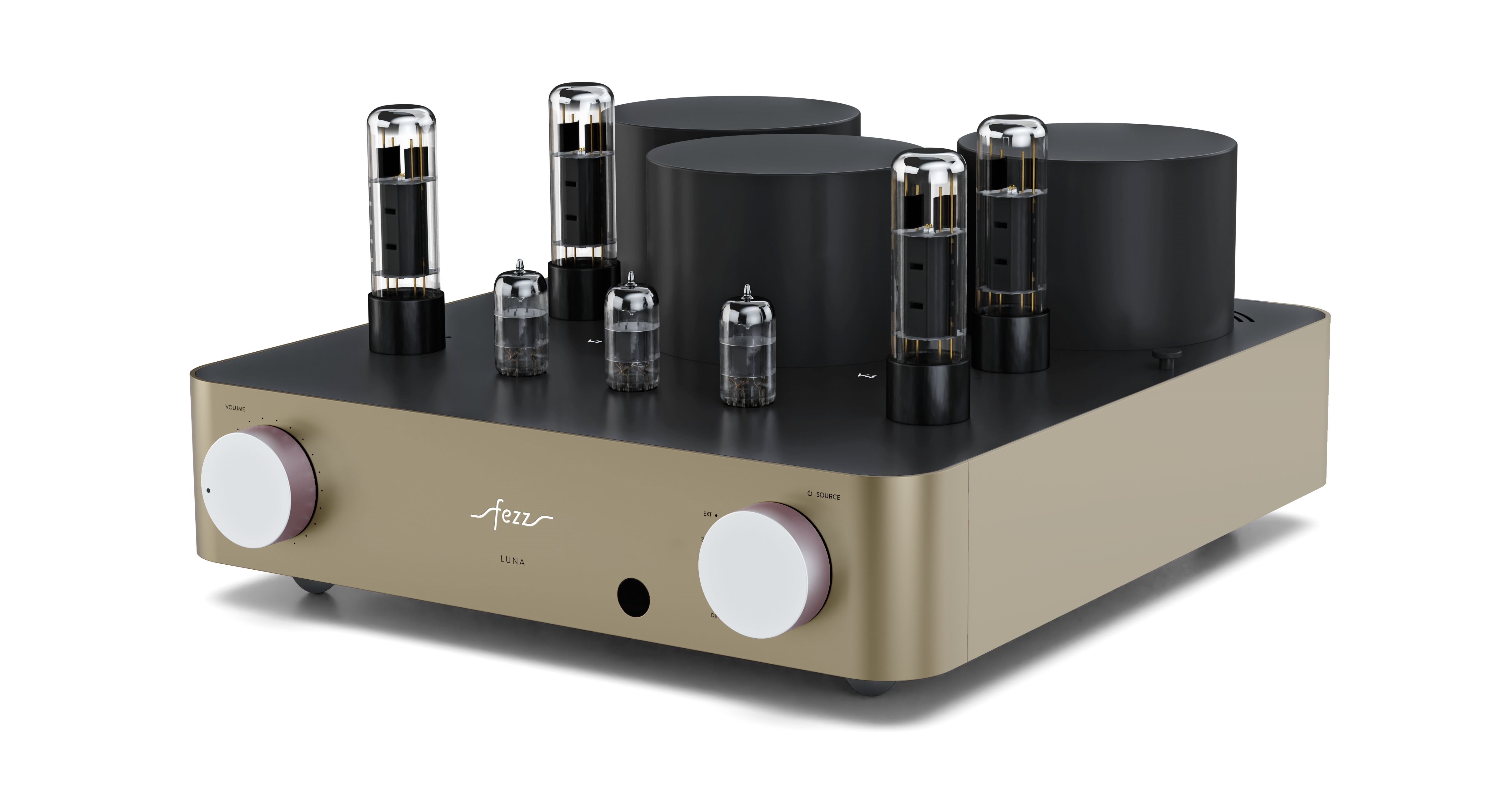
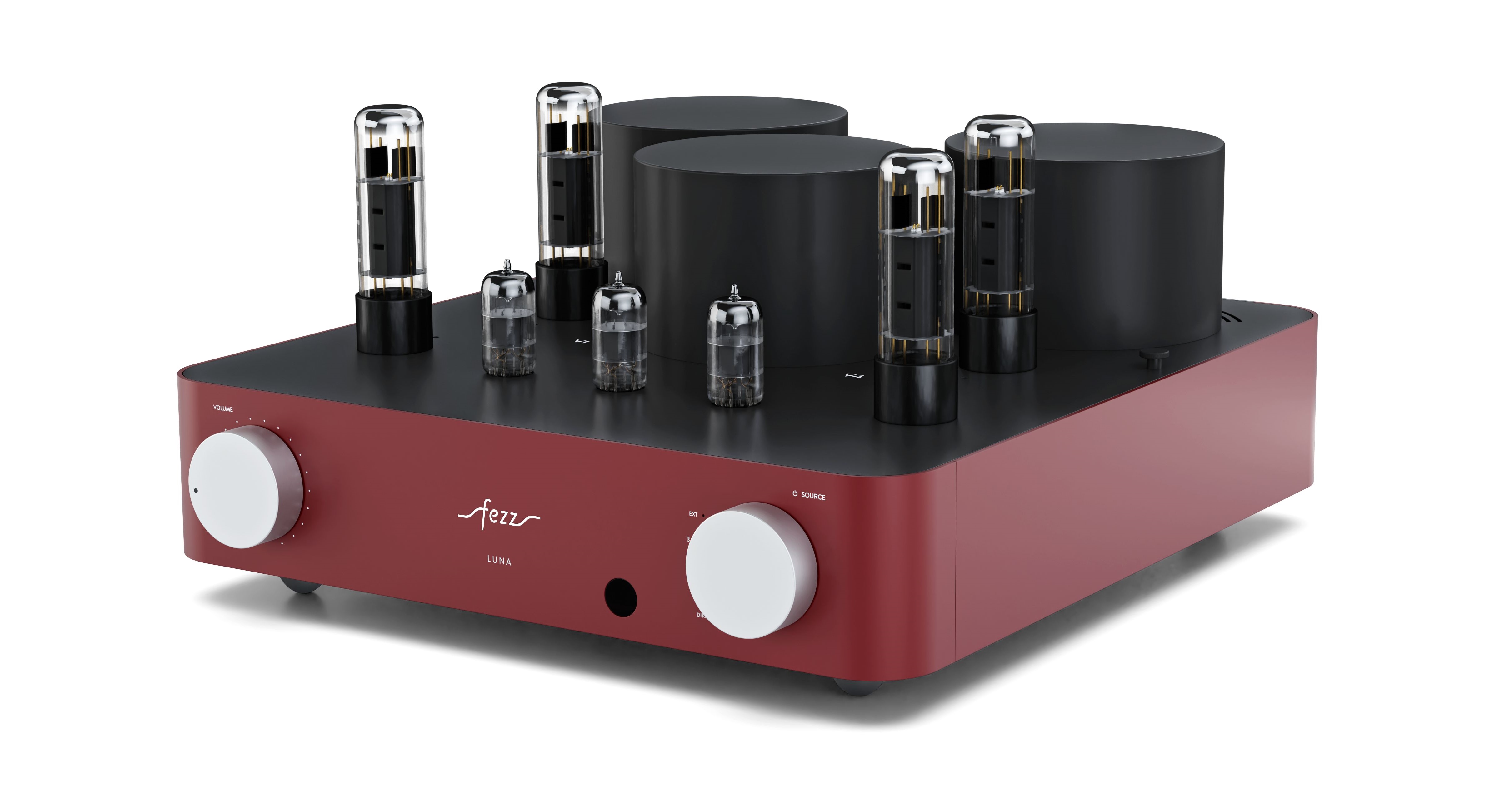
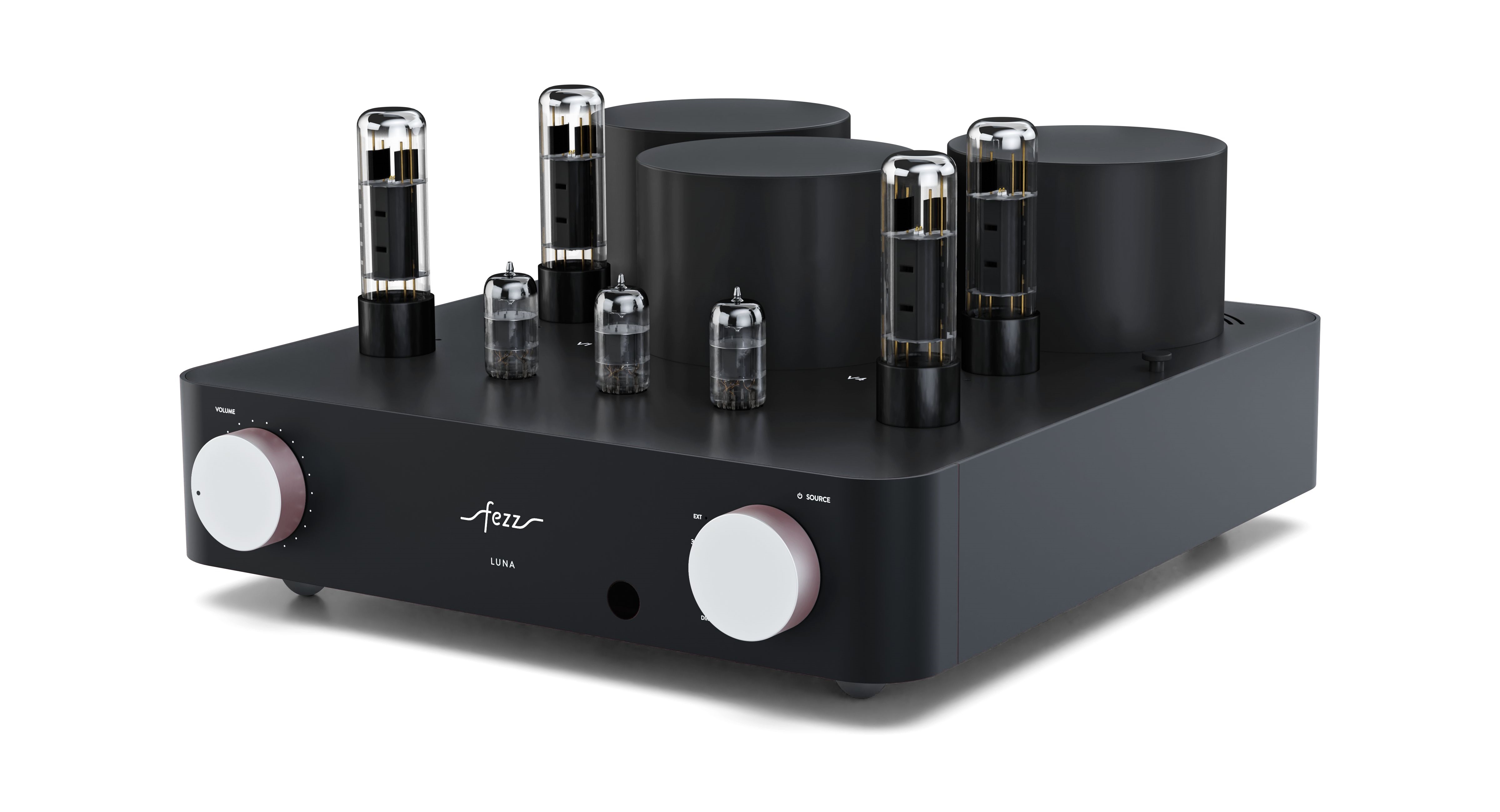
Finish options are more extensive on the Luna Evo: Black Ice, Moonlight, Sunlight, Republika, Evergreen, Big Calm and Burning Red. The choice offers a less anonymous alternative to the usual black or silver component palette, while the visible valve complement and supplied cover preserve the functional, recognisably tube-amplifier form.
Which Luna Evo model suits which system?
The decision should begin with loudspeakers, not finish. The Luna Mini Evo’s 10W Class A single-ended design is the more focused proposition. It makes sense for listeners who already own efficient, electrically friendly speakers, listen in a smaller room or at moderate distances, and want a deliberately simple valve integrated with three line inputs and the option of subwoofer augmentation. Its expansion slot could also be relevant to buyers comfortable with the idea of adding a future module, though the nature of those upgrades remains unconfirmed.
The Luna Evo is the safer starting point for buyers who want a valve integrated without tightly constraining speaker choice. Its 40W-per-channel rating, push-pull output stage and selectable triode/ultralinear modes offer greater operating latitude, while its home-theatre input makes it easier to integrate into a system that must serve both stereo music and multichannel film duties.
In either case, a careful audition with the intended loudspeakers remains advisable. With valve amplification, the nominal wattage figure tells only part of the story. Speaker sensitivity, impedance stability, room size and the desired maximum level all influence the result. It is also worth allowing for ventilation, access to the amplifier’s controls and tube replacement over the long term. The preheat function may help support valve longevity, but output valves and small-signal tubes are still wear items, and future ownership includes the possibility of replacing them with correctly specified equivalents.
Fezz Audio’s new Luna pair therefore offers a meaningful split rather than two near-identical products at different sizes. The Luna Mini Evo is a compact, low-power Class A route for sympathetic speaker systems; the Luna Evo is the higher-power, more adaptable Class AB alternative with a useful choice of output modes and home-theatre integration. Both are scheduled to arrive in November 2025.