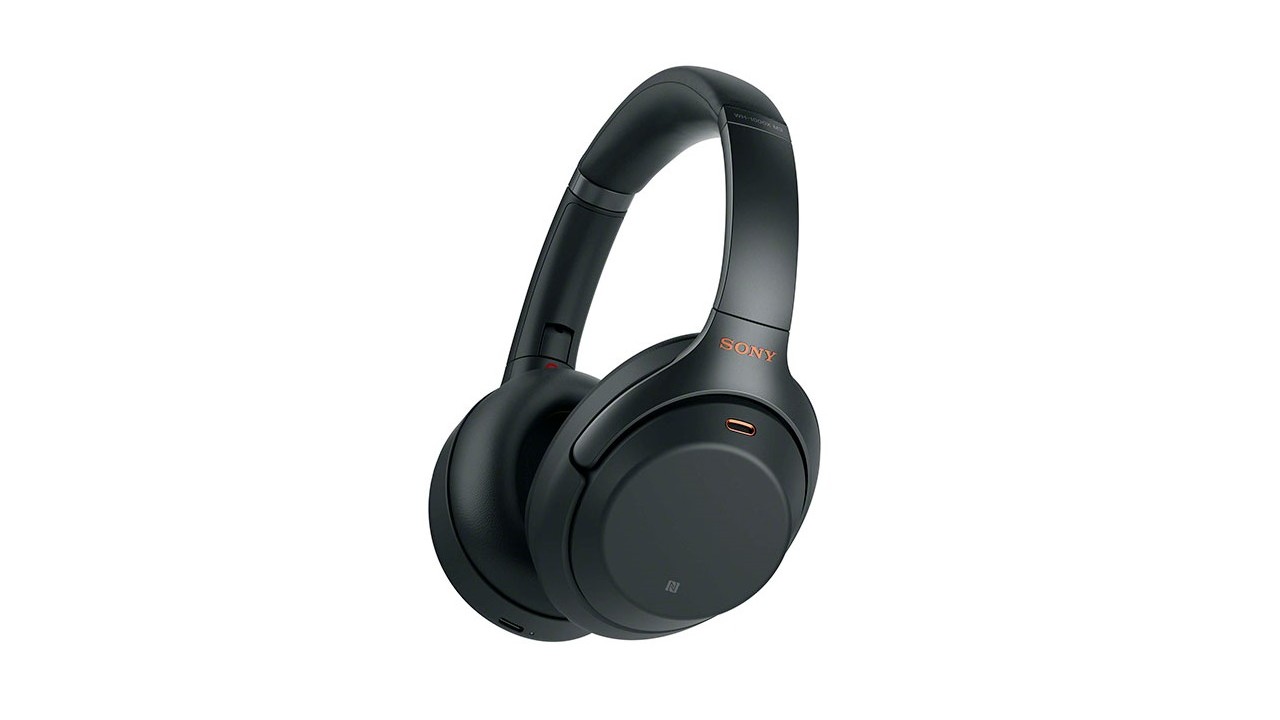
This pre-launch preview reflects the information and expectations available ahead of IFA 2020.
For a long time, Bose was the defining name in noise-cancelling headphones. By 2020, however, the category had become far more competitive, with major audio brands pursuing increasingly sophisticated active noise cancellation (ANC), wireless connectivity and sound quality in one portable package.
Sony’s WH-1000XM3 was among the most sought-after models in that market. Introduced in 2018, the over-ear wireless headphones combined ANC with a notably ambitious internal architecture and went on to win What Hi-Fi? Awards. With competing premium models from Sennheiser and B&W gaining ground, attention naturally turned to Sony’s expected successor: the WH-1000XM4.

Sony WH-1000XM4 release date and expected price
Sony had unveiled the MDR-1000X, WH-1000XM2 and WH-1000XM3 at IFA, making the Berlin technology show a credible setting for the next-generation model. The expectation was therefore that Sony would announce the WH-1000XM4 at IFA in September 2020, potentially during a press conference on Friday 4 September.
Based on the pattern established by earlier models, the headphones were expected to become available to order shortly after their announcement. That timing was not certain: Sony could instead have chosen a separate launch event, particularly as MWC was no longer an option.
Price expectations were similarly based on precedent. Each of the three previous models in the series launched at $349, so $349 was the most likely projected launch price for the WH-1000XM4. It remained a prediction rather than confirmed pricing, and Sony could have priced the new model higher or lower.
Why the WH-1000XM4 name looked likely
The model name itself appeared to have strong support. Sony’s recent naming convention used “M” as shorthand for “Mark”, with the following number identifying the generation. In that context, “M4” would denote the fourth model in the line.
More significantly, an FCC filing uncovered by The Verge in January included the identification code AK8WH1000XM4. That made WH-1000XM4 a highly plausible formal model number, even if Sony could theoretically have adopted a more consumer-friendly marketing name alongside it.

Expected features: over-ear ANC and app control
At the time, there were no detailed leaks setting out the WH-1000XM4’s final specification. The most reasonable expectations were therefore drawn from the WH-1000XM3, Sony’s recent product direction and wider developments in the ANC market.
The WH-1000XM4 was expected to remain a full-size wireless headphone with active noise cancellation. Sony was also expected to retain multiple noise-cancelling modes and companion-app control over the degree of cancellation. These are meaningful practical features: different environments call for different levels of isolation, and adjustable ANC gives listeners more scope to balance external awareness against reduction of ambient sound.
ANC performance was another likely area of development. As competition intensified, the expectation was that Sony would further improve its noise-cancelling system, potentially including the microphones used for voice calls. Better microphone handling could make a substantial difference to call clarity for the person at the other end of the line, especially in noisy surroundings.
Adaptive cancellation was becoming the industry direction
Apple’s AirPods Pro, launched the previous year, illustrated the growing emphasis on adaptive ANC. Its external and internal microphones analyse ambient sound and the way music behaves in the listener’s ears, then adapt the system up to 200 times per second.
There was no indication that Sony would necessarily use the same approach or operate at the same rate. But real-time analysis and adjustment were increasingly important ideas in noise-cancelling design, and it was reasonable to expect Sony to pursue this broader direction in some form.
QN1 processing and sound quality
A major part of the WH-1000XM3’s appeal was its sound quality, not simply its ability to suppress outside noise. Sony’s QN1 chip combined noise cancellation, a DAC and an analogue amplifier in a compact, lightweight headphone-ready design.
That integration mattered because it allowed Sony to address conversion, amplification and noise control within the same portable product. The WH-1000XM3 was regarded as delivering a balanced presentation, pairing some analogue-style warmth and richness with worthwhile digital detail.
A second-generation processor—perhaps dubbed QN2—was a possibility for the WH-1000XM4, though it had not been confirmed. Any update would need to preserve the balance that made the WH-1000XM3 distinctive rather than chasing technical change for its own sake.
Bluetooth codec support
The WH-1000XM3 used Bluetooth 4.2 and supported aptX, aptX HD and LDAC. For the WH-1000XM4, Bluetooth 5.0 and aptX Adaptive were plausible expectations. aptX Adaptive was of particular interest because it was designed to offer improved audio quality with lower latency.
As with the ANC and processing discussion, these were expectations rather than confirmed WH-1000XM4 specifications. What was clear was the challenge facing Sony: improve a highly successful headphones platform while retaining the sound quality, convenience and effective noise cancellation that had made the WH-1000XM3 such a strong contender.