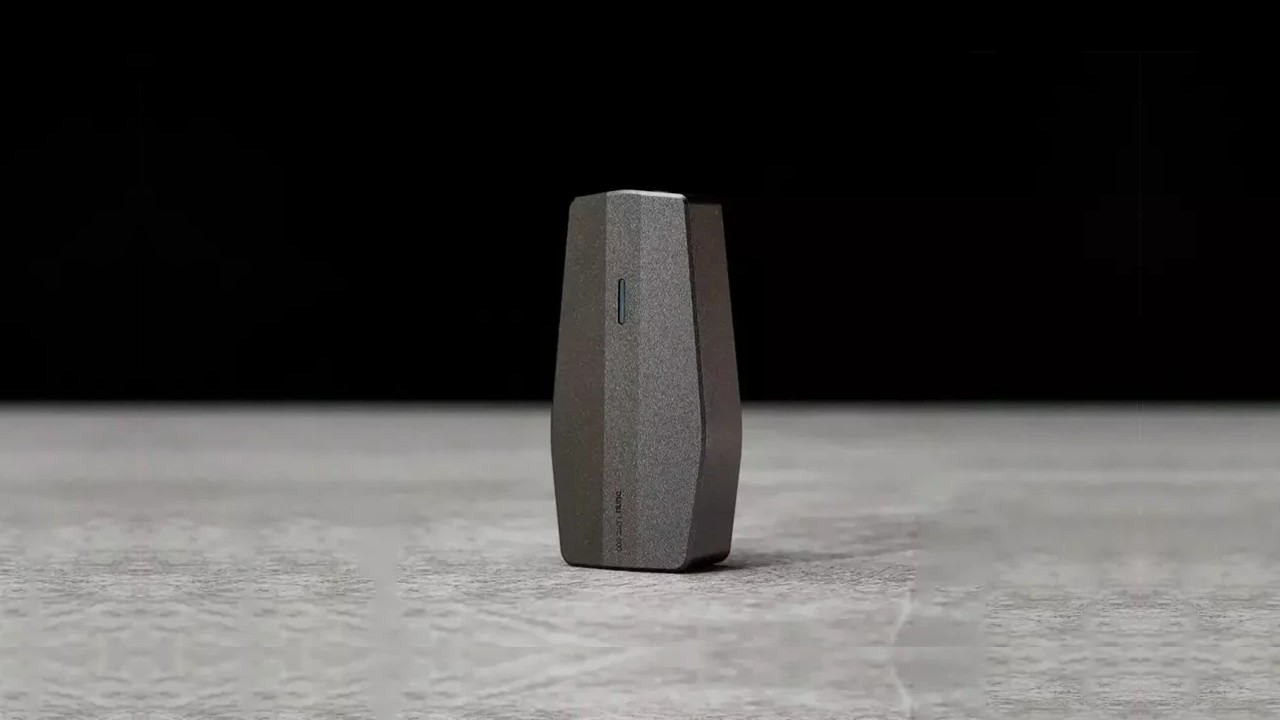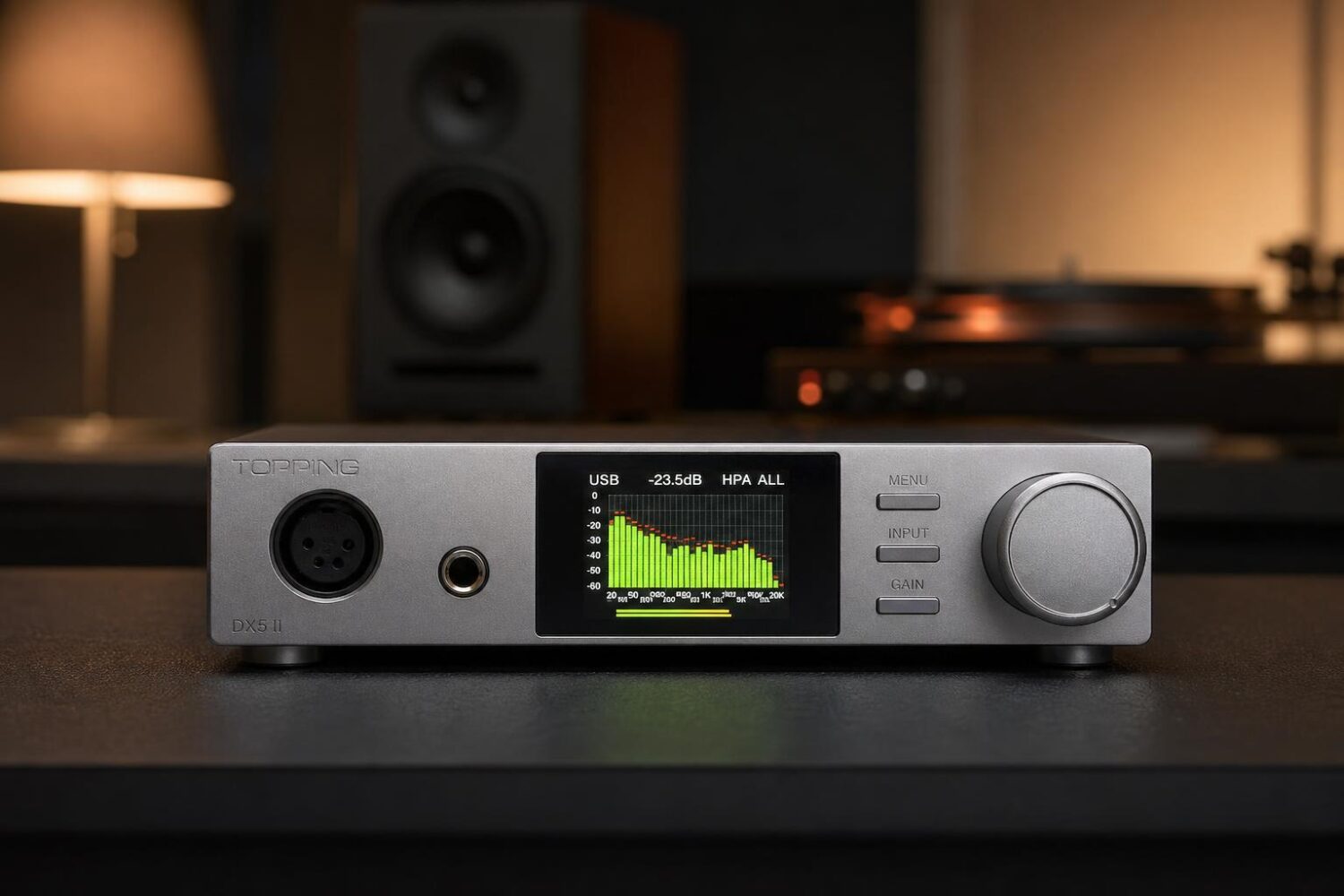
The Topping DX5 II is presented in the supplied material as a DAC and described as a bestseller. That makes it a relevant product for anyone assembling a desktop audio system or adding digital playback to a conventional hi-fi chain. It does not, however, provide enough verified information to support the kind of full review that serious buyers should expect.
There are no confirmed details here on the DX5 II’s converter implementation, digital inputs, analogue outputs, format support, headphone capability, output level, price, dimensions or supplied accessories. Nor are there measurements, listening observations or manufacturer documentation from which to judge its performance. Rather than fill those gaps with assumptions based on the model name or the wider DAC market, the useful approach is to identify exactly what needs checking—and why those details matter in a real system.
A DAC is not necessarily just a DAC
At its most basic, a digital-to-analogue converter receives a digital signal from a computer, streamer, CD transport, television or other source, then supplies an analogue signal to an amplifier or active loudspeakers. That basic description tells us very little about how a particular product can be used.
Some DACs are deliberately simple components with fixed-level line outputs, intended to feed an integrated amplifier or separate preamplifier. Others add a variable volume control and can work directly into active speakers or a power amplifier. Many desktop-oriented designs also combine conversion with a headphone amplifier. These are materially different jobs, requiring different connections, output levels and user controls.
The supplied material confirms only that the Topping DX5 II is a DAC. It does not establish whether it is a fixed-output converter, a DAC/preamp, a headphone DAC/amp, or a more comprehensive digital control centre. A prospective buyer should therefore avoid assuming that it will replace any particular component in their system until the official specification and connection diagram have been checked.
Connectivity is the first practical question
For most DAC purchases, input and output provision matters at least as much as the headline conversion hardware. The right product is the one that connects cleanly to the sources and amplification already in use, without unnecessary adapters, compromised volume control or an unsupported digital interface.
Digital inputs to confirm
No input configuration is documented in the supplied text. Buyers should confirm which inputs the exact retail version of the DX5 II provides and, just as importantly, which one suits their source.
USB is generally the most flexible option for a computer-based system, because it can carry high-resolution PCM and potentially DSD, depending on the DAC and operating system. Windows users should establish whether a dedicated driver is required and whether it is currently supported. MacOS and many Linux-based streamers commonly use class-compliant USB audio, but this should still be confirmed for the product rather than presumed.
Optical and coaxial S/PDIF are common connections for CD transports, televisions, games consoles and some streamers. Optical can be particularly convenient where electrical isolation from a noisy TV or computer is desirable, while coaxial uses an electrical connection and normally requires a correctly specified digital cable. Neither connection should be assumed, and the accepted sample-rate limits can differ between inputs.
If the intended source is a TV, it is also worth checking whether the DAC has an appropriate optical input and whether the television can be set to output compatible two-channel PCM. A DAC cannot decode every surround or proprietary TV audio format simply because it accepts an optical signal.
Analogue outputs and volume control
The source material does not state whether the DX5 II has single-ended RCA outputs, balanced XLR outputs, or both. This is not a cosmetic detail. An integrated amplifier with RCA line inputs needs a compatible analogue output; active speakers may accept RCA, XLR or both; and a power amplifier normally needs a properly implemented variable-level signal path upstream.
Balanced connection is often useful for studio-oriented active speakers, long cable runs and installations where hum or ground-noise pickup is a concern. It is not automatically an audio-quality upgrade in every short domestic setup, nor does the presence of XLR connectors by itself prove that a component’s internal circuit is fully balanced. Compatibility and sensible gain structure matter more than connector prestige.
Buyers should also determine whether outputs can be set to fixed or variable level, whether both output types operate simultaneously, and how volume is controlled. A DAC used into an integrated amplifier is normally simplest at a fixed output level, with the amplifier handling volume. A DAC feeding active speakers or a power amplifier needs a reliable, repeatable volume-control arrangement. The available material does not confirm any of these points for the DX5 II.
Conversion architecture and format support need documentation
There is no confirmed information in the supplied material on the DX5 II’s DAC chipset, discrete conversion design, clocking, digital filters, PCM limits, DSD compatibility or MQA capability. These are all areas frequently highlighted in DAC marketing, but they should be read in the context of actual use rather than as a checklist.
PCM is the format used by CDs and by much streaming audio. A DAC’s maximum PCM sample rate may be relevant to users with high-resolution local files, but it is unlikely to determine sound quality on its own. DSD support matters only if a listener has DSD files or uses a playback chain that outputs DSD. Similarly, selectable digital filters can alter the converter’s high-frequency behaviour in technically defined ways, but are rarely the deciding factor in whether a DAC is suitable for a system.
Clocking and jitter-rejection claims also require careful interpretation. Digital timing matters in converter engineering, but a meaningful assessment requires either documented implementation details or properly conducted measurements. Neither is supplied here. It would be inappropriate to credit the Topping DX5 II with any particular technical architecture or performance advantage without those sources.
Headphone use cannot be assumed
The draft provides no confirmation that the DX5 II includes a headphone amplifier or headphone outputs. That is a critical distinction for desktop buyers, as the product’s suitability changes substantially if it is intended to drive headphones directly.
If headphone functionality is confirmed elsewhere, prospective owners should look beyond the mere presence of a socket. Useful questions include which connectors are fitted, whether there is a balanced headphone output, the stated output power into relevant load impedances, output impedance, gain settings and whether the volume range is usable with sensitive in-ear monitors as well as full-size headphones.
Output power alone does not tell the whole story. Low-impedance planar magnetic headphones can demand substantial current, while high-impedance dynamic designs often need greater voltage swing. Sensitive headphones, meanwhile, reveal background hiss and can make coarse volume adjustment frustrating. Those matching considerations cannot be applied to this model until its headphone section, if any, is verified.
Measurements would establish the engineering case
No measured or manufacturer-specified performance figures are included in the source. There are no stated values for dynamic range, signal-to-noise ratio, total harmonic distortion plus noise, channel separation, output impedance, output voltage or jitter behaviour. There is consequently no factual basis for ranking the DX5 II’s measured performance against other DACs.
Specifications can be useful when read carefully. Output voltage indicates whether a DAC can properly drive the following stage without creating an awkward volume-control range; output impedance can affect interaction with connected equipment; and noise and distortion figures offer an indication of how cleanly a component performs under the stated test conditions. But values should always be compared on a like-for-like basis, with attention paid to the measurement level, weighting and connection used.
For a DAC/headphone amplifier, independent measurements can be especially valuable because they may reveal output behaviour at different loads, noise at low gain, channel balance and volume-control performance. No such evidence accompanies the supplied material, so any assertion about the DX5 II’s transparency, noise floor, power delivery or technical leadership would be speculation.
Build, operation and ownership remain open questions
There are likewise no verified details regarding chassis construction, dimensions, weight, display, control layout, remote control, power supply, thermal behaviour, finish options or included accessories. These practical details influence ownership more than they might initially appear to.
A small desktop DAC must fit around monitors, keyboards and headphone stands while leaving enough room for plugs and cable bend radius. A system component needs clear front-panel feedback and controls that make it easy to identify the active input and output level from a listening position. If a remote is supplied, its ability to select inputs and adjust volume can determine whether the DAC is practical in a living-room system rather than only at a desk.
Firmware policy deserves similar attention. If the product uses USB audio, buyers should check the manufacturer’s current driver and firmware downloads, supported operating systems, instructions for updating, and local warranty process. These are not glamorous considerations, but they can matter more over several years of ownership than an isolated feature claim.
What “bestseller” does—and does not—tell us
The supplied material calls the Topping DX5 II a bestseller, indicating that it has market visibility. That may be a useful reason to investigate the product, but it is not evidence of a particular specification, build standard or system match. Sales can reflect price, availability, brand recognition, retailer promotion, feature mix or customer recommendations, among other factors.
For an enthusiast, popularity is best treated as a starting point for research. It does not substitute for checking the exact version being sold in a particular region, its inputs and outputs, mains-voltage suitability, accessories, warranty and return policy. This is particularly important when a DAC is expected to serve several roles at once, such as USB interface, preamp and headphone amplifier.
Buying guidance: establish the system role first
The most efficient way to assess the Topping DX5 II is to begin with a short list of system requirements, then compare those requirements against an official, current specification sheet.
- For a computer and integrated amplifier: confirm USB compatibility and the presence of a suitable fixed-level line output.
- For active speakers: confirm variable output operation, connector compatibility and how the DAC manages volume and muting.
- For a TV and hi-fi system: verify the relevant digital input, two-channel PCM compatibility and convenient input selection.
- For headphones: first establish that a headphone stage is included, then check gain, output specifications and connector format against the headphones in use.
- For multiple sources: confirm the number and type of inputs, input switching behaviour, remote operation and whether unused sources remain connected without issue.
Price is another essential missing variable. No USD price is supplied, so there is no defensible way to assess value or identify whether the DX5 II is positioned as an entry-level converter, a mid-priced desktop hub or a more ambitious all-in-one component. Once a confirmed selling price is available, value should be assessed against the features actually needed—not against functions that will remain unused.
Verdict: a product to research, not yet a reviewed recommendation
The Topping DX5 II has enough relevance to be on a DAC shopper’s radar: it is identified as a DAC and presented as a bestseller. Beyond that, the supplied material does not substantiate a technical or sonic recommendation. There is no confirmed connectivity list, digital-format support, analogue output configuration, headphone functionality, measurement data, physical specification or price.
That does not make the DX5 II a weak product; it means the available evidence is too limited to judge it responsibly. Buyers already considering it should obtain the current official manual and specification sheet, check system compatibility line by line, and confirm support and pricing from their chosen retailer. Until those details are established, the sensible editorial conclusion is cautious: investigate the Topping DX5 II, but do not treat bestseller status as a substitute for verified engineering and practical fit.